Tank, tankless, and hybrid systems compared
| Type | Where it fits | Considerations |
|---|---|---|
| Gas storage tank | Restaurants, small hotels, fitness facilities | Strong recovery and buffer for peak demand; larger footprint; venting and combustion air requirements |
| Electric storage tank | Offices, small retail, medical suites | Simple installation without venting; electrical capacity and demand charges to consider |
| Commercial tankless (gas) | Restaurants with space limits, multi-tenant buildings | Compact and efficient at steady load; sensitive to water quality and venting design; plan for scale management |
| Heat pump water heater | Buildings pursuing electrification | Needs air volume and ambient conditions that support it; cools surrounding space |
| Boiler with indirect storage | Hotels, hospitals, campuses with hydronic plants | Central source can serve many loads; see boiler considerations |
No type wins everywhere. Peak demand profile, space, gas service, electrical capacity, and local rules drive the answer, which is why we size from fixture use and not from the label on the old heater. The water heaters and boilers guide covers selection in more depth.
Sizing from demand, not from habit
Undersized hot water shows up as complaints at peak times and constant burner operation. Oversized systems waste standby energy and short cycle. Sizing depends on fixture counts and flow, simultaneous use, required delivery temperature, incoming water temperature, and recovery rate.
A restaurant's dish machine, prep sinks, and mop sink often hit at once at the end of service. A dental office has comparatively light but steady demand. A gym's shower use peaks at specific hours. When a heater is being replaced, we ask what changed since the original sizing, since tenants, equipment, and occupancy often drift over the years.
How commercial water heaters fail
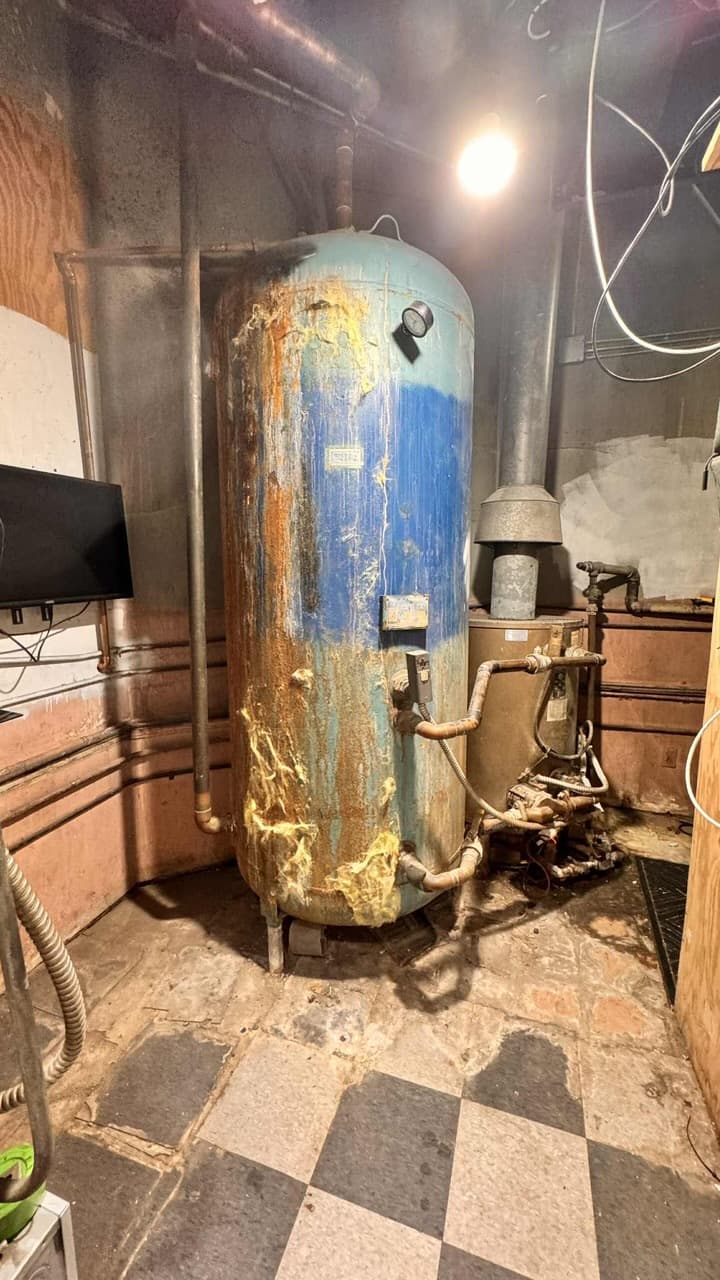
- Tank corrosion and sediment. Minerals settle and insulate the bottom of the tank, reducing efficiency, causing noise, and accelerating failure. Anode rods and flushing extend life when maintained.
- Burner and ignition faults. Dirty burners, failed igniters or flame sensors, and gas pressure problems cause lockouts and slow recovery.
- Thermostat and control failure. Drifting aquastats and failing control boards produce inconsistent temperature.
- Relief valve and expansion issues. Closed systems with backflow prevention need expansion tanks or relief management; a weeping valve is often a symptom of pressure rise, not a bad valve.
- Tankless scale and flow faults. Heat exchangers scale in hard water, restricting flow and triggering error codes; flushing and water treatment prevent most of it.
- Venting and combustion air problems. Blocked, corroded, or undersized venting causes safety lockouts and is a life-safety concern.
- Recirculation loop failures. Failed pumps, stuck check valves, or poor balancing leave distant fixtures cold and waste energy.
Code, air quality, and safety considerations
Gas-fired water heaters in much of Southern California are subject to local air quality rules, including NOx emission limits enforced by SCAQMD and its predecessors in various product classes. Equipment offered for sale in the region is typically certified to these limits, and size and category determine which rule applies. Always confirm current requirements for your unit class and jurisdiction.
Beyond emissions, a replacement usually requires attention to seismic anchoring and strapping, temperature and pressure relief valve discharge piping, venting materials and clearances, gas line sizing, condensate neutralization for condensing models, and backflow and expansion control on the water side. Building departments commonly require permits for commercial water heater replacement. Energy code provisions under Title 24 may also affect insulation, controls, and recirculation. Our Title 24 and permits guide explains how those requirements typically work.
Hospitals, senior living, and some hospitality settings have additional expectations around storage temperature, circulation, and water management programs related to Legionella. If this applies to you, tell us during scoping so we design and document accordingly.
Our approach versus the same-day swap
When a water heater fails, the pressure to get hot water back is real, and a same-day swap of a like-for-like unit is sometimes what the situation calls for. The problem is that many swaps copy old problems: rusted vent connectors, undersized gas lines, missing seismic straps, relief discharge that terminates nowhere safe, and a lack of expansion control that caused the failure in the first place.
We handle emergencies promptly, and we also tell you what we saw. For a failed tank, we examine the cause: age, water chemistry, pressure behavior, or installation. If temporary hot water is needed while the permanent replacement is specified, we can plan for it. If you need a design comparison, the commercial repair team can bring diagnostic data into the replacement scope.
Replacement planning checklist
- Confirm peak demand and delivery temperature with the people who use the water.
- Verify gas supply capacity, or electrical service and breaker capacity for electric units.
- Inspect venting path, material, and termination for compliance and condition.
- Confirm combustion air supply for gas units in enclosed rooms.
- Check floor drain, pan, and discharge routing for the relief valve.
- Evaluate water hardness and plan treatment for tankless or condensing models.
- Confirm seismic anchoring method and structural support.
- Decide on a recirculation strategy and balancing valves for larger buildings.
- Plan permits, inspections, and any shutdown windows with tenants or operations.
Service, flushing, and records
Routine service includes tank flushing, anode inspection, burner and igniter cleaning, venting inspection, relief valve testing, thermostat calibration, recirculation pump checks, and tankless descaling where needed. Each unit is tagged and recorded in the DaVinci Portal with model, age, readings, and photos, so service history survives staff turnover. Water heaters pair naturally with a maintenance plan, particularly in kitchens and hospitality where hard water and heavy use shorten life.
Who this is for (and who it isn't)
Our water heater work serves restaurants, hotels, medical and senior-care facilities, schools, fitness centers, multi-tenant property managers, and general contractors installing hot water as part of larger commercial projects. It suits clients who need the system sized correctly, permitted, and documented.
It is not designed for homeowners, for single residential tank swaps, or for buyers whose main requirement is the lowest-cost install without permits or code upgrades. We work in commercial buildings only.
What a typical visit looks like
- Check current output against actual peak demand, not just spec-sheet capacity
- Inspect combustion/ignition or heating elements and descale as needed
- Confirm venting, gas/electrical, and condensate are code-correct
- Set and verify temperature set-points for safety and code compliance
- Document the visit — proof-of-work you can show for inspection
Problems we most often find
- Undersized units that were never sized to actual peak demand
- Scale buildup reducing efficiency and shortening element/heat-exchanger life
- Venting or gas line sizing that doesn't match the installed unit
- Aging tanks nearing end of service life with no replacement plan in place
FAQ
Tank or tankless — which is right for a commercial site?
It depends on peak demand and available gas/electrical service. We'll size the recommendation to your actual usage, not just replace like-for-like.
Do you handle code-required inspections?
Yes — venting, gas line, and combustion work is documented to pass inspection, and we coordinate with your building department when needed.
Commercial Water Heaters: where we work
Orange County is our home base. For larger commercial and public projects we also work across Los Angeles County, the Inland Empire, San Diego County, and Ventura County.