Commercial Water Heaters in El Segundo, CA
Hotels near the airport, campus kitchens, fitness facilities and restrooms in large office buildings drive El Segundo's hot water demand. Hotels run recirculation loops and storage tanks sized for morning peaks, where scale, failed mixing valves or a weak recirc pump quickly produce complaints. We evaluate sizing against actual demand, check venting and combustion air in tight mechanical rooms, and look at coastal corrosion on flues and tank jackets. Replacement planning covers gas line capacity, seismic strapping and permit requirements, with minimal disruption to occupied floors.
Aerospace, technology and corporate campuses wedged between LAX, the refinery and the Pacific Coast Highway corridor, with salt-laden coastal air shortening equipment life.
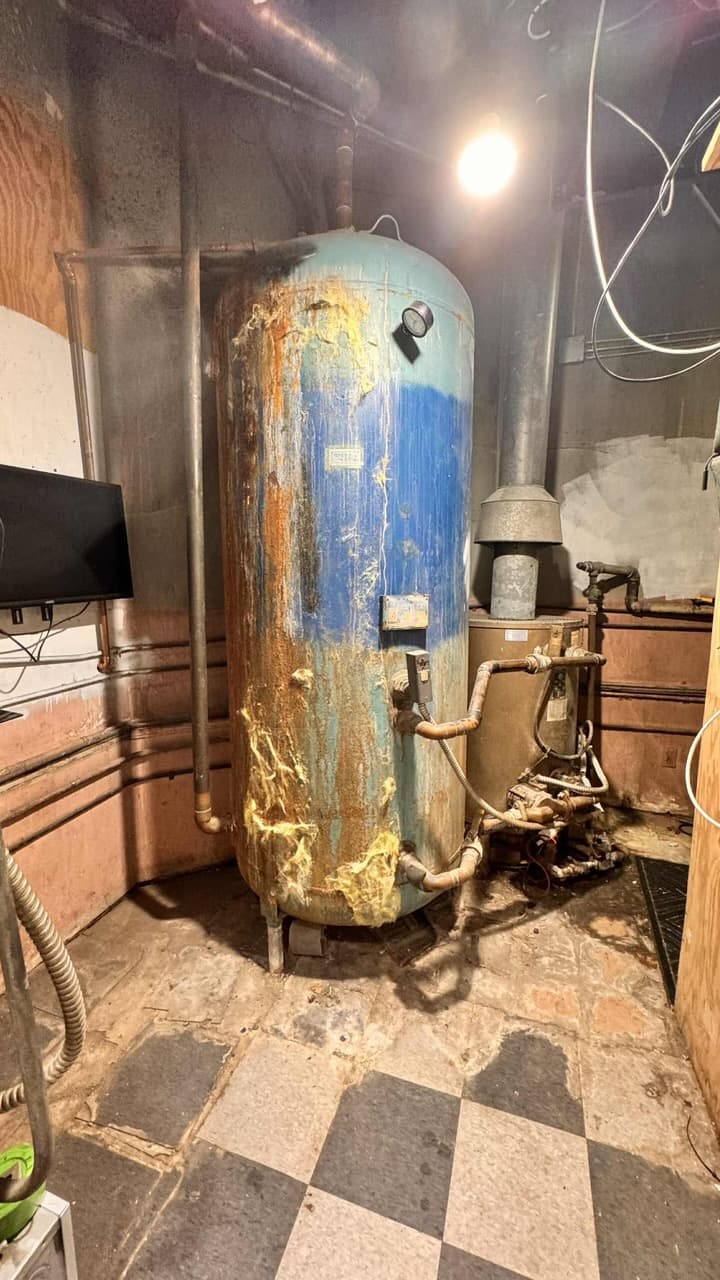
How commercial water heaters work plays out in El Segundo
The hotels serving LAX set the pace for hot water in El Segundo. Properties along Imperial Highway and Sepulveda Boulevard turn rooms at unusual hours, with crew check-ins and red-eye arrivals creating demand peaks that do not match a typical leisure hotel curve. Storage tanks, recirculation loops, and in newer properties, banks of tankless units have to recover fast, and a weak recirculation pump or a failed mixing valve produces complaints from guests who are trying to sleep in the middle of the day. Laundry and kitchen loads stack on top of that.
The campuses add their own demand through fitness centers, cafeteria kitchens, and restrooms across large office floors, usually served from central mechanical rooms with storage tanks and distribution loops long enough that recirculation balance matters. Downtown restaurants on Main Street run commercial tank or tankless units in tight back rooms where venting and combustion air were never generous. Across all of them, the coastal environment corrodes flue terminations, intake screens, and tank jackets, and tankless heat exchangers scale from local water hardness.
Replacement in El Segundo covers gas supply capacity, venting that meets current code in buildings where termination locations are constrained, seismic strapping practice, condensate handling for condensing units, and a swap sequence that keeps hot water flowing for a hotel that never closes. Temporary heating or a staged tank replacement is the usual answer for the hotels. Permits run through the city's building department; confirm current requirements. See commercial water heaters, the water heaters and boilers guide, and hotels and convention properties in Los Angeles County.
El Segundo's climate and what it does to this equipment
El Segundo sits at the edge of Santa Monica Bay, so mornings often open under the marine layer and afternoons rarely reach the extremes seen inland. That mildness hides the real stress: constant salt-laden air attacks condenser fins, copper tubing, fan guards and rooftop cabinets, and airport and refinery particulates load coils and filters faster than inland offices. Humidity runs higher than most of Los Angeles County, which affects economizer behavior and condensate management. Equipment is rarely heat-stressed, but coating failure and coil corrosion cut service life well short of inland counterparts.
For the equipment background behind this page, read our water heaters and boilers guide or the full Commercial Water Heaters service page.
- Campus and corporate row (Douglas, Continental and Nash)Aerospace, entertainment-tech and corporate campuses with chilled-water plants, VAV systems and tight uptime expectations for labs and data rooms.
- Sepulveda and Imperial hotel and office stripAirport-serving hotels and mid-rise offices with continuous hot water demand, rooftop plant and strict noise limits at night.
- Downtown El Segundo (Main Street)Older low-rise buildings with restaurants, cafes and small retail, where walk-ins, makeup air and shared roofs are the main challenges.
- Smoky Hollow and the southern industrial blocksOlder creative-office conversions and light industrial buildings mixing legacy packaged units with newer tenant-driven mini-splits.
- Combustion/ignition or element checks with descaling
- Venting, gas/electrical, condensate, and expansion tank review
- Temperature set-points confirmed for safety and code
- DaVinci Portal: full service history and proof-of-work on file
What a commercial water heaters visit includes, and the problems we most often find
- Check current output against actual peak demand, not just spec-sheet capacity
- Inspect combustion/ignition or heating elements and descale as needed
- Confirm venting, gas/electrical, and condensate are code-correct
- Set and verify temperature set-points for safety and code compliance
- Document the visit — proof-of-work you can show for inspection
- Undersized units that were never sized to actual peak demand
- Scale buildup reducing efficiency and shortening element/heat-exchanger life
- Venting or gas line sizing that doesn't match the installed unit
- Aging tanks nearing end of service life with no replacement plan in place
Commercial Water Heaters in El Segundo: questions we get
Our airport hotel gets hot water complaints at 2 p.m., not in the morning. Why?
Airport hotels have a midday turnover that most properties do not, with crews and travelers showering when the recirculation loop has cooled and the tanks are recovering from laundry. We log loop and tank temperatures over a full day to see the real curve, then check recirculation pump performance, loop balance, and mixing valve operation. The fix is often a pump or balancing correction, sometimes a control change, and only occasionally more storage. The data shows which.
Can a campus fitness center and cafeteria share one water heating system efficiently?
They can if the system is sized for the combined peak and the distribution loop is balanced so the farther load does not starve. Fitness centers peak early morning and after work, cafeterias peak before and during lunch, so the loads partly offset. We review the actual demand pattern, the recovery rate of the existing equipment, and loop temperatures at the far ends before recommending whether to keep a shared plant, add storage, or split the loads.
Tank or tankless — which is right for a commercial site?
It depends on peak demand and available gas/electrical service. We'll size the recommendation to your actual usage, not just replace like-for-like.
Do you handle code-required inspections?
Yes — venting, gas line, and combustion work is documented to pass inspection, and we coordinate with your building department when needed.