Commercial Water Heaters in Downey, CA
Medical and rehabilitation facilities, restaurant kitchens, salons and personal-care tenants, and mall food service all make hot water a core need in Downey. Rehabilitation and care buildings need reliable temperatures with safe mixing and legionella-aware recirculation practices, while restaurants require quick recovery during rushes. We evaluate storage, recovery, venting and gas capacity, and plan replacements with mixing valves and seismic anchoring. Where legacy buildings have oversized or undersized equipment, we right-size to actual demand.
Stonewood-area retail, multiple hospital campuses, former aerospace sites and light industrial blocks in the Gateway Cities.
How commercial water heaters work plays out in Downey
Hot water demand in Downey splits between kitchens and care. The restaurant rows along Firestone and in the Stonewood and Promenade food areas need fast recovery through a dinner rush, with dish machines, hand sinks and prep sinks drawing at the same time. The rehabilitation, skilled nursing and medical office buildings clustered near Imperial Highway and Brookshire Avenue need steady, safe temperatures all day with recirculation that does not leave warm, stagnant water in long branch lines. Salons and barber shops along Downey Avenue and Paramount Boulevard, and the car washes and dealership detail bays on Firestone, add high-volume, long-hour draws that are easy to undersize.
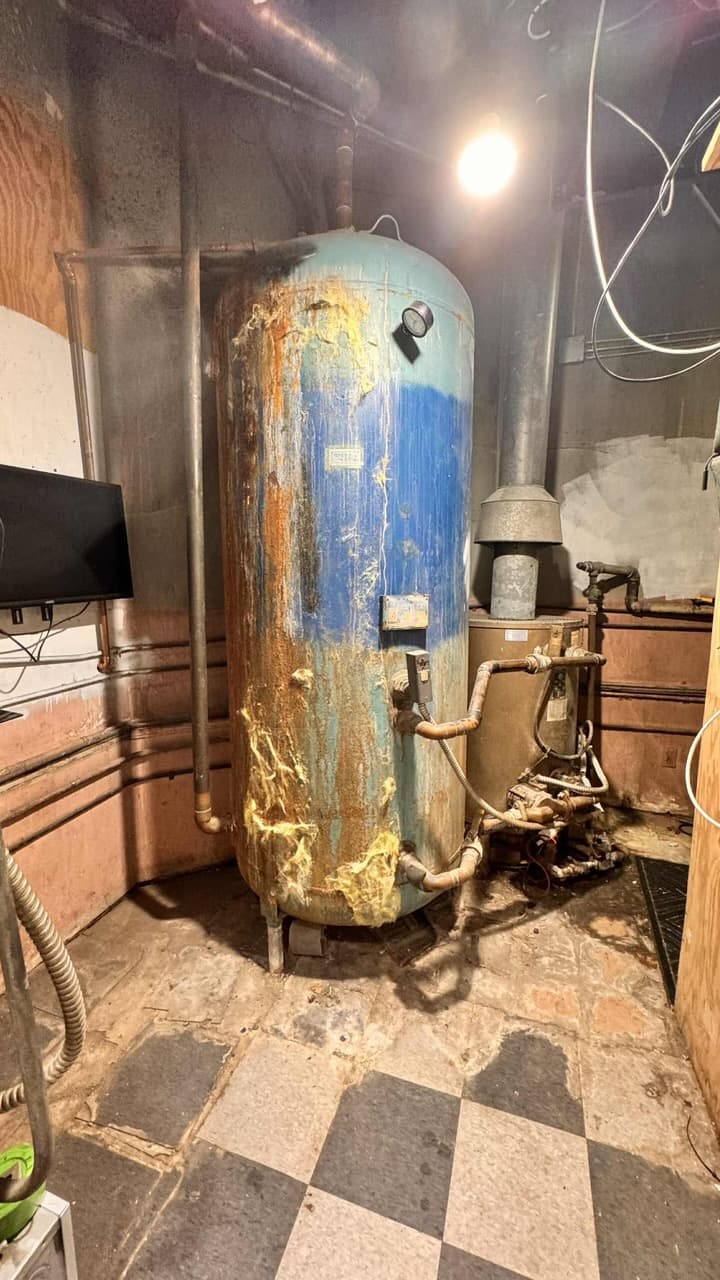
The equipment we find is usually an atmospheric tank that has outlived its warranty, installed in a mechanical closet with marginal combustion air and a flue that was never updated when the roof was redone. In humid Downey summers these closets run damp, and corrosion on the flue connector and burner tray shows up early. We evaluate recovery against the fixture count and the actual rush, check venting and gas supply, confirm seismic strapping and expansion control, and look at whether a condensing tank or a tankless bank better matches the space and the gas line that exists.
For care facilities, we verify mixing valves, recirculation balance and storage temperatures with legionella awareness, and we leave a written record the facility can file. For restaurants, we schedule the swap between lunch and dinner, or overnight when a landlord permits, so the kitchen never opens without hot water. The water heaters and boilers guide walks through sizing and venting decisions.
Downey's climate and what it does to this equipment
Downey is part of the flat, warm Gateway Cities plain, inland of the coast but still influenced by the marine layer on many mornings. Summers bring warm, humid afternoons in the 80s and low 90s, with occasional heat waves that push higher, and warm nights that keep cooling equipment running late. Humidity makes condensate and coil cleanliness more important than in drier valleys. Freeway traffic, rail and nearby industry put fine particulate on filters and coils. Equipment is rarely heat-limited but works long hours in moderately dirty, humid air.
For the equipment background behind this page, read our water heaters and boilers guide or the full Commercial Water Heaters service page.
- Stonewood Center and Lakewood Boulevard retailEnclosed-mall and surrounding national tenants with restaurants, food courts and shared roof and plant systems.
- Kaiser Downey and Rancho Los Amigos medical corridorHospital and rehabilitation campuses plus nearby medical offices with strict environmental and documentation requirements.
- Downtown Downey and Firestone BoulevardOlder low-rise offices, restaurants and professional buildings with aging rooftop and split-system equipment.
- Former aerospace and rail-line light industrial areasLarge legacy buildings and smaller industrial properties adapted from aerospace use, often with mixed-vintage mechanical systems.
- Combustion/ignition or element checks with descaling
- Venting, gas/electrical, condensate, and expansion tank review
- Temperature set-points confirmed for safety and code
- DaVinci Portal: full service history and proof-of-work on file
What a commercial water heaters visit includes, and the problems we most often find
- Check current output against actual peak demand, not just spec-sheet capacity
- Inspect combustion/ignition or heating elements and descale as needed
- Confirm venting, gas/electrical, and condensate are code-correct
- Set and verify temperature set-points for safety and code compliance
- Document the visit — proof-of-work you can show for inspection
- Undersized units that were never sized to actual peak demand
- Scale buildup reducing efficiency and shortening element/heat-exchanger life
- Venting or gas line sizing that doesn't match the installed unit
- Aging tanks nearing end of service life with no replacement plan in place
Commercial Water Heaters in Downey: questions we get
Our skilled nursing facility in Downey has complaints about hot water temperature swinging between rooms. What causes that?
Most often it is a recirculation problem rather than a heater problem: a failed circulator, a balancing valve that was closed during a past repair, or branch lines that were added when rooms were reconfigured. We measure return temperatures across the loop, check the mixing valve, and verify storage temperature. Fixing the loop usually stabilizes delivery without replacing the heater, and we document the readings for your facility file.
Can a Downey restaurant switch to tankless water heaters in a small back room?
Often yes, but it depends on gas capacity and venting. A bank of tankless units needs more gas flow than an old tank, and many Firestone-era buildings have a meter and line sized for less. We check the meter, the line and the available vent route before proposing anything. Where gas is limited, a high-recovery condensing tank may serve the kitchen better than tankless and still save floor space.
Tank or tankless — which is right for a commercial site?
It depends on peak demand and available gas/electrical service. We'll size the recommendation to your actual usage, not just replace like-for-like.
Do you handle code-required inspections?
Yes — venting, gas line, and combustion work is documented to pass inspection, and we coordinate with your building department when needed.