Commercial Water Heaters in Irvine, CA
Most Irvine office and medical buildings have a modest set of water heaters, often tucked in a mechanical closet or on a roof platform, serving restrooms, break rooms, and janitorial sinks. Because they are rarely noticed until a tenant reports cold water, age and sediment accumulate unseen. We check anode condition where applicable, flush sediment, test relief valves, verify venting and combustion air, and review thermostatic mixing at fixtures. When replacement is due, we lay out like-for-like and electrification paths against current South Coast AQMD expectations, which owners should confirm before purchasing, and keep each unit's records attached to its tag.
Dense with corporate campuses, business parks, and multi-tenant office buildings around the Irvine Spectrum and Great Park areas — heavy RTU counts and tight PM windows.
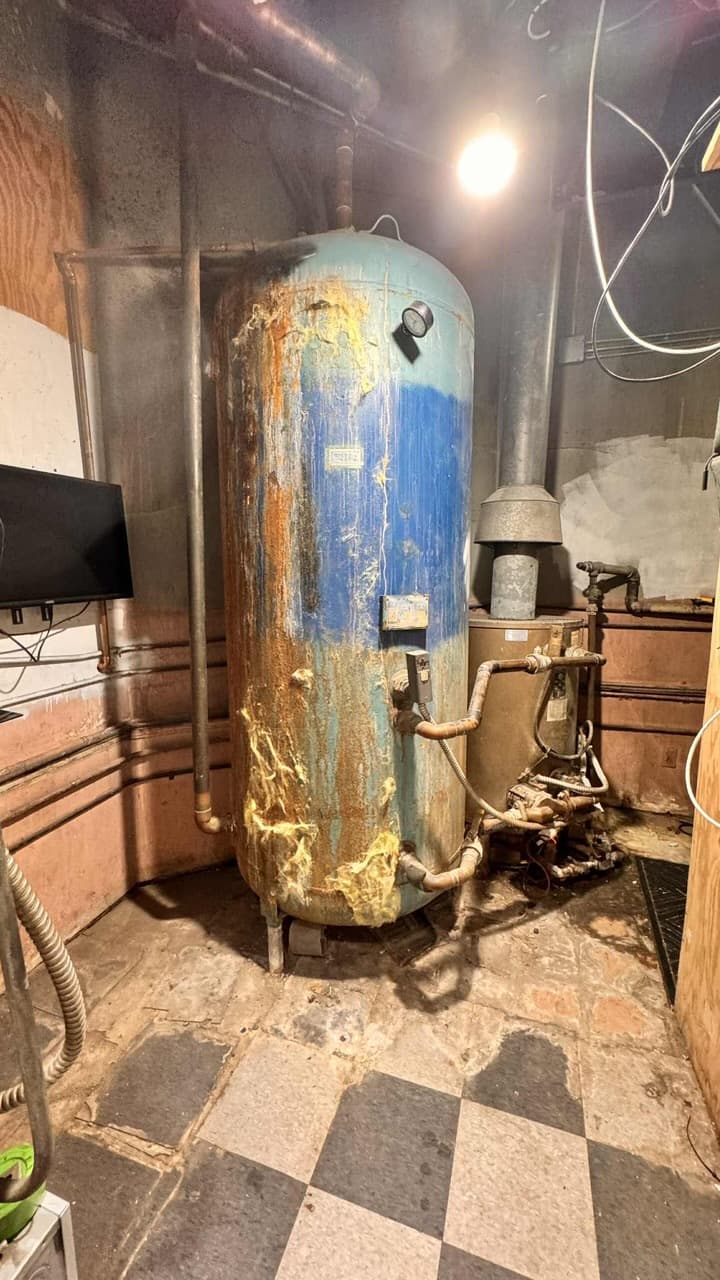
How commercial water heaters work plays out in Irvine
Hot water in Irvine is mostly a quiet utility until the morning it is not. Office towers along Von Karman and Michelson run a few commercial tank heaters or a small boiler-and-storage set for restrooms and break rooms. Medical office buildings around Sand Canyon and the Hoag and Kaiser campuses need reliable hot water at sinks and for instrument washers and sterilizer prep, with temperature records some clinic managers now keep as a matter of routine. Hotels near John Wayne Airport and restaurants at Spectrum have the real load: dish machines, laundry, and guest showers that peak in the same hour. Each of these settings fails differently, and an Irvine water heater call is usually a sizing or recirculation question wearing a repair request.
The water heater rooms in Irvine's 1990s and 2000s buildings are often small, interior, and shared with electrical gear, which constrains venting and combustion air for any gas replacement. Because the county sits inside South Coast AQMD, replacing a gas-fired commercial heater means checking the current low-NOx and ultra-low-NOx requirements for the size class, and increasingly it means a conversation about heat pump water heaters where the electrical service and the recovery time both allow it. We model demand from how the building actually runs: a restaurant's dish machine draw at close, a medical office's morning rush, a hotel's checkout window. Confirm current AQMD requirements for your equipment class before ordering anything, because the rules have been moving.
A good result is a system that recovers fast enough that nobody notices it, with recirculation that actually delivers hot water to the far restroom, and a service record for anodes, flushing, and venting that lives on the unit's tag. The commercial water heaters and boilers guide covers tank, tankless, and heat pump choices in more depth.
Irvine's climate and what it does to this equipment
Irvine sits in the central basin, warm in summer with moderate humidity and little salt exposure. Cooling hours are high and rooftop condensers work hard in September heat, so spring condenser cleaning and economizer checks pay off.
For the equipment background behind this page, read our water heaters and boilers guide or the full Commercial Water Heaters service page.
- Irvine Spectrum and Great ParkRetail, entertainment, restaurants, and newer office and medical development with heavy kitchen and refrigeration loads.
- Irvine Business Complex (near John Wayne Airport)Dense mid-rise office, flex, and light-industrial space, with older RTU populations and tight rooftop access.
- University and Technology corridorsR&D, lab-adjacent, and tech tenants where uptime and temperature control matter.
- Sand Canyon and Alton business parksMulti-building office and flex campuses with many near-identical rooftop units.
- Combustion/ignition or element checks with descaling
- Venting, gas/electrical, condensate, and expansion tank review
- Temperature set-points confirmed for safety and code
- DaVinci Portal: full service history and proof-of-work on file
What a commercial water heaters visit includes, and the problems we most often find
- Check current output against actual peak demand, not just spec-sheet capacity
- Inspect combustion/ignition or heating elements and descale as needed
- Confirm venting, gas/electrical, and condensate are code-correct
- Set and verify temperature set-points for safety and code compliance
- Document the visit — proof-of-work you can show for inspection
- Undersized units that were never sized to actual peak demand
- Scale buildup reducing efficiency and shortening element/heat-exchanger life
- Venting or gas line sizing that doesn't match the installed unit
- Aging tanks nearing end of service life with no replacement plan in place