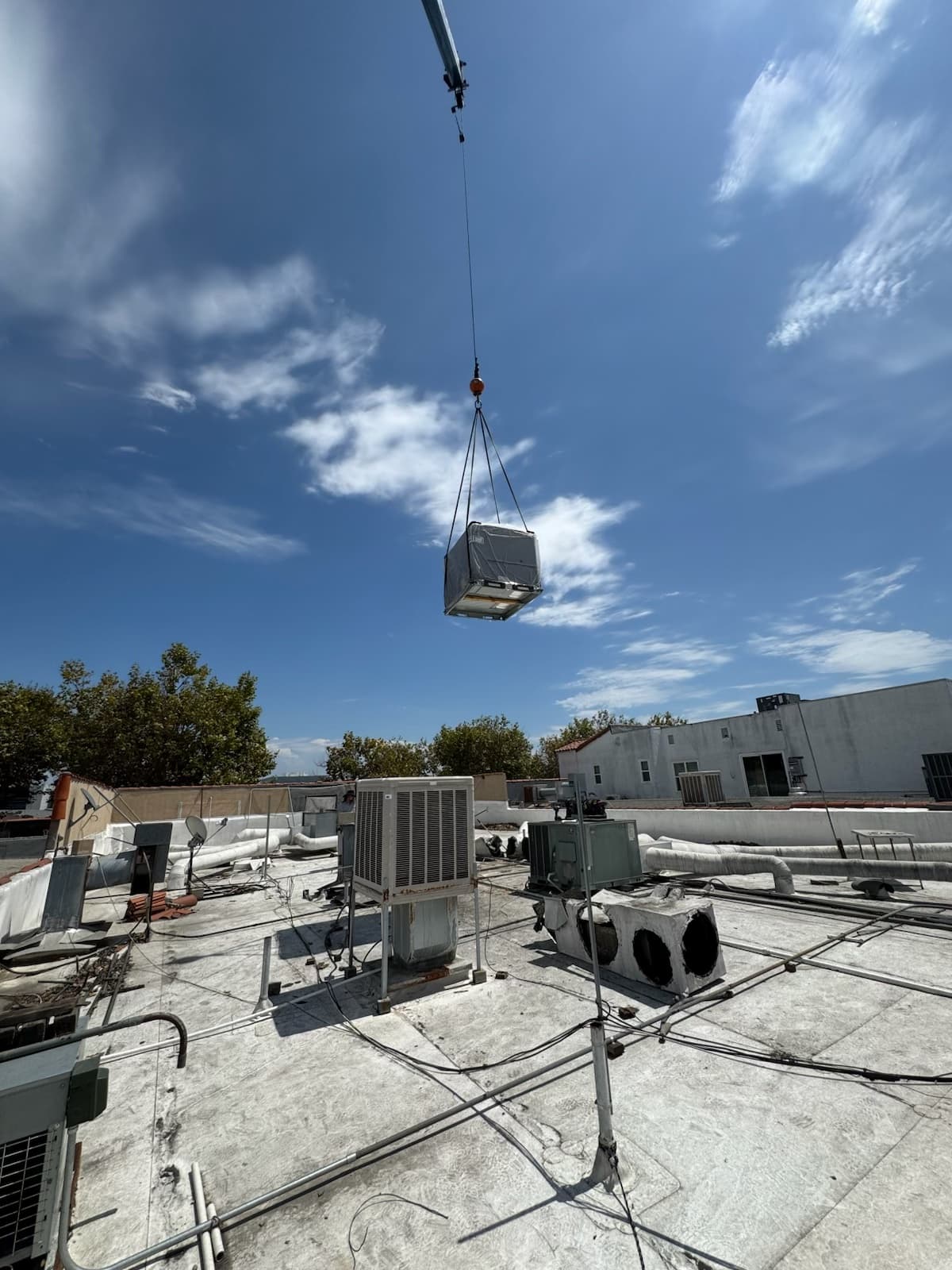
How VRF works, briefly
A VRF system connects one or more outdoor condensing units to many indoor units through shared refrigerant piping. Inverter-driven compressors vary their speed to match demand, and electronic expansion valves meter refrigerant to each indoor unit. Heat pump versions heat or cool; heat recovery versions can serve some zones in cooling and others in heating at the same time, moving energy between them through branch controllers.
Ductless mini-splits use the same principles at smaller scale, typically one outdoor unit serving one to a handful of indoor units. Conventional commercial splits pair a condensing unit with an air handler or furnace and duct system, and remain a good fit for many retail and office spaces.
Choosing the right system type
| System | Best fit | Tradeoffs |
|---|---|---|
| VRF heat pump | Multi-tenant offices, hotels, medical suites with many zones | More electronics; long piping needs careful design; refrigerant quantity limits apply |
| VRF heat recovery | Buildings with simultaneous heating and cooling demand | Added branch controllers and piping complexity |
| Multi-zone ductless | Small offices, add-on spaces, buildings without duct paths | Limited capacity per outdoor unit; indoor unit aesthetics |
| Single-zone ductless | Server rooms, MDF closets, standalone spaces | One zone per outdoor unit; redundancy planning needed for critical loads |
| Conventional commercial split | Retail, restaurants, offices with existing ductwork | Larger duct footprint; less zoning flexibility |
Some owners are better served by rooftop equipment. Our RTU guide covers that comparison honestly, and we will tell you when VRF is not the right call.
Refrigerant rules that shape VRF design
Because VRF systems carry large refrigerant charges through occupied buildings, safety standards limit how much refrigerant can be released into a space if a leak occurs. Designers must calculate charge against the smallest room volumes served. Refrigerant transitions under federal and California rules are also pushing the market toward lower global-warming-potential refrigerants, including mildly flammable A2L types in newer equipment. These products come with specific installation, ventilation, and detection requirements that differ from older systems.
We design and install to the manufacturer's current requirements and the applicable codes, certified technicians handle all refrigerant, and leak records are kept. Rules in this area change, so confirm current requirements; our refrigerant compliance guide tracks the basics.
How VRF and split systems fail
- Leaks at brazed joints, flare connections, or coil circuits: small leaks in long line sets can lose enough charge to degrade capacity before any alarm appears.
- Communication faults: a single damaged control wire between indoor units and the outdoor unit can disable zones or the whole system.
- Oil return problems: poor piping slopes, traps, or low load operation can starve the compressor.
- Condensate drainage: blocked drains and failed pumps cause ceiling leaks, one of the most common indoor unit complaints.
- Inverter board and fan motor failures: heat, power quality, and corrosion at coastal sites accelerate these.
- Airflow issues: dirty filters and coils drive capacity loss and freeze-ups.
A VRF fault code points to a subsystem, not a part. Reading the code, then verifying with refrigerant pressures, temperatures, and electronic expansion valve positions is what separates a repair from a guess.
Installation and commissioning that holds up
Most long-term VRF problems are born during installation. Piping that was not nitrogen-purged during brazing, line sets that were not pressure-tested and evacuated properly, and sloppy control wiring all show up as service calls years later. We treat the installation as a quality-controlled process:
- Piping design verified against manufacturer limits for length, elevation, and branch sizing.
- Brazing with nitrogen flow, followed by pressure and leak testing and deep evacuation to a recorded vacuum level.
- Charge calculated and documented, with additional refrigerant weighed in.
- Control wiring tested for polarity, shielding, and continuity, and each indoor unit addressed and labeled.
- Condensate drains pitched, tested, and given safeties where required.
- Start-up and commissioning per manufacturer procedure, with run-test results recorded.
Title 24 and permit requirements apply to these systems as to any HVAC replacement; see our Title 24 and permits guide.
Our approach versus the quick-fix approach
When a VRF system has a fault, the quick fix is to swap the board or the indoor unit that displayed the code. Sometimes that works. When the cause is a wiring fault, a leak, or an overloaded circuit, it does not, and the owner pays for the part twice.
We trace faults by reading controller history, measuring system conditions, and inspecting installation quality. Every unit is tagged in the DaVinci Portal with its model, serial, charge, and service history, so the building owns the information instead of the last contractor.
Keeping a VRF system healthy
Preventive maintenance on VRF focuses on filters, coils, drains, outdoor unit condition, electrical connections, control communication, and logged operating data. The goal is to catch slow refrigerant loss and failing fans early. We structure this as part of a commercial maintenance plan with a visit frequency suited to the building. Bid-level installs for public agencies or tenant improvements run through our bid project process, including prevailing wage and certified payroll where it applies.
Who this is for (and who it isn't)
VRF and commercial split work suits medical and dental offices, multi-tenant buildings, hospitality, schools and campuses, tenant improvement projects, and owners of IT or telecom rooms who need dedicated cooling. We also support engineers and general contractors on bid-level mechanical packages.
It is not for residential installs or for buyers shopping on the lowest equipment price with no interest in piping quality, commissioning, or documentation. If you manage commercial space and want a system that runs well for its full life, call (714) 594-9194.
What a typical visit looks like
- Review the system layout: outdoor units, branch controllers, and indoor units
- Read refrigerant-circuit data and communication status
- Inspect drains, filters, coils, and line sets
- Correct the fault and re-verify operation across zones
- Document the system layout and readings by unit
Problems we most often find
- Communication faults between indoor units, branch boxes, and outdoor units
- Condensate pumps and drains failing in ceiling cassettes
- Refrigerant leaks in long line sets and field joints
- Zones fighting each other because of control setup
FAQ
Do you service all VRF brands?
We service commercial VRF and ductless systems from the major manufacturers. Share the model and we will confirm.
Is VRF right for my building?
It suits buildings with varied zones and limited ceiling space. We help weigh VRF against rooftop and split options for the actual load and layout.
Can you add a ductless unit for a server room?
Yes. Dedicated ductless cooling for IT and equipment rooms is a common job.
VRF & Split System Service: where we work
Orange County is our home base. For larger commercial and public projects we also work across Los Angeles County, the Inland Empire, San Diego County, and Ventura County.