About Davinci Mechanical

Commercial HVAC & Refrigeration — straightforward and reliable

We keep businesses comfortable and open with clear communication, clean workmanship, and maintenance that prevents breakdowns. No gimmicks—just professional service you can count on.

UA Local 250 Member
PLA / Prevailing Wage Ready
Certified Payroll & Compliance
Licensed • Bonded • Insured
Time in field
• 15 years
Experience
15+ years commercial HVAC & refrigeration
Availability
Same-day diagnostics when possible

From technician to owner

After 15 years in the field, working rooftops, kitchens, and mechanical rooms across OC, Tom Walsh founded Davinci Mechanical to do the simple things exceptionally well: answer the phone, show up prepared, test before we touch, explain clearly, and fix what actually matters.

We focus on everyday commercial equipment—rooftop and split HVAC, walk-in/reach-in coolers, refrigeration systems, and commercial water heaters. No upsells. No jargon. Just clean work with photos and readings so you know what was done and why.

That mindset built a steady roster of restaurants, retail, offices, and schools who value reliability over hype. We’re small on purpose so quality never slips.
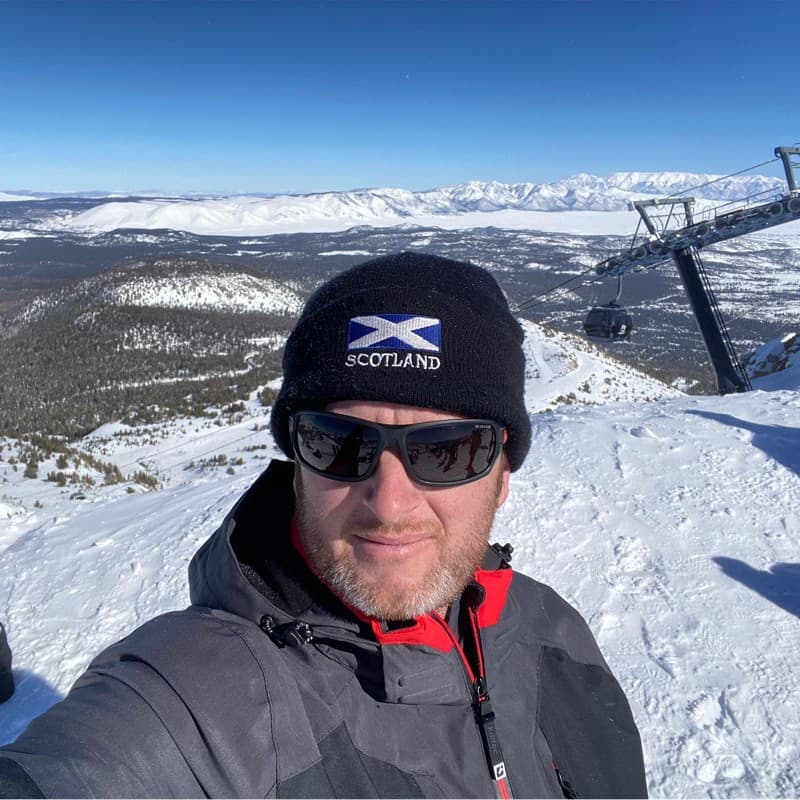
Tom Walsh — Founder of Davinci Mechanical

How we work

  • Test first: Accurate diagnostics beat trial-and-error every time.
  • Clean workmanship: Neat installs and repairs that hold up.
  • No pressure: Options explained in plain English, photos included.
  • Preventive mindset: Fix the cause, not just the symptom.

Who we serve

Restaurants, retail, offices, schools, and small warehouses across Orange County. We prioritize businesses that need steady temperature and hot water to stay open.

  • Commercial HVAC repair & change-outs
  • Walk-in/reach-in cooler & freezer service
  • Ice machine troubleshooting
  • Commercial water heater install & service
  • Emergency diagnostics (as available)
  • Quarterly / Bi-annual maintenance

Our maintenance philosophy

Most clients run quarterly or bi-annual PM. We focus on the tasks that actually prevent service calls: coil cleaning, belts & bearings, electrical checks, refrigerant readings, drain service, and box-temp verification on coolers. Every visit includes photos and notes so you can plan repairs—not guess.

Talk to Tom

Need commercial HVAC, refrigeration, cooler service, or a water heater quote? We’ll give you clear options and keep it simple.

The relationship to Scottish Tom's, and why a separate division exists

Davinci Mechanical is the commercial and union division of Scottish Tom's Heating & Air, an Orange County HVAC company. Scottish Tom's continues to serve its own customers. Davinci Mechanical exists because commercial and institutional work has demands that do not mix well with a general HVAC operation, and bolting a commercial crew onto a residential company tends to shortchange both sides.

Three pressures drove the split. First, labor. Public agencies, many general contractors and a growing number of private owners in Southern California require or strongly prefer union mechanical labor, and project labor agreements on larger projects make it a condition of bidding. Running union labor under UA Local 250 means a distinct set of agreements, payroll practices and training obligations that belong in their own entity. Second, compliance. Prevailing-wage work carries DIR registration, certified payroll and apprenticeship requirements that a residential operation never touches. Third, equipment. Walk-in refrigeration, chillers, kitchen make-up air and building automation are different trades from residential split systems, with different tools, parts and diagnostic habits. A division that does only commercial work can stock, train and schedule for that reality without compromise.

What the two companies share is ownership, an Orange County home base, and a way of working that favors testing over guessing. What they do not share is customers: Davinci Mechanical takes no residential work, and Scottish Tom's refers commercial and institutional inquiries here.

What UA Local 250 labor means for a facility manager in practice

Union affiliation is often presented as a political or cost question. For the person responsible for a building, it is mostly a question of who shows up and what they know. UA Local 250 is the United Association local covering refrigeration and air conditioning fitters in Southern California. Membership means a technician has come through, or is progressing through, a structured multi-year apprenticeship with classroom instruction and supervised field hours, followed by continuing education as refrigerants, controls and codes change.

  • Standardized skills. Brazing, refrigerant handling, electrical troubleshooting, controls and safety are taught to a common standard and tested, rather than learned piecemeal on customer equipment. On your roof, that shows up as consistent work across technicians instead of quality that depends on which truck arrived.
  • Certifications in order. EPA Section 608 refrigerant certification, OSHA safety training and manufacturer-specific training are part of the program. When an inspector, insurer or owner asks who touched the equipment and what they were qualified to do, there is a clean answer.
  • Apprenticeship ratios and PLA eligibility. Many public specifications and project labor agreements require apprentices from a state-approved program at defined ratios. Union labor meets that requirement by default, which is why a public owner can bid us without a labor compliance headache.
  • A labor pool for larger projects. A replacement package across a school district or a central plant project can need more fitters than any single company employs full time. The local's dispatch system supplies qualified labor for the duration, which is how a contractor of any size staffs a large project responsibly.
  • Predictable labor terms. Wage and benefit rates are set by agreement, so a multi-year maintenance contract or a long project does not carry hidden labor cost surprises.

For private owners who have never thought about union labor one way or the other, the practical takeaway is consistency: the same training, the same procedures, the same documentation on every visit.

Licensing and compliance posture

Davinci Mechanical holds California contractor license #1083101. You can verify it, including classification and bond status, on the Contractors State License Board website, and we encourage every owner to check any contractor the same way before signing anything. The how to choose a commercial HVAC contractor guide walks through what to look for.

For public and prevailing-wage work, the company is set up for the obligations that come with it. In general terms, that means Department of Industrial Relations public works contractor registration, payment of the applicable prevailing-wage determination for each craft, electronic certified payroll reporting, apprenticeship compliance, and the ability to sign and work under a project labor agreement where the owner or general contractor has one in place. Requirements vary by agency, funding source and project size, and they change over time, so confirm current rules for any specific project. The California prevailing wage guide covers the landscape in more depth.

On the equipment side, refrigerant work follows federal Section 608 requirements and California's refrigerant management rules, with recovery, leak repair and recordkeeping documented in the asset record. Replacement projects are permitted with the local jurisdiction and designed to meet Title 24 mechanical requirements, including the economizer, fan control and acceptance testing provisions that apply to commercial equipment. See the refrigerant compliance guide and the Title 24 and permits guide for the details an owner is most likely to be asked about.

Why this matters even on a small repair

A contractor who skips permits on a rooftop replacement or cannot produce refrigerant records exposes the building owner, not just themselves. Compliance posture is not a bid-work credential. It is the difference between a repair that closes cleanly and one that becomes a problem during a sale, an insurance claim or an inspection two years later.

How we diagnose: root cause versus parts swapping

The most common failure in commercial HVAC service is not a bad compressor. It is a technician replacing the component that stopped working without finding out what made it stop. The new part lives in the same conditions as the old one, and the owner pays for the same repair again a season later, often with a bigger component the second time. Davinci Mechanical was built around not doing that.

A worked example

Consider a common call: a packaged rooftop unit on a retail building is tripping its high-pressure switch on hot afternoons. The parts-swapping approach is to replace the switch, or to add refrigerant because the unit "must be low," and leave when it runs. Either move might get it through the afternoon.

The diagnostic approach starts by confirming the trip and taking readings: head pressure and condensing temperature against outdoor ambient, suction pressure and superheat, subcooling, compressor amperage against nameplate, condenser fan motor amperage and RPM, and airflow across the condenser coil. In a case like this the numbers typically point one of several directions. A condensing temperature far above ambient with normal subcooling suggests the condenser is not rejecting heat: a coil packed with cottonwood and dust, a fan motor running slow on a weak capacitor, or a fan blade installed backwards after a previous repair. High subcooling with high head pressure suggests the system was overcharged, often by the last contractor who topped it off. Normal condenser performance with a nuisance trip suggests the switch itself or its wiring.

Only after those readings does a repair make sense, because each cause has a different fix and a different cost. Cleaning a coil and replacing a capacitor is a small job. Recovering an overcharge and weighing in the correct charge is a different job. Replacing a switch that was never the problem is wasted money, and adding refrigerant to an already overcharged system makes the trips worse. After the repair, the same readings are taken again and recorded, so the fix is proven rather than assumed. The diagnostics and root cause guide goes into the method in detail, and the second opinion diagnostic applies it to quotes you have already received.

Documentation culture

Documentation at Davinci Mechanical is not a report produced after the fact for the customer. It is how the work is done. Readings are recorded as they are taken because the next diagnostic decision depends on them. Photos are taken of the failure and the repair because they are the evidence that the diagnosis was right. Model and serial numbers, refrigerant quantities, parts and recommendations are logged because the next technician on that unit, who may be the same person a year later, needs them.

The DaVinci Portal is the system that holds all of this. Each unit gets a QR tag tied to its record. Anyone with access can scan the tag and see the full history on a phone. The portal is included with service, because charging separately for documentation would create an incentive to skip it, and the documentation is the part that makes the service worth more than a cheaper call.

  • Health inspections for restaurants and food retail: temperature logs and refrigeration service records on demand.
  • Refrigerant compliance: quantities added and recovered, leak inspections and repairs, dated and tied to the specific appliance.
  • Capital planning: condition and repair history across a fleet so replacements are prioritized on data.
  • Public agency audits: service records that line up with invoices, certified payroll and the contract scope.
  • Property transactions and insurance: proof that equipment was maintained and that work was permitted and performed by licensed, certified people.

How we approach bids and larger projects

Service calls and maintenance programs are one side of the company. The other is project work: equipment replacement packages, mechanical scopes on tenant improvements and modernizations, central plant work, and on-call agreements with public agencies. The approach differs from service in pace and paperwork but not in principle.

  1. Read the documents fully before pricing. Drawings, specifications, addenda, the general conditions, the labor requirements and the schedule. A bid that misses a controls integration requirement or a crane logistics constraint is not a low bid; it is a change order waiting to happen.
  2. Walk the site. Roof structure and curb conditions, electrical capacity, gas supply, refrigerant piping routes, access for cranes and lifts, and how the building will keep operating during the work. Most surprises on mechanical projects are discoverable in a two-hour walk.
  3. Price the work that is actually there. Including Title 24 acceptance testing, permits, startup and commissioning, refrigerant management and documentation, with exclusions stated plainly so the owner can compare bids honestly.
  4. Staff for the schedule. Union dispatch allows crew size to match the project rather than stretching a fixed crew across a tight window.
  5. Close out completely. As-built records, startup and test data, warranty documents, operation and maintenance information, and every unit tagged and loaded into the DaVinci Portal so the owner's maintenance program starts with a full history on day one.

The bid projects page explains how to send a solicitation. The sectors pages describe how mechanical projects differ for school districts, colleges, hospitals, city and county buildings, airports, water utilities and other institutional owners, and the bid work pages cover individual public agencies across Southern California. For the mechanics of project delivery methods and bid structure, see the project delivery and bidding guide.

Where we work

The company is based in Orange County, and that is where routine service, emergency response and maintenance programs are concentrated. The service areas pages cover each city with notes on its commercial property mix and the climate exposure that shapes equipment life there, from salt air on the coast to late-summer heat inland.

For larger commercial, institutional and bid-level work, the footprint extends across Southern California: Los Angeles County, the Inland Empire, San Diego County and Ventura County. We do not maintain offices or yards in those regions, and we do not describe ourselves as a local emergency service vendor there. We do take on multi-site maintenance contracts, replacement packages, central plant projects and public-works contracts in those regions, where mobilization is planned rather than reactive. Larger projects elsewhere in the country are bid project by project.

What we will say no to

A contractor that never declines work is not making decisions about quality. These are the requests Davinci Mechanical turns down, and why.

  • Residential work of any kind. It belongs with Scottish Tom's or another residential company. Taking it would dilute the commercial focus that justifies a separate division.
  • Replacing a part without testing the diagnosis. If another contractor said the compressor is bad, we will verify it before replacing it. Sometimes it is. Sometimes it is a contactor, a capacitor or a control problem, and the compressor is fine.
  • Topping off refrigerant on a known leak as a long-term plan. Beyond the regulatory exposure, it is a poor use of money and it masks the actual condition of the equipment. We will find and repair the leak or lay out the replacement case honestly.
  • Unpermitted replacements. A rooftop unit, boiler or water heater replacement that requires a permit gets one. Owners sometimes ask to skip it to save time; the risk lands on the building, not on us, and we will not create that exposure.
  • Scopes stripped to the lowest number. When an owner asks us to remove commissioning, documentation or code-required items to match a cheaper bid, we will explain what is being removed and decline if the result would not be work we can stand behind.
  • Hood and duct cleaning. We service kitchen exhaust fans and make-up air units, but grease-duct cleaning is a separate specialty trade with its own certification, and we refer it out rather than pretend to it.

How to evaluate us against other contractors

Nothing on this page should be taken on faith. Every claim here is checkable, and the same checks apply to any contractor you are considering. The how to choose a commercial HVAC contractor guide is the long version; this is the short one.

Questions worth asking every bidder, including us
QuestionWhat a good answer looks like
Is your license active, and does its classification cover this work?A CSLB license number you can look up, with the right classification and current bond and workers' compensation on file.
Who will be on the roof, and how were they trained?A clear description of technician training and certification. For union contractors, the local and apprenticeship program. For others, specific manufacturer and EPA certifications.
How do you diagnose a failure before replacing a part?A description of the readings taken and how they lead to the repair, not a parts list. Ask for a sample service report with before-and-after data.
What documentation do I receive, and in what form?Readings, photos, refrigerant records and recommendations per unit, accessible to your team without calling the contractor. Ask to see the system.
Can you work prevailing wage and under a PLA?A specific answer about DIR registration, certified payroll and labor agreements. Vague confidence is a warning sign.
Where are you actually based, and what is your response geography?An honest answer about where routine service is realistic and where only project work makes sense. Beware a contractor who claims local emergency coverage everywhere.
Will you tell me when a repair is not worth making?Examples of recommending against a repair the contractor would have been paid to make. Our second opinion diagnostic is designed around this.

If you want to start with something small, the second opinion diagnostic is the lowest-commitment way to see how we work: we test the equipment, show you the readings and tell you whether the quote in your hand is justified. If you want to talk first, call (714) 594-9194 or use the contact page. For common questions, the FAQ covers scheduling, access, documentation and scope.

More questions, answered

Is Davinci Mechanical a separate company from Scottish Tom's Heating & Air?
Davinci Mechanical is the commercial and union division of Scottish Tom's Heating & Air. The division exists because commercial, institutional and prevailing-wage work carries labor agreements, compliance obligations and equipment specialties that do not fit inside a general HVAC operation. Davinci Mechanical handles only commercial and institutional work, with UA Local 250 labor, under California contractor license #1083101. Residential inquiries are referred to Scottish Tom's.
Does using a union contractor change how my service call is handled?
For a private owner the experience is the same as any commercial service call, with the benefit that every technician has come through a structured apprenticeship and ongoing training program with standardized certifications. The difference is most visible on larger projects and public work, where union labor satisfies apprenticeship ratios, project labor agreements and prevailing-wage requirements without a separate crew or a compliance scramble.
How can I verify your license and compliance claims?
Look up license #1083101 on the Contractors State License Board website to confirm status, classification, bond and workers' compensation. For public works, the Department of Industrial Relations maintains a searchable registry of registered public works contractors. Certified payroll is reported electronically on covered projects and is available to the awarding body. We would rather you check than take our word for it, and we recommend the same checks on every contractor you consider.
What does root-cause diagnosis mean on a real service call?
It means measuring the system before touching it: pressures, temperatures, superheat and subcooling, amperage, airflow and control signals. Those readings identify why a component failed, not just that it failed. A compressor that died from a dirty condenser coil or a slow fan motor will die again if only the compressor is replaced. Correcting the underlying condition, then re-measuring to prove the fix, is the whole method. The about page above walks through a high-pressure trip as a worked example.
Do you take on work outside Orange County?
Yes, for larger commercial, institutional and bid-level projects and multi-site contracts across Los Angeles County, the Inland Empire, San Diego County and Ventura County, and on a project-by-project basis nationwide. Routine service and emergency response are concentrated in Orange County, where the company is based. We do not have offices elsewhere and say so plainly, because response geography is something a facility manager should know before signing a service agreement.
What kinds of work do you decline?
Residential work, replacing parts without verifying the diagnosis, topping off refrigerant on known leaks as a long-term fix, unpermitted replacements, scopes stripped of commissioning or code-required items to match a cheaper bid, and grease hood and duct cleaning, which is a separate certified trade. Declining these is part of how the company keeps its work consistent and keeps owners out of avoidable exposure.