Commercial Water Heaters in City of Industry, CA
In Industry buildings, hot water supports restrooms, break rooms, wash-down stations and, in food plants, sanitation cycles that can drive big recovery demands. Hard water means scale in tanks and heat exchangers, so inspection and flushing matter, and mixing valves and recirculation pumps wear quickly. In the resort and hospitality properties, guest and kitchen demands overlap. We size replacements to real demand, review venting and gas capacity in mechanical rooms, and coordinate with plant sanitation schedules so hot water is never offline when a shift needs it.
One of the largest warehouse, distribution and manufacturing concentrations in the San Gabriel Valley, with food processing, rail corridors and punishing inland summer heat.
How commercial water heaters work plays out in City of Industry
Hot water in a City of Industry food plant is a production utility. Sanitation at the end of each shift needs large volumes at a specified temperature within a fixed window, and wash-down stations, CIP systems and hand sinks all draw at once. A heater that cannot recover between cycles delays the next shift's start, which is why plants here often run a dedicated boiler or a bank of storage heaters with recirculation rather than a single tank. In the distribution buildings the load is restrooms and break rooms, and in the Industry Hills resort and conference properties it is guest rooms, kitchens and banquet service stacked on top of each other.
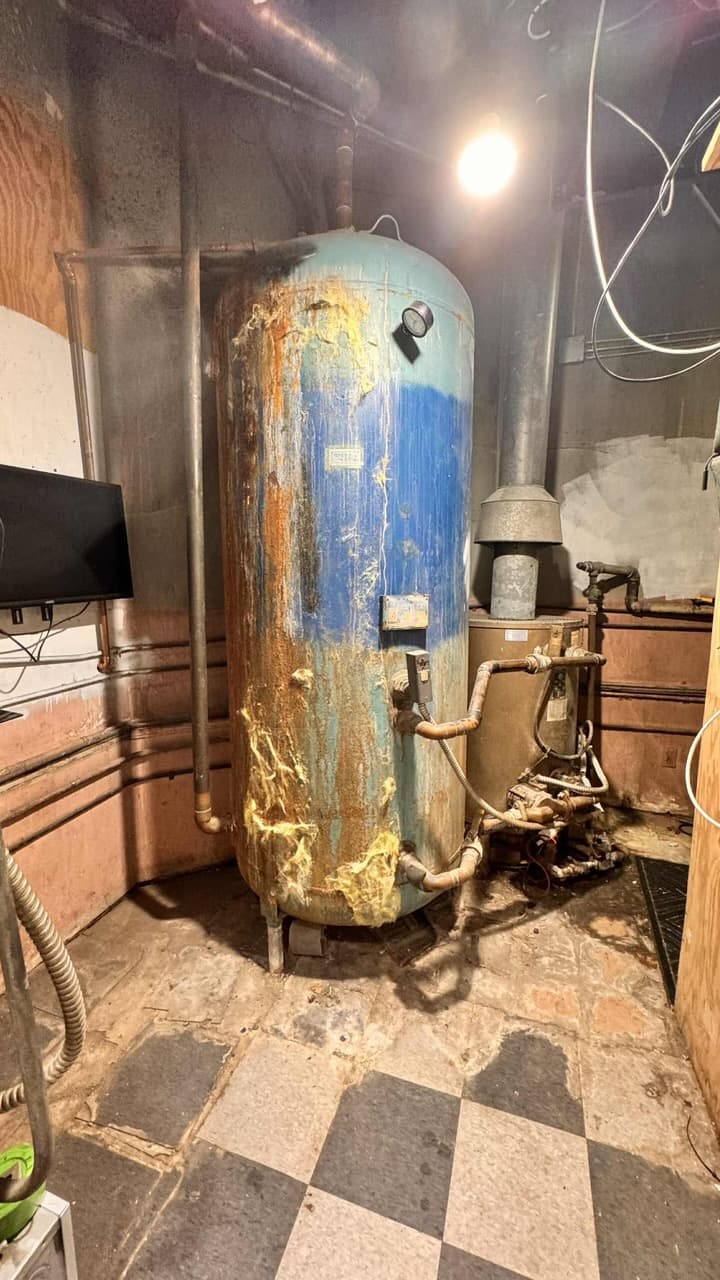
Hard water is the common thread. Scale accumulates in tanks, on heat exchangers in tankless units and inside recirculation pumps and mixing valves, reducing output and shortening life. We flush and inspect, check anode condition in tanks, verify gas pressure and venting in mechanical rooms that have often been partitioned by tenant improvements, and confirm seismic strapping and expansion control that inspectors expect. Many complaints about inconsistent temperature trace to a failed mixing valve or a dead recirculation pump rather than the heater.
Replacements are sized to the real pattern of demand. A plant's sanitation peak is best served by storage with strong recovery and a verified gas supply, while a hospitality property benefits from staged capacity that follows occupancy. We coordinate installation with the plant's sanitation schedule or the hotel's event calendar so hot water is never offline when it is needed. The commercial water heaters and boilers guide walks through sizing and venting in more detail.
City of Industry's climate and what it does to this equipment
City of Industry sits in the San Gabriel Valley, well inland, and summer afternoons regularly push past 95 degrees with stretches of triple digits. Large dark roofs soak up that heat, so rooftop units work against extreme ambient conditions plus radiant load from the roof surface. Low humidity makes evaporative approaches effective but also puts a premium on clean condensers, since dusty air from rail yards and truck traffic builds up fast on coils. Santa Ana wind events add debris and static pressure problems, and winter nights are mild enough that heating loads stay light.
For the equipment background behind this page, read our water heaters and boilers guide or the full Commercial Water Heaters service page.
- Valley Boulevard and Azusa Avenue distribution corridorLarge tilt-up warehouses with long rooftop unit rows, dock offices and multi-shift operations.
- Gale Avenue and Nelson Avenue manufacturing and food-processing blocksPlants with process refrigeration, sanitation hot water and make-up air demands that change with production.
- Puente Hills Mall and Fullerton Road retailAnchor and strip retail with restaurants, older packaged equipment and shared roof infrastructure.
- Industry Hills hospitality and business park areaResort, event and office properties with hot water loads, chilled-water or large packaged systems and seasonal event peaks.
- Combustion/ignition or element checks with descaling
- Venting, gas/electrical, condensate, and expansion tank review
- Temperature set-points confirmed for safety and code
- DaVinci Portal: full service history and proof-of-work on file
What a commercial water heaters visit includes, and the problems we most often find
- Check current output against actual peak demand, not just spec-sheet capacity
- Inspect combustion/ignition or heating elements and descale as needed
- Confirm venting, gas/electrical, and condensate are code-correct
- Set and verify temperature set-points for safety and code compliance
- Document the visit — proof-of-work you can show for inspection
- Undersized units that were never sized to actual peak demand
- Scale buildup reducing efficiency and shortening element/heat-exchanger life
- Venting or gas line sizing that doesn't match the installed unit
- Aging tanks nearing end of service life with no replacement plan in place