Commercial Water Heaters in Escondido, CA
Escondido's hospital and medical offices require hot water that is reliable and well controlled, while restaurants, car washes and service operations need strong recovery under heavy use. Hard water in the region can build scale in tanks and heat exchangers. We install and service tank and tankless equipment, check venting, gas supply and mixing, and plan routine flushing and inspection.
An inland North County city with a downtown core, auto-dealer and big-box corridors, a major hospital campus, and agriculture and food-related light industrial space exposed to real valley heat.
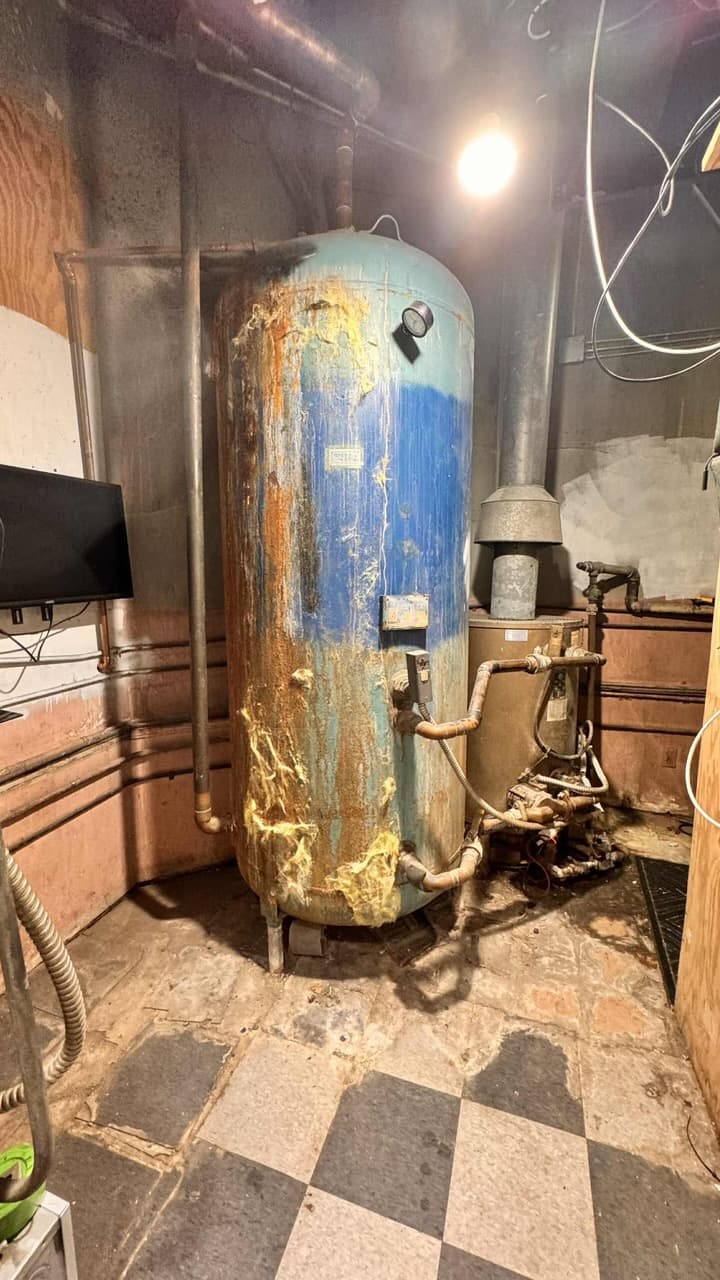
How commercial water heaters work plays out in Escondido
Hot water in Escondido has a mineral problem. Inland North County water carries enough hardness in many areas to scale tank bottoms, tankless heat exchangers and recirculation lines noticeably faster than coastal buildings experience. Restaurants downtown and along East Valley Parkway, car washes and dealership service departments, and the food-related light-industrial buildings all see it as rising gas use, longer recovery and eventually a heater that fails early. Scale control through filtration, treatment or a disciplined flushing and descaling schedule is the first conversation on almost every water heating job here.
The hospital-adjacent medical offices on the west side of the city and the clinics scattered along the corridors need temperature control more than volume. Mixing valves, recirculation that actually reaches the far fixtures and documented temperature checks are the deliverables, and the equipment itself is often a modest tank or tankless unit that simply has to be reliable. For those buildings we focus on the control side and the record, because the question that eventually gets asked is whether anyone can prove the water was held at the right temperature.
Replacement decisions in Escondido run through the same logic as everywhere else, with one local twist: the mechanical room is often hot. A tankless bank or a tank in an unventilated closet behind a kitchen in August works in air that is far above design, which affects combustion and component life. We check venting, combustion air, gas supply and location along with sizing and recovery. Tank, tankless and hybrid options are covered in the water heaters and boilers guide.
Escondido's climate and what it does to this equipment
Escondido's inland valley setting produces hot, dry summers, with afternoon temperatures that regularly run well above coastal levels and long cooling seasons stretching from late spring into fall. The marine layer reaches the valley only weakly, so humidity is low most of the year, and dust and agricultural debris load coils and filters quickly. Santa Ana wind events can add intense, dry heat in autumn. Rooftop units, condensers and refrigeration systems here run harder and longer than their coastal counterparts, which makes capacity margins, clean coils and healthy electrical components central to reliability.
For the equipment background behind this page, read our water heaters and boilers guide or the full Commercial Water Heaters service page.
- Downtown EscondidoRestaurants, civic and arts buildings, and older commercial blocks with mixed rooftop equipment and renovation history.
- Auto-dealer and big-box corridorsLarge flat-roofed showrooms, service buildings and retail centers whose rooftop units run long hours through valley heat.
- Hospital and medical districtA major hospital campus with surrounding medical offices that require continuous cooling, hot water and documented maintenance.
- Agricultural and light-industrial areasFood-related light industrial, packing and storage buildings, and warehouses where refrigeration and temperature-controlled space matter.
- Combustion/ignition or element checks with descaling
- Venting, gas/electrical, condensate, and expansion tank review
- Temperature set-points confirmed for safety and code
- DaVinci Portal: full service history and proof-of-work on file
What a commercial water heaters visit includes, and the problems we most often find
- Check current output against actual peak demand, not just spec-sheet capacity
- Inspect combustion/ignition or heating elements and descale as needed
- Confirm venting, gas/electrical, and condensate are code-correct
- Set and verify temperature set-points for safety and code compliance
- Document the visit — proof-of-work you can show for inspection
- Undersized units that were never sized to actual peak demand
- Scale buildup reducing efficiency and shortening element/heat-exchanger life
- Venting or gas line sizing that doesn't match the installed unit
- Aging tanks nearing end of service life with no replacement plan in place