Commercial Water Heaters in Temecula, CA
Temecula hospitality settings need hot water that recovers fast during dishwashing peaks and event cleanup, and hard water makes that harder over time. Sediment insulates burners and heat exchangers and shortens tank life. We check recovery against kitchen demand, inspect venting and combustion, and consider booster heaters for dish machines where sanitizing temperatures are a concern. Tankless is evaluated case by case, with an eye on scale control and maintenance access.
A hospitality-driven valley city where wine-country restaurants, Old Town dining, a growing medical sector, and business parks all depend on dependable cooling in summer heat and wind.
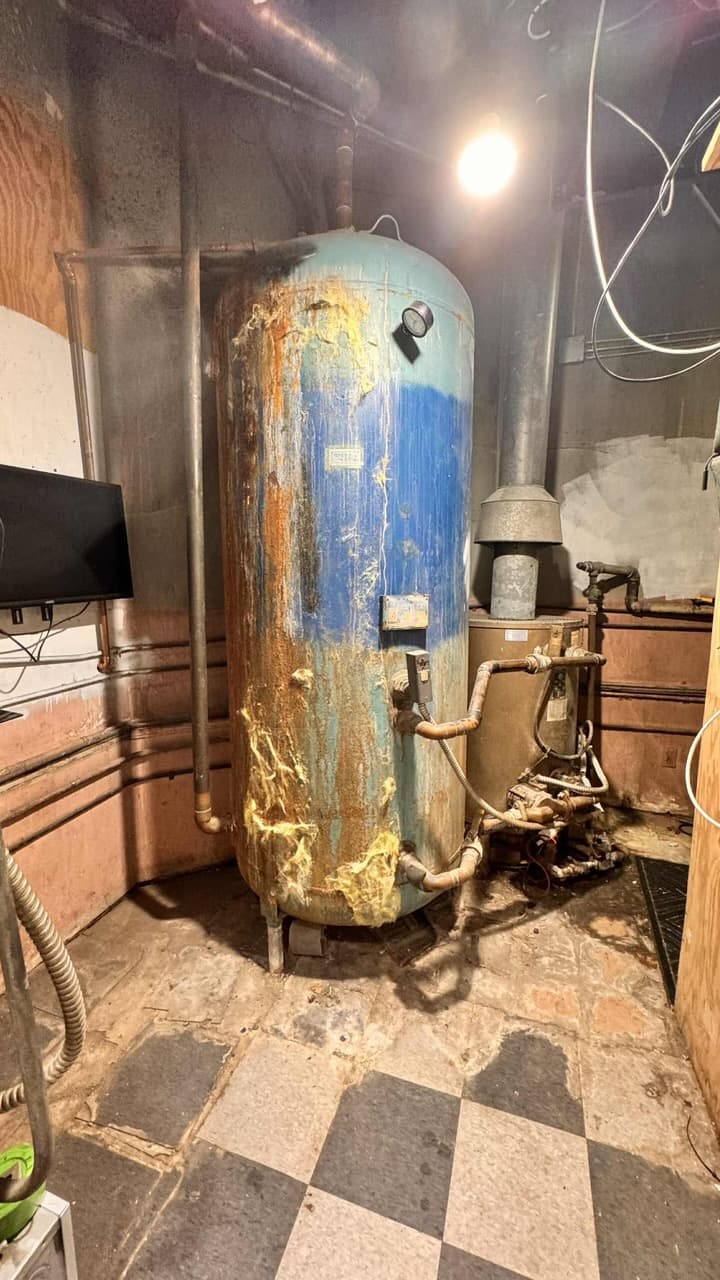
How commercial water heaters work plays out in Temecula
Hot water in Temecula is a hospitality and healthcare story more than an industrial one. Event venues and wine country restaurants run dish machines hard during turnover between courses and then again at closing, and a water heater that cannot recover between those bursts leaves the dish machine short of sanitizing temperature when it matters most. Resorts and hotel properties add laundry and guest-room loads on top of kitchen demand. Clinics and surgery centers around Temecula Valley Hospital need stable, tempered water at the fixtures and dependable supply for instrument processing.
Hard water is the common enemy. Sediment and scale settle in tank-type heaters and insulate the burner from the water, which raises flue temperature, lengthens recovery, and shortens tank life. In tankless units, scale narrows the heat exchanger passages until flow drops and error codes start. We find a lot of Temecula heaters that have never been flushed, often because the heater is tucked into a closet or a mezzanine that nobody visits until it leaks. Older Old Town buildings add venting and gas supply constraints that limit what can be installed as a replacement without opening walls.
Our approach begins with demand: how many dish cycles, how many fixtures, how much laundry, and when. We inspect anodes, flues, relief valves, and mixing valves, flush sediment where the tank can tolerate it, and check recirculation loops that have lost balance. For dish machines struggling to reach sanitizing temperature, a booster heater at the machine often solves the problem without replacing the main heater. Where tankless makes sense, we pair it with scale control and confirm there is service access. Details on sizing and replacement are in the water heaters and boilers guide.
Temecula's climate and what it does to this equipment
Temecula sits farther from the coast than most of Southern California's urban areas but still catches a marine layer that funnels through the Rainbow Gap, so evenings can cool noticeably after very hot days. The wide daily temperature swing is hard on equipment because it stresses controls, economizers, and refrigerant systems differently from a steady climate. Summer afternoons are hot and dry, with gusty winds that carry dust from vineyards and construction sites into coils and intakes. Wildfire smoke from inland hills and the surrounding region can load filters, and fall Santa Ana conditions add heat and debris at the end of the cooling season.
For the equipment background behind this page, read our water heaters and boilers guide or the full Commercial Water Heaters service page.
- Old Town TemeculaFront Street restaurants, boutiques, and event spaces in older buildings, usually with compact rooftop or split equipment and limited access.
- Wine country and Rancho California RoadTasting rooms, resorts, event venues, and restaurants with seasonal peaks and walk-in storage that supports food and beverage programs.
- Temecula Valley Hospital and medical districtClinics, imaging centers, and specialty offices near the hospital campus with strict temperature and air quality expectations.
- Winchester Road and Ynez corridor business parksRetail centers, offices, and light industrial space with multi-tenant rooftop systems along the main commercial arteries.
- Combustion/ignition or element checks with descaling
- Venting, gas/electrical, condensate, and expansion tank review
- Temperature set-points confirmed for safety and code
- DaVinci Portal: full service history and proof-of-work on file
What a commercial water heaters visit includes, and the problems we most often find
- Check current output against actual peak demand, not just spec-sheet capacity
- Inspect combustion/ignition or heating elements and descale as needed
- Confirm venting, gas/electrical, and condensate are code-correct
- Set and verify temperature set-points for safety and code compliance
- Document the visit — proof-of-work you can show for inspection
- Undersized units that were never sized to actual peak demand
- Scale buildup reducing efficiency and shortening element/heat-exchanger life
- Venting or gas line sizing that doesn't match the installed unit
- Aging tanks nearing end of service life with no replacement plan in place
Commercial Water Heaters in Temecula: questions we get
Our venue's dish machine fails its temperature check at the end of large events. Do we need a bigger water heater?
Not necessarily. End-of-event dish loads are a recovery problem, and the first things we check are the heater's actual recovery rate against the dish machine's draw, the condition of the tank, and whether sediment has cut into performance. A booster heater at the dish machine frequently solves the sanitizing temperature issue at far lower cost and disruption than a larger main heater. If the main heater is also near the end of its life, we size the replacement around the measured peak rather than a rule of thumb.
Is tankless a good fit for a Temecula restaurant given the hard water here?
It can be, with conditions. Tankless units deliver strong recovery in a small footprint, which helps in tight Old Town kitchens, but scale from hard water will foul the heat exchanger quickly without a scale inhibitor or softener and a descaling schedule. Gas supply and venting also have to support the higher instantaneous input. We evaluate each case on the water, the gas service, and whether anyone will realistically keep up with the maintenance before recommending it.
Tank or tankless — which is right for a commercial site?
It depends on peak demand and available gas/electrical service. We'll size the recommendation to your actual usage, not just replace like-for-like.
Do you handle code-required inspections?
Yes — venting, gas line, and combustion work is documented to pass inspection, and we coordinate with your building department when needed.
Other services in Temecula
Commercial Water Heaters nearby in Inland Empire (Riverside & San Bernardino Counties)
Commercial HVAC and refrigeration across Inland Empire (Riverside & San Bernardino Counties)