Commercial Water Heaters in Chino, CA
Food plants in Chino lean on hot water for sanitation, washdown, and employee facilities, and demand is both heavy and time-sensitive. Restaurants and medical offices on the city's retail corridors have their own needs. We evaluate sizing and recovery against actual use, inspect venting and combustion, treat scale, and consider booster heaters or dedicated equipment where sanitizing temperatures are required. Replacements are scheduled to avoid disrupting production.
A food processing, manufacturing, and former dairy-region industrial city with an airport-area business cluster, Chino Spectrum retail, and heavy refrigeration demand.
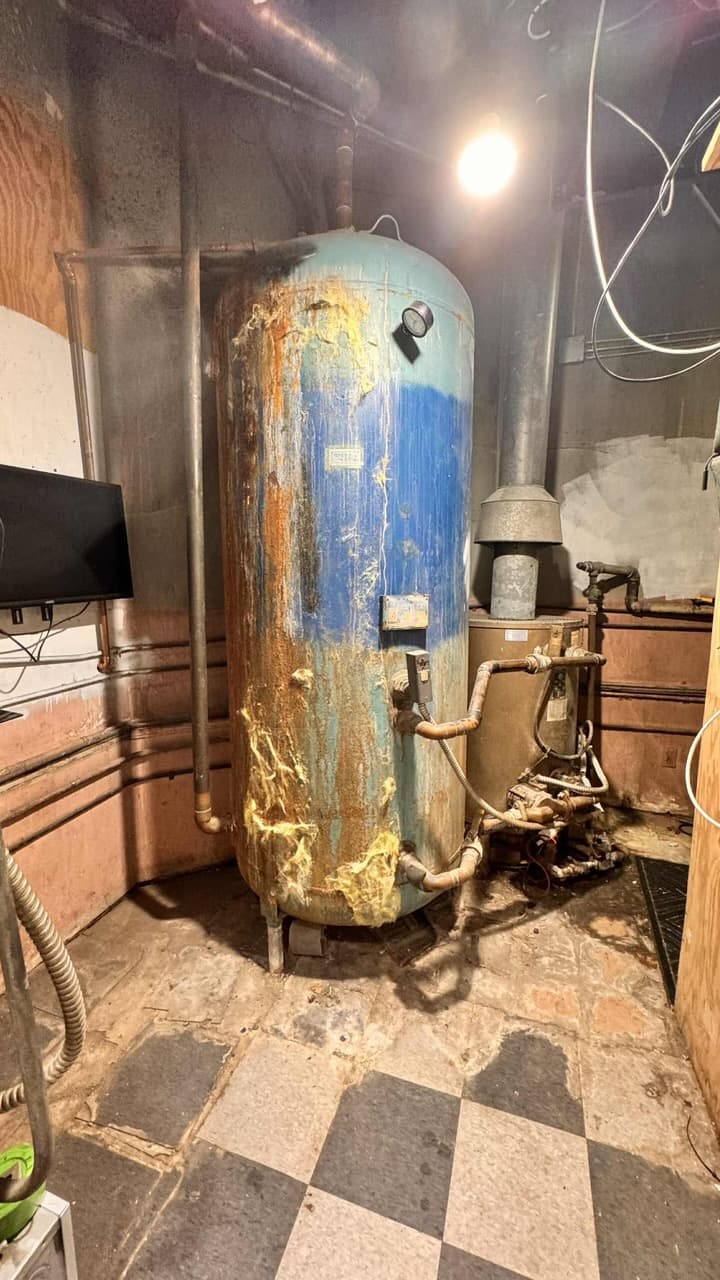
How commercial water heaters work plays out in Chino
Hot water in a Chino food plant is a production utility, not a convenience. Sanitation crews need high volumes at sanitizing temperature during the washdown window, typically at the end of a shift, and the system has to recover fast enough to be ready for the next one. Hand-wash stations, boot washes, and employee facilities draw throughout the day. When a tank or a heat exchanger is scaling in this valley's hard water, recovery slows, the sanitation window stretches, and the production schedule absorbs the delay. We size and evaluate hot water systems in these buildings against the actual washdown demand curve, not an occupancy table.
Restaurants at Chino Spectrum and along Central Avenue need dish machine temperatures that pass health inspection during a rush, which often means a booster heater in addition to the main system. Medical and dental offices near the Chino Hills border need stable, mixed-down temperatures at the tap with recirculation that keeps wait times short. Each is a different sizing and control problem, and a like-for-like replacement of whatever was there is rarely the right answer.
On every hot water assessment we inspect venting and combustion, flush sediment, check anodes, and test mixing valves. Tankless systems can serve steady-demand applications well, but hard water means they need treatment and descaling to survive, and we recommend them only where the maintenance will actually happen. Replacements at plants are scheduled around production and sanitation windows so neither is interrupted.
Chino's climate and what it does to this equipment
Chino's flat terrain and open surroundings make it hot, breezy, and dusty. Summer highs are intense, Santa Ana winds blow through with little obstruction, and remaining agricultural land and busy industrial sites contribute dust to the air. Dairy and agricultural operations also add ammonia and organic particulate that can foul coils and filters faster than in a typical commercial area, and regional smog and wildfire smoke add more. For food processing and cold storage, hot afternoons coincide with peak production, so refrigeration condensers must hold performance exactly when the load is greatest.
For the equipment background behind this page, read our water heaters and boilers guide or the full Commercial Water Heaters service page.
- Former dairy-region industrial areaFood processing, cold storage, manufacturing, and distribution buildings in the south and southeast, with large refrigeration and rooftop loads.
- Chino Spectrum and Ontario borderBig-box retail, restaurants, and entertainment with dense rooftop equipment and extended operating hours.
- Chino Airport and Merrill Avenue areaAviation-related users, light industrial tenants, and business space with wide-open exposure to wind.
- Downtown Chino and Chino Hills borderOlder storefronts, restaurants, medical offices, and community retail along the central corridors and at the city's northern edge.
- Combustion/ignition or element checks with descaling
- Venting, gas/electrical, condensate, and expansion tank review
- Temperature set-points confirmed for safety and code
- DaVinci Portal: full service history and proof-of-work on file
What a commercial water heaters visit includes, and the problems we most often find
- Check current output against actual peak demand, not just spec-sheet capacity
- Inspect combustion/ignition or heating elements and descale as needed
- Confirm venting, gas/electrical, and condensate are code-correct
- Set and verify temperature set-points for safety and code compliance
- Document the visit — proof-of-work you can show for inspection
- Undersized units that were never sized to actual peak demand
- Scale buildup reducing efficiency and shortening element/heat-exchanger life
- Venting or gas line sizing that doesn't match the installed unit
- Aging tanks nearing end of service life with no replacement plan in place
Commercial Water Heaters in Chino: questions we get
Our Chino plant's sanitation crew runs out of hot water before washdown is finished. Is the heater too small?
Do we need a booster heater for the dish machine at our Chino restaurant?
Tank or tankless — which is right for a commercial site?
Do you handle code-required inspections?
Other services in Chino
Commercial Water Heaters nearby in Inland Empire (Riverside & San Bernardino Counties)
Commercial HVAC and refrigeration across Inland Empire (Riverside & San Bernardino Counties)