Commercial Water Heaters in Newport Beach, CA
Hot water in Newport Beach has a few demanding customers: hotel guest floors, medical suites with sterile-processing sinks, and restaurants that run dish machines through a long dinner shift. Tank life on the coast is shortened by humid mechanical rooms and corroded vent connections, so we inspect flue joints, anodes, relief piping, and mixing valves as well as burners. Replacements are planned around low-emission requirements and the building's shutdown rules, with recirculation balanced afterward. You receive the new unit's data, startup combustion readings, and a recorded setpoint for each system.
Class-A office towers, medical office, and upscale retail/restaurant tenants that expect clean, quiet, documented service.
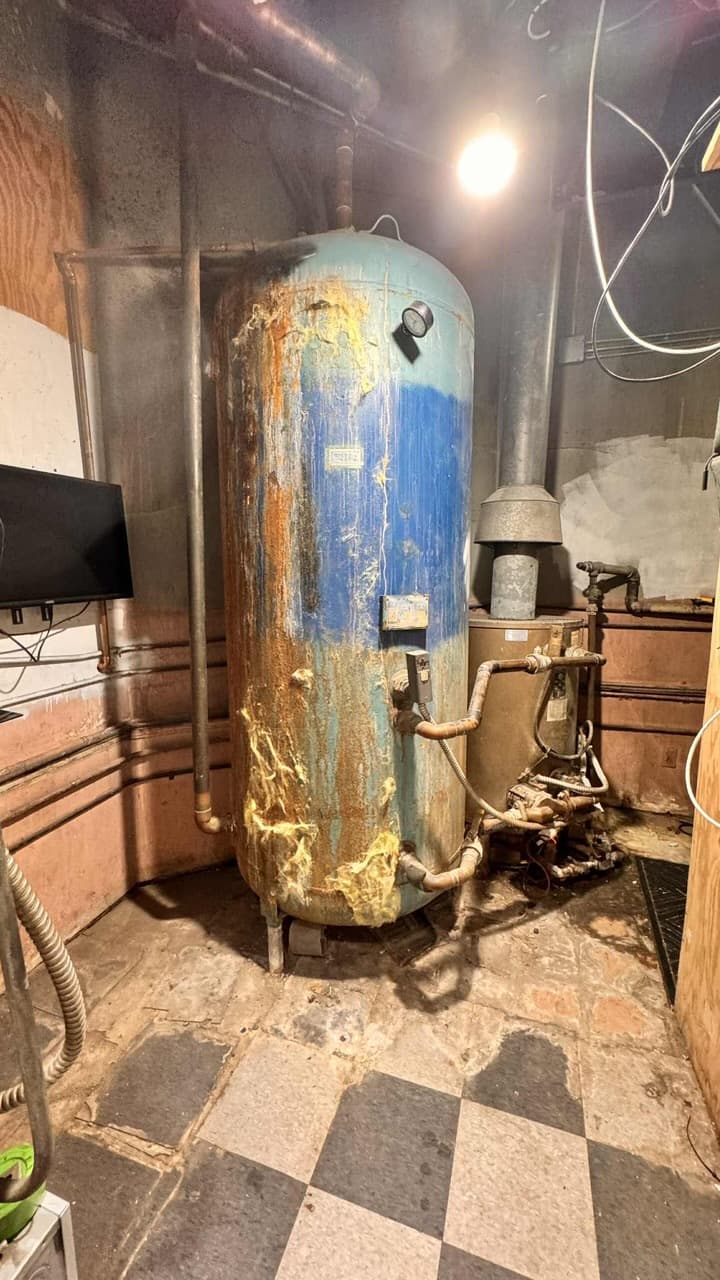
How commercial water heaters work plays out in Newport Beach
Hot water in Newport Beach is a hospitality problem first. Resorts and hotels from the Newport Coast to the harbor run laundry, banquet dishwashing, spa facilities, and hundreds of guest rooms off central plants or banks of commercial heaters with recirculation loops, and a lukewarm shower complaint reaches the general manager fast. Restaurants on the peninsula and along Mariners Mile often have a single commercial tank or a tankless bank squeezed into a closet, with no redundancy and no room to grow. Medical buildings around Hoag and Superior Avenue need tempered water at fixtures and reliable supply for sterilization and cleaning.
Coastal conditions add their own wear. Flue terminations and outdoor tankless units corrode in the salt air, and venting that was marginal when new can become a combustion-safety issue as it deteriorates. Mixing valves scale and drift, which matters anywhere but especially where regulators expect documented fixture temperatures. We check every valve against a thermometer, inspect venting end to end, and look at the condition of the anode and the tank before we assume a heater has years left.
Replacements in this city are also an emissions-rules question. Air district rules for gas water heaters have been tightening and the timeline for what can be installed is subject to change, so we confirm current requirements for each project and lay out gas, heat-pump, and tankless options with their trade-offs in venting, electrical capacity, and recovery rate. The hot-water guide covers the sizing logic in detail; the hotels and resorts sector page covers the hospitality specifics.
Newport Beach's climate and what it does to this equipment
Newport Beach is directly coastal: marine layer, humidity, and salt. Coated coils and routine rinsing are not optional; they decide whether a rooftop unit lasts 10 years or 18.
For the equipment background behind this page, read our water heaters and boilers guide or the full Commercial Water Heaters service page.
- Newport Center and Fashion IslandHigh-rise office, retail, and dining with building-engineer oversight.
- Airport area (near John Wayne Airport)Mid-rise offices and professional tenants.
- Balboa Peninsula and harbor-frontRestaurants and hospitality in direct salt-air exposure.
- Mariners Mile and Corona del MarRetail, medical, and professional offices near the coast.
- Combustion/ignition or element checks with descaling
- Venting, gas/electrical, condensate, and expansion tank review
- Temperature set-points confirmed for safety and code
- DaVinci Portal: full service history and proof-of-work on file
What a commercial water heaters visit includes, and the problems we most often find
- Check current output against actual peak demand, not just spec-sheet capacity
- Inspect combustion/ignition or heating elements and descale as needed
- Confirm venting, gas/electrical, and condensate are code-correct
- Set and verify temperature set-points for safety and code compliance
- Document the visit — proof-of-work you can show for inspection
- Undersized units that were never sized to actual peak demand
- Scale buildup reducing efficiency and shortening element/heat-exchanger life
- Venting or gas line sizing that doesn't match the installed unit
- Aging tanks nearing end of service life with no replacement plan in place