Commercial Water Heaters in Ontario, CA
Distribution center break rooms and restrooms, hotel guest and laundry loads, and food service kitchens near the Convention Center make up Ontario's hot water demand. Hotels in particular need recovery, recirculation, and mixing valve performance that hold up under peak occupancy. We evaluate sizing, venting, and sediment condition, and for food operations we look at booster heaters for sanitizing temperatures. Replacements are scheduled around guest and operating hours.
Built around Ontario International Airport, enormous distribution and cold-storage buildings, Ontario Mills, and the Convention Center district, with Santa Ana wind and extreme heat exposure.
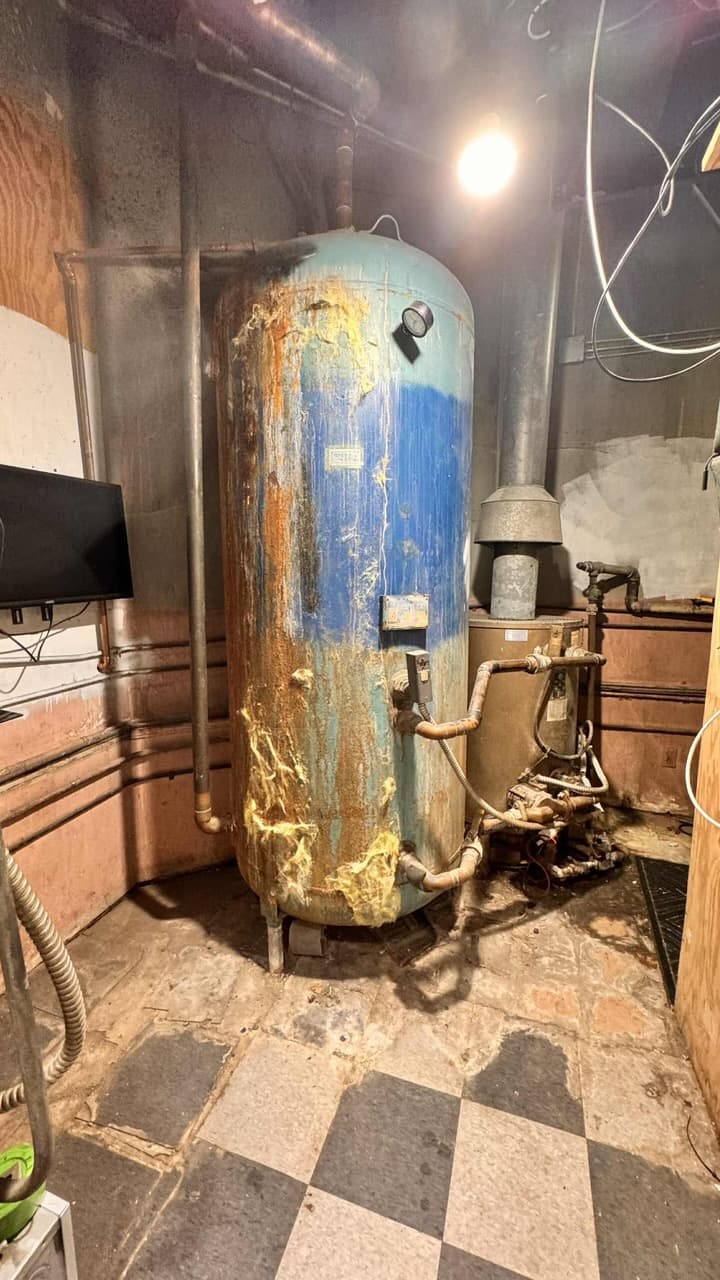
How commercial water heaters work plays out in Ontario
Ontario's hot water demand is heaviest where the beds and the banquet kitchens are. The hotel row along Inland Empire Boulevard and the properties around the Convention Center run laundry, guest showers, and kitchen dish machines on overlapping peaks, and a hotel that fills for a convention finds out quickly whether its water heating plant can recover between the morning shower rush and the breakfast dish load. Recirculation loops that have lost balance leave rooms at the far end of a wing waiting for hot water, and mixing valves that have drifted create scald risk that housekeeping notices before engineering does.
The distribution buildings have a smaller but constant draw: restrooms and break rooms for a shift of several hundred people, sometimes a wash-down area, and often a water heater installed in a mezzanine corner that no one has looked at since the building opened. Scale from the local water settles in the tank, flue temperatures climb, and recovery drops, until the heater fails on a day when the building has three shifts to serve. Restaurants in the Ontario Mills area and along Fourth Street have the familiar recovery problem at dish machines, with sanitizing temperature at risk during the busiest service.
We size against measured demand, not nameplate, and inspect anodes, flues, relief valves, and mixing valves as part of any visit. Sediment is flushed where the tank can take it, recirculation is rebalanced, and for dish machines that cannot reach sanitizing temperature a booster heater is often the right fix. For hotels, replacements are planned around occupancy forecasts so a plant change-out does not coincide with a sold-out show. Records go into the DaVinci Portal. The water heaters and boilers guide covers sizing and tank versus tankless decisions.
Ontario's climate and what it does to this equipment
Ontario is flat, hot, and open, so Santa Ana winds arrive with little to slow them. Dry gusts carry dust from nearby industrial sites and open ground onto huge rooftops, where condenser coils collect it quickly. Summer highs are routinely well above 100 degrees on the hottest days, and large dark roofs raise local rooftop air temperatures further. Regional smog and wildfire smoke affect filtration, and sharp swings between day and night temperatures stress controls and refrigeration defrost cycles. For cold storage, this means condensers are working against the worst ambient conditions of the year, usually with the heaviest product loads.
For the equipment background behind this page, read our water heaters and boilers guide or the full Commercial Water Heaters service page.
- Airport and logistics corridorsDistribution and cargo buildings near Ontario International Airport, including cold storage and large rooftop equipment arrays.
- Ontario Mills and Ontario GatewayLarge-format retail, entertainment, and hospitality properties with extended operating hours and heavy rooftop equipment loads.
- Convention Center and arena districtEvent venues, hotels, and surrounding offices where ventilation and cooling demand surges during conventions and games.
- Guasti, Inland Empire Boulevard, and Ontario RanchMixed office, restaurant, and newer warehouse and commercial development south and east of the core.
- Combustion/ignition or element checks with descaling
- Venting, gas/electrical, condensate, and expansion tank review
- Temperature set-points confirmed for safety and code
- DaVinci Portal: full service history and proof-of-work on file
What a commercial water heaters visit includes, and the problems we most often find
- Check current output against actual peak demand, not just spec-sheet capacity
- Inspect combustion/ignition or heating elements and descale as needed
- Confirm venting, gas/electrical, and condensate are code-correct
- Set and verify temperature set-points for safety and code compliance
- Document the visit — proof-of-work you can show for inspection
- Undersized units that were never sized to actual peak demand
- Scale buildup reducing efficiency and shortening element/heat-exchanger life
- Venting or gas line sizing that doesn't match the installed unit
- Aging tanks nearing end of service life with no replacement plan in place
Commercial Water Heaters in Ontario: questions we get
Guests in one wing of our Ontario hotel complain about slow hot water. Is that a heater problem or a piping problem?
Our warehouse water heater is on a mezzanine with limited access. Can it be replaced without a lift or a crane?
Tank or tankless — which is right for a commercial site?
Do you handle code-required inspections?
Other services in Ontario
Commercial Water Heaters nearby in Inland Empire (Riverside & San Bernardino Counties)
Commercial HVAC and refrigeration across Inland Empire (Riverside & San Bernardino Counties)