Commercial Water Heaters in Fontana, CA
Fontana's warehouses have restrooms and wash areas with modest but constant hot water demand, while the medical and restaurant sectors have higher and more variable loads. Hard water shortens tank life, and scale insulates burners and heat exchangers. We inspect anodes, venting, gas supply, and mixing valves, flush systems that need it, and plan replacements to minimize interruptions. Tankless options are evaluated for steady-demand locations.
One of the Inland Empire's heaviest logistics and warehouse cities, with a major Kaiser medical campus, industrial corridors, and relentless heat and dust.
How commercial water heaters work plays out in Fontana
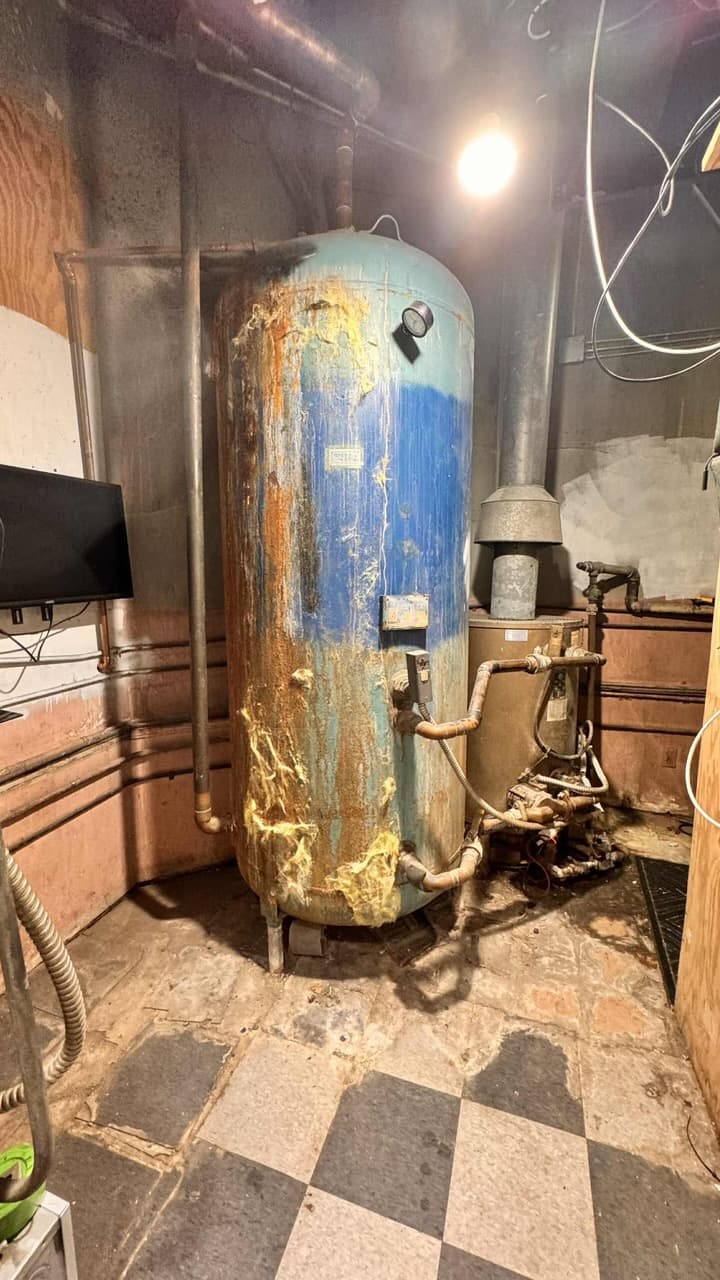
The hot water story in Fontana is mostly about hard water and neglect. Warehouse restrooms and wash areas along Jurupa and Slover use modest volumes, but the heaters are tucked into mechanical closets nobody visits, and a decade of sediment leaves a tank that recovers slowly, pops and rumbles as it fires, and eventually leaks onto a floor that may hold inventory. We flush and inspect these units, check anodes and venting, and tell the owner honestly whether the tank has useful life left or is a leak waiting for a long weekend.
Medical buildings along Sierra Avenue and around the Kaiser campus need something different: dependable, safe temperatures at every fixture, which depends on mixing valves and recirculation loops that were set during the tenant improvement and never touched again. A clinic with lukewarm water at the far end of a suite and scalding water near the heater has a loop problem, not a heater problem. We test the loop, verify the mixing valve, and correct the balance before anyone replaces equipment.
Restaurants in downtown Fontana and on Valley Boulevard are where recovery matters most, because dish machines need sanitizing temperatures during a rush and a scaled tank cannot keep up. We size against actual kitchen demand, consider a booster for the dish machine where appropriate, and inspect gas supply and venting in older buildings where both may be shared with other equipment. Tankless is a fit only where demand is steady and the heat exchanger will be descaled on schedule; the water heaters and boilers guide lays out the tradeoffs.
Fontana's climate and what it does to this equipment
Fontana is among the hottest and windiest parts of the region. Its position near the Cajon Pass and the base of the mountains means Santa Ana winds, and the strong gusts that come with them, strike with more force than in many neighboring cities. Dust from open ground and construction settles on coils, filters, and rooftop surfaces, and air quality is frequently poor in summer because of ozone and particulate. Wildfire smoke adds more load. Triple-digit heat is routine in summer, so condensers operate near their limits for long periods, and cold storage faces its highest loads at the worst possible ambient conditions.
For the equipment background behind this page, read our water heaters and boilers guide or the full Commercial Water Heaters service page.
- Slover, Jurupa, and Miller logistics corridorsLarge distribution and fulfillment buildings with extensive rooftop equipment, dock areas, and temperature-controlled space.
- Kaiser medical campus and Sierra AvenueHospital, clinics, pharmacies, and professional offices with high expectations for air quality, temperature stability, and uptime.
- Speedway-adjacent industrial areaLarge-scale industrial and warehouse development in the northwest part of the city, exposed to open ground and strong wind.
- Downtown Fontana and Valley BoulevardSmaller retail, restaurants, and service businesses in older buildings with split systems and compact rooftop units.
- Combustion/ignition or element checks with descaling
- Venting, gas/electrical, condensate, and expansion tank review
- Temperature set-points confirmed for safety and code
- DaVinci Portal: full service history and proof-of-work on file
What a commercial water heaters visit includes, and the problems we most often find
- Check current output against actual peak demand, not just spec-sheet capacity
- Inspect combustion/ignition or heating elements and descale as needed
- Confirm venting, gas/electrical, and condensate are code-correct
- Set and verify temperature set-points for safety and code compliance
- Document the visit — proof-of-work you can show for inspection
- Undersized units that were never sized to actual peak demand
- Scale buildup reducing efficiency and shortening element/heat-exchanger life
- Venting or gas line sizing that doesn't match the installed unit
- Aging tanks nearing end of service life with no replacement plan in place
Commercial Water Heaters in Fontana: questions we get
The water heater in our Fontana warehouse rumbles and takes forever to recover. Is it failing?
Our clinic has hot water at some sinks and barely warm at others. Do we need a bigger heater?
Tank or tankless — which is right for a commercial site?
Do you handle code-required inspections?
Other services in Fontana
Commercial Water Heaters nearby in Inland Empire (Riverside & San Bernardino Counties)
Commercial HVAC and refrigeration across Inland Empire (Riverside & San Bernardino Counties)