Commercial Water Heaters in Long Beach, CA
Hotels, restaurants, hospitals, and warehouses with break rooms and washdown needs all rely on commercial hot water in Long Beach. Humid coastal air accelerates corrosion on external fittings and exhaust components, and scale from local water chemistry can reduce efficiency over time. Replacement work should consider recovery rate, venting path, and access to the mechanical room. For hotels and medical buildings, planning a swap so that hot water interruption is brief is often the main scheduling challenge.
Port-driven logistics and warehousing, a dense downtown, large hospital campuses, and an airport-area business park cluster, all within reach of salt air.
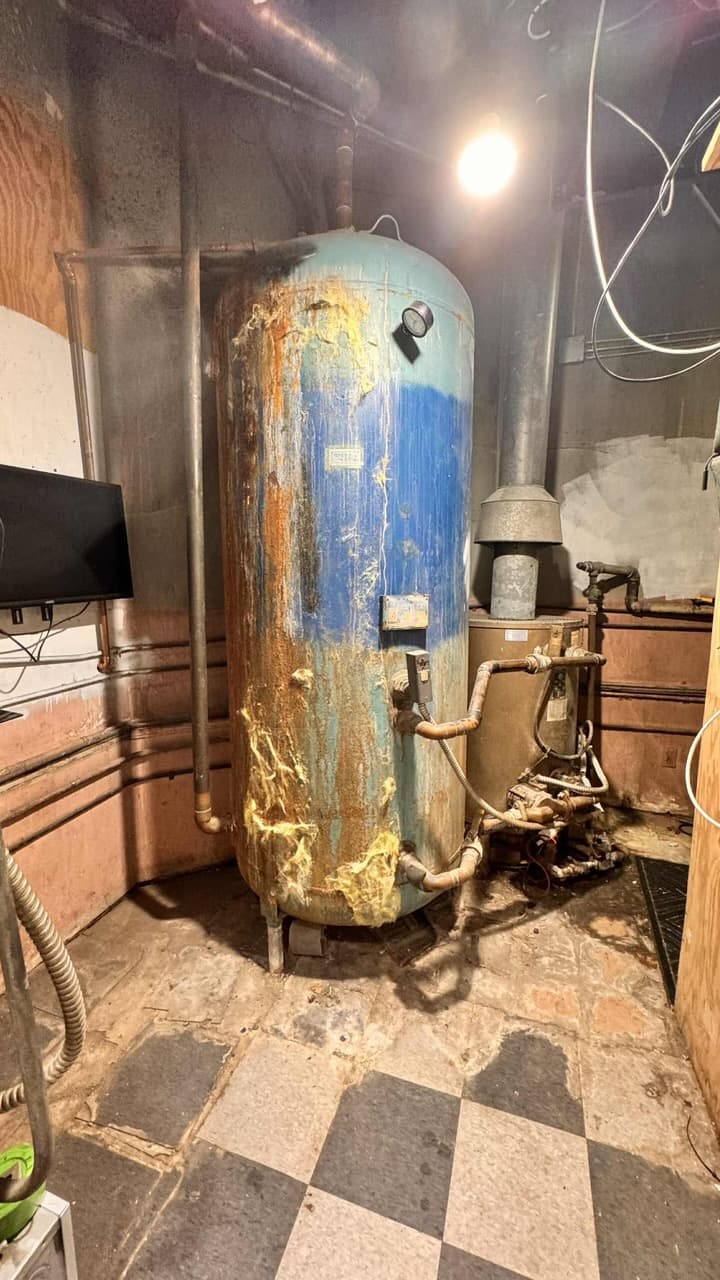
How commercial water heaters work plays out in Long Beach
Hot water demand in Long Beach peaks in the hotels during event weeks and in the hospitals every single day. A property on Ocean Boulevard with a sold-out Grand Prix weekend is running laundry, kitchen, and several hundred guest showers off a plant that may have lost a third of its recovery to scale and burner fouling, and nobody notices until the morning the complaints start. Hospital and medical buildings along the Atlantic corridor and around the VA campus have domestic hot water requirements with temperature and documentation expectations that do not flex. Restaurants along Pine Avenue and in Belmont Shore run dish machines in cramped back rooms.
The coastal environment adds a failure mode most cities do not have. Water heater flue components, draft hoods, external gas fittings, and venting terminations corrode in humid salt air, and a heater that is sound inside can fail inspection or become unsafe because of what has happened to its exhaust path. Mechanical rooms in downtown buildings are often ventilated to the outside, which lets marine air in. Replacement planning in Long Beach therefore includes a hard look at venting material and termination condition, along with the usual gas supply, recovery sizing, seismic strapping, and the physical route for getting the old tank out.
A good replacement is sized to measured recovery demand, vented with materials that will hold up in coastal air, strapped to current requirements, and done in the window that matters least to the property: mid-morning for a hotel after checkout, between meals for a restaurant, a scheduled weekend for a medical office. The water heaters and boilers guide covers tank versus tankless and sizing; the hospitals and health systems sector page covers how healthcare domestic hot water work is coordinated with facility engineering.
Long Beach's climate and what it does to this equipment
Long Beach sits directly on the coast, so salt-laden marine air is a constant at the shoreline, in downtown, and across the port. That air attacks condenser coils, fasteners, panel hardware, and exposed copper far faster than inland conditions, and it is humid enough to feed corrosion and mold in poorly ventilated spaces. Summers are milder than the valleys and basin, but humid afternoons and occasional heat waves still push rooftop equipment hard. Coil protection, drain pan cleaning, and regular inspection of corroded components are central to keeping equipment alive here.
For the equipment background behind this page, read our water heaters and boilers guide or the full Commercial Water Heaters service page.
- Downtown Long Beach and the ShorelineOffices, hotels, and waterfront restaurants where salt air shortens coil life and ice machines run hard through event season.
- Douglas Park and the airport areaBusiness park and light industrial buildings with dense rooftop equipment, newer tilt-up construction, and corporate tenants with defined comfort expectations.
- Port-adjacent logistics and the Westside industrial areaLarge distribution buildings and cold storage serving container traffic, with dock refrigeration, ventilation, and make-up air needs that run nearly around the clock.
- Medical campuses and the central corridorHospital campuses and medical office buildings where redundancy, filtration, and coordination with in-house engineers shape the work.
- Combustion/ignition or element checks with descaling
- Venting, gas/electrical, condensate, and expansion tank review
- Temperature set-points confirmed for safety and code
- DaVinci Portal: full service history and proof-of-work on file
What a commercial water heaters visit includes, and the problems we most often find
- Check current output against actual peak demand, not just spec-sheet capacity
- Inspect combustion/ignition or heating elements and descale as needed
- Confirm venting, gas/electrical, and condensate are code-correct
- Set and verify temperature set-points for safety and code compliance
- Document the visit — proof-of-work you can show for inspection
- Undersized units that were never sized to actual peak demand
- Scale buildup reducing efficiency and shortening element/heat-exchanger life
- Venting or gas line sizing that doesn't match the installed unit
- Aging tanks nearing end of service life with no replacement plan in place