Commercial Water Heaters in Pasadena, CA
Hotels, restaurants, and medical offices around Pasadena depend on hot water every day, and older buildings can make replacement complicated. Water heaters may sit in basements or tight closets with venting runs that were adapted over time. Replacement planning covers access for removal, gas supply, venting, and seismic bracing practice, and confirms current local requirements. For hotels, scheduling swaps outside peak occupancy or event weeks avoids guest complaints. In multi-tenant historic buildings, shared hot water lines add another coordination step.
Older historic buildings, a restaurant-dense Old Pasadena, and science and institutional campuses near Caltech, sitting at the foot of the San Gabriel Mountains.
How commercial water heaters work plays out in Pasadena
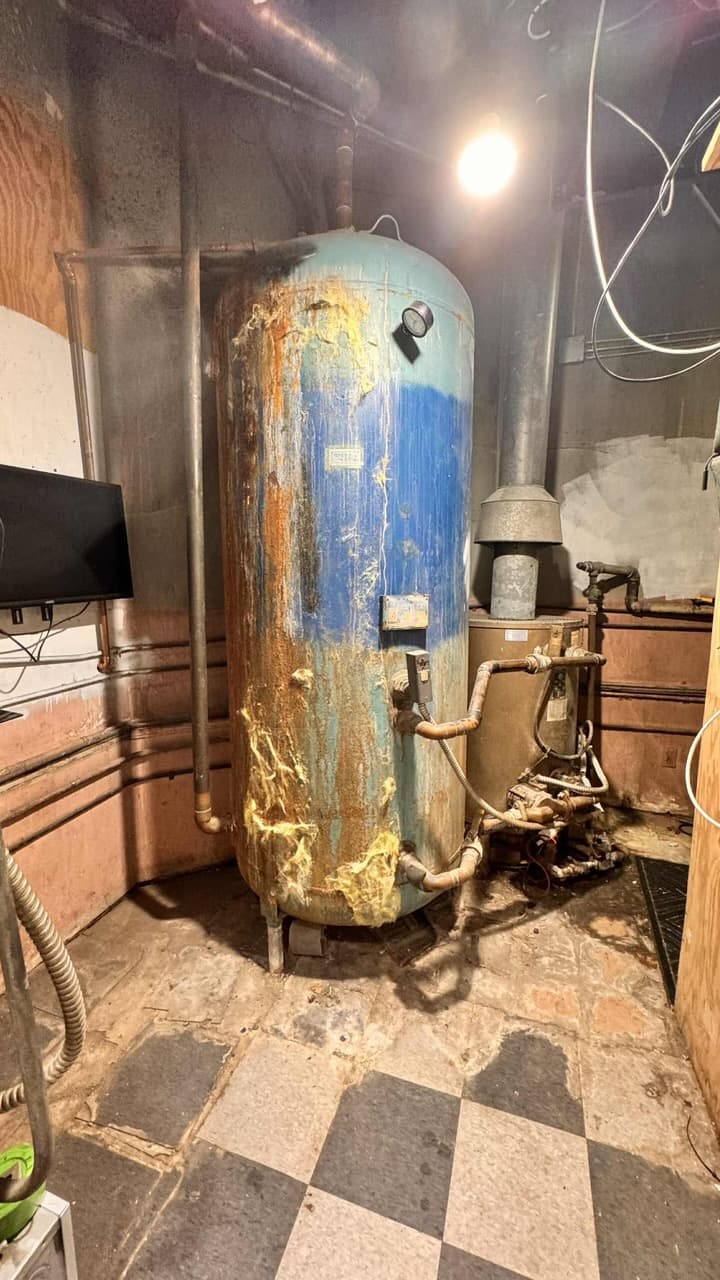
The water heater in a Pasadena building is often the oldest piece of mechanical equipment in it and the hardest to reach. Old Pasadena restaurants frequently have theirs in a basement beneath the kitchen, down a narrow stair, with a vent that was adapted through an old chimney. Hotels along Colorado Boulevard run large storage tanks or banks of heaters serving guest rooms, laundry, and banquet kitchens with sharp demand peaks during event weeks. Medical offices around Huntington Hospital have sterilization and exam room needs where hot water is not optional. Institutional buildings near Caltech and the Civic Center often have heaters tied into older mechanical rooms with shared venting.
Pasadena's water carries moderate hardness, and in hot summers incoming water temperatures are higher, which changes how a heater behaves but does not stop scale from accumulating on tank bottoms and heat exchanger surfaces. In tankless units, scale shows up as reduced flow and error codes. The access problem compounds every replacement: a tank that went into a basement in 1975 through a doorway that was later narrowed may not come out the same way, and modern condensing heaters need new venting and a condensate drain that the old location may not support.
Davinci Mechanical plans commercial water heater replacements in Pasadena around a careful site survey: removal path, gas supply, venting route, seismic strapping, condensate disposal, and permit requirements through the city's permit center. For a hotel, the work is scheduled in a low-occupancy window with temporary hot water if needed. For a restaurant, it happens overnight so the kitchen opens with hot water. The water heaters and boilers guide covers sizing and venting concepts.
Pasadena's climate and what it does to this equipment
Pasadena sits inland at the foot of the San Gabriel Mountains, so it runs considerably hotter than the coast, with long summers, frequent days well into the 90s and sometimes above 100, and warm evenings that give equipment little recovery time. Santa Ana wind events in fall bring dry heat and dust, and nearby wildfire smoke and ash can load filters and coils quickly. Foothill conditions also mean leaves and debris in condensers, and older buildings with limited airflow show weaknesses early in every heat wave.
For the equipment background behind this page, read our water heaters and boilers guide or the full Commercial Water Heaters service page.
- Old PasadenaHistoric brick buildings with restaurants and retail, tight alleys, retrofitted mechanical systems, and roof access that varies from easy to awkward.
- Colorado Boulevard and the Playhouse DistrictHotels, entertainment venues, restaurants, and offices along the main boulevard, with heavy demand during parade and event periods.
- Caltech area and science or institutional campusesResearch buildings, labs, and institutional facilities with demanding environmental control and documentation expectations.
- Civic Center and the Huntington Hospital areaCity buildings, medical offices, and hospital-adjacent properties where clinical comfort, filtration, and scheduling are central.
- Combustion/ignition or element checks with descaling
- Venting, gas/electrical, condensate, and expansion tank review
- Temperature set-points confirmed for safety and code
- DaVinci Portal: full service history and proof-of-work on file
What a commercial water heaters visit includes, and the problems we most often find
- Check current output against actual peak demand, not just spec-sheet capacity
- Inspect combustion/ignition or heating elements and descale as needed
- Confirm venting, gas/electrical, and condensate are code-correct
- Set and verify temperature set-points for safety and code compliance
- Document the visit — proof-of-work you can show for inspection
- Undersized units that were never sized to actual peak demand
- Scale buildup reducing efficiency and shortening element/heat-exchanger life
- Venting or gas line sizing that doesn't match the installed unit
- Aging tanks nearing end of service life with no replacement plan in place
Commercial Water Heaters in Pasadena: questions we get
Our Old Pasadena restaurant's water heater is in a basement with an old masonry chimney as the vent. Can a modern replacement use the same vent?
Usually not without changes. Modern atmospheric heaters have different venting requirements, and condensing units cannot vent through masonry at all because their exhaust is cool and acidic. Options include a stainless or plastic liner inside the old chimney, a new vent route, or a power-vented unit that can run horizontally to an exterior wall. We survey the chimney and the building before recommending anything, and confirm current code with the city.
Our Pasadena hotel runs out of hot water during event weeks but is fine otherwise. Should we add capacity?
First we check recovery: a scaled tank or a heater with a failing burner can lose a significant share of its rated recovery and look undersized when it is not. If the system is healthy and still cannot keep up, options include adding storage, adding a heater in parallel, or a recirculation and mixing strategy that stretches peak capacity. The decision is based on measured demand during a busy period, not on nameplate math alone.
Tank or tankless — which is right for a commercial site?
It depends on peak demand and available gas/electrical service. We'll size the recommendation to your actual usage, not just replace like-for-like.
Do you handle code-required inspections?
Yes — venting, gas line, and combustion work is documented to pass inspection, and we coordinate with your building department when needed.