What commercial repair actually covers
Commercial repair at Davinci Mechanical spans the equipment that keeps a building operating: rooftop and split-system HVAC, walk-in and reach-in refrigeration, ice machines, commercial water heaters, and the controls that tie them together. A single site often has failures that cross those lines. A restaurant's kitchen runs hot because the make-up air is starved, which pushes the walk-in condenser past its design ambient, which trips a high-pressure control. Treating those as three unrelated tickets wastes everyone's time.
So the first question on any call is about the system, not the part: what changed recently, when the symptom appears, and what else on the property shares the same power, airflow, water, or controls. Our technicians are trained to ask those questions before opening a panel, and dispatch collects the answers when you call (714) 594-9194.
What a diagnostic visit looks like, in order
- Confirm the complaint and make the site safe. Verify what the occupant or operator is actually experiencing, and isolate anything that could cause product loss, water damage, or a safety issue.
- Read the unit before touching it. Nameplate, service history in the DaVinci Portal if the asset is already tagged, fault codes, and visible conditions such as ice, oil staining, scorched wiring, or a dirty coil.
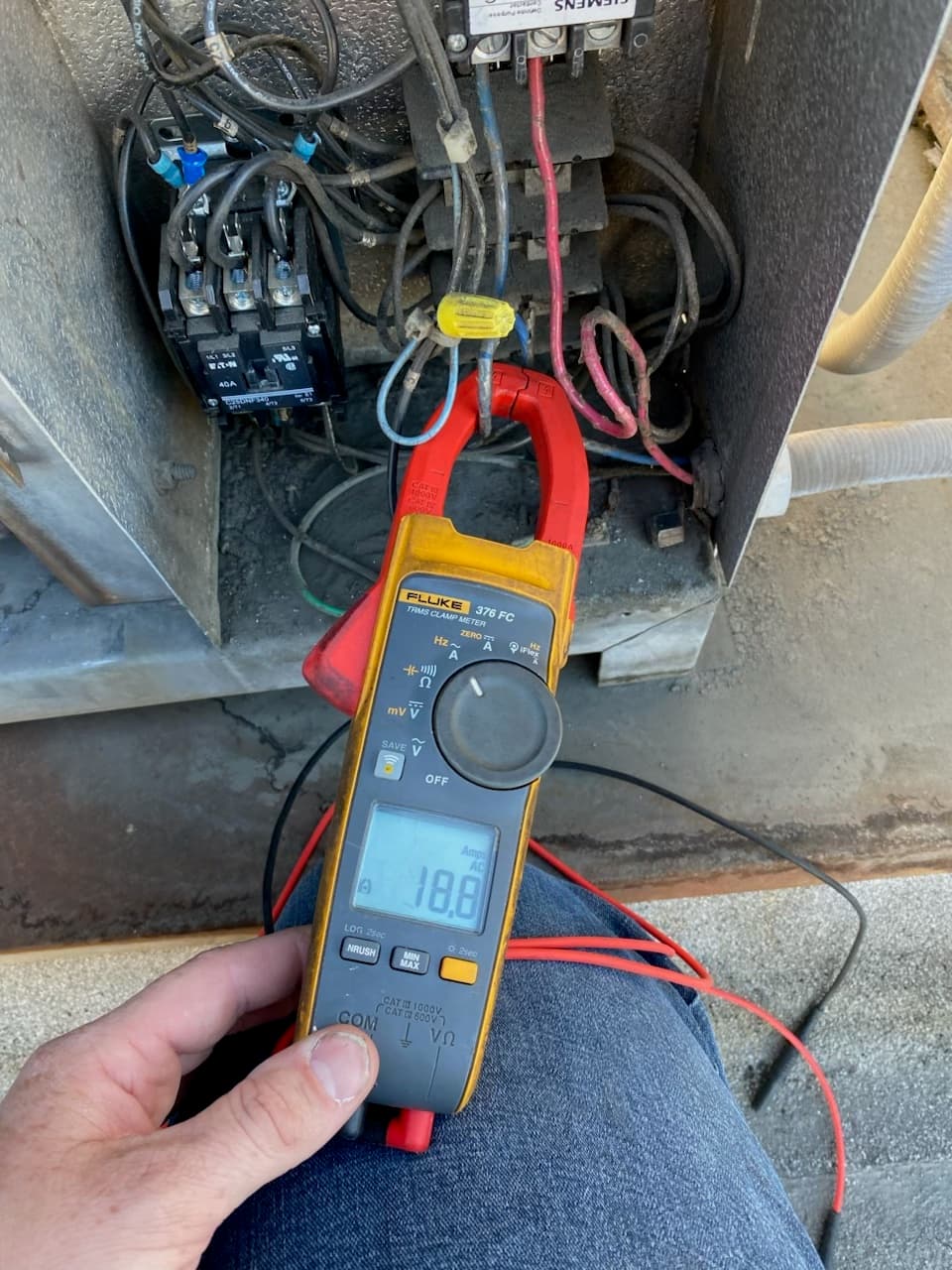
- Take measurements under load. Supply and return temperature split, suction and discharge pressures, superheat and subcooling, amp draw against nameplate, voltage under load, and static pressure across the air path.
- Isolate by elimination. Electrical, refrigerant, airflow, controls, and water are tested as separate domains so one finding does not hide another.
- Repair what is proven, and state what is not. If a failed part is confirmed, it gets replaced. If the cause is still an open question, we say so and describe the next test rather than guessing.
- Document and close. Readings, photos of the failed component, the corrective action, and any recommended follow-up are logged and sent to you.
Failure patterns we see repeatedly
The table below pairs common repeat-call symptoms with the cause that is frequently behind them. It is not a substitute for diagnosis, but it explains why a quick swap so often fails to hold.
| Symptom | Part usually replaced | Frequent underlying cause |
|---|---|---|
| Compressor keeps tripping on overload | Compressor or contactor | Dirty condenser, failed fan motor, or low airflow raising head pressure |
| Capacitor fails again within months | Run capacitor | High line voltage, a failing motor drawing excess current, or heat soak in the electrical compartment |
| Evaporator coil freezes | Thermostatic expansion valve or refrigerant charge | Dirty filters, failed blower, closed dampers, or a defrost control not terminating |
| Water leak at ceiling | Condensate pump or drain line | Slope loss, algae blockage, or a missing secondary drain safety switch |
| Walk-in warm after defrost | Evaporator fan motor | Defrost heater or termination sensor failure leaving ice on the coil |
| Gas unit lockout on ignition | Ignition control or flame sensor | Combustion air restriction, cracked heat exchanger, or reversed polarity |
How we approach it compared with the typical fast fix
The common fast-fix call goes like this: a technician arrives, sees a failed capacitor or contactor, replaces it, confirms the unit starts, and leaves. Sometimes that is exactly right. Often the part was a casualty, and the cause is still in the system waiting to take out the replacement.
We do not treat a running unit as proof of a repair. Before closing a call we confirm the unit holds stable readings through a full cycle, and we check the adjacent components that share the failure path. That might mean checking the condenser fan motor amperage after replacing a compressor contactor, or measuring evaporator airflow after replacing a frozen coil's expansion valve. If a second opinion on someone else's diagnosis is what you need, our second opinion diagnostic is built for that.
If the same component fails twice at the same site, the third visit is a root-cause investigation, not another replacement.
How the repair-or-replace decision gets made
When a failure is significant, we give you the facts to decide rather than a sales push in either direction. The questions that drive the recommendation:
- Age of the unit against its realistic service life for the application and climate, with coastal exposure counted honestly.
- Refrigerant type, and whether future service on that refrigerant is likely to become harder as regulations phase down higher-GWP products. See our refrigerant compliance guide.
- Condition of the part that failed relative to the rest: a sealed-system failure on an otherwise worn unit points differently than a one-off on a well-kept one.
- Parts availability and lead time, especially for older controls or proprietary boards.
- What a replacement would trigger, including Title 24 compliance and permit scope, which sometimes changes the economics of a repair.
If replacement is the better answer, our RTU and split installs team can scope it with the diagnostic data already in hand.
What you receive after a repair
- A service report stating the complaint, measurements taken, finding, and corrective action in plain language.
- Photos of the failed component and the equipment nameplate, attached to the asset record in the DaVinci Portal.
- Recorded operating readings so the next technician starts from data rather than memory.
- A written recommendation, separate from the repair itself, for anything not urgent but worth budgeting.
- Documentation formatted so a landlord, insurer, or health inspector can understand what happened without a phone call.
Who this is for (and who it isn't)
This service fits facility managers, restaurant and grocery operators, medical and veterinary practices, hospitality operators, property managers, public agencies, and general contractors who need reliable repairs and want records they can use. It works best when you want the problem solved rather than quieted, and when someone on your side can approve a reasonable follow-up.
It is probably not the right fit if you are looking for the lowest-cost quick patch on a call-by-call basis, if the priority is a visit that finishes in minutes with no measurements, or if the property is residential. We work on commercial properties only, and we would rather say so up front than waste your time.
What a typical visit looks like
- Call in the issue — what the equipment is doing, and what it's affecting
- Tech arrives with truck-stocked parts for the most common failures on that equipment type
- Root-cause diagnostic with readings taken and logged, not just symptom patching
- Repair options presented with pricing before anything is authorized
- Approved work completed same-visit where parts allow; readings logged to the Portal
Problems we most often find
- Electrical failures — contactors, capacitors, and control boards
- Refrigerant leaks and low-charge symptoms
- Failed motors, bearings, and belts on fans and blowers
- Clogged condensate drains causing water damage or shutdowns
FAQ
How fast can you get a tech on site?
Most diagnostics are same-day across our Orange County coverage area. Priority accounts and maintenance-plan members get first availability.
Do you charge a diagnostic fee?
Yes, a flat diagnostic fee that's disclosed up front and applied toward the repair if you approve it the same visit.
Commercial HVAC Repair: where we work
Orange County is our home base. For larger commercial and public projects we also work across Los Angeles County, the Inland Empire, San Diego County, and Ventura County.