Commercial Water Heaters in Los Angeles, CA
Los Angeles properties lean on commercial hot water in more ways than most people expect: hotel laundries and guest rooms near the airport, restaurant kitchens with high recovery demand, and multi-tenant buildings where one storage tank serves many suites. Hard water scales heating elements and burners, and older buildings sometimes have undersized venting or tight mechanical rooms that complicate replacement. Sizing for recovery, checking combustion and venting, and planning tank removal through a limited access path are all part of getting a clean result.
A sprawling mix of high-rise offices, production and creative space, food distribution in the industrial core, and a long LAX-adjacent logistics corridor, all under one of the state's most demanding permit environments.
How commercial water heaters work plays out in Los Angeles
Commercial hot water in Los Angeles fails most visibly in hotels, and the airport corridor is where it shows. A property on Century Boulevard with laundry, a restaurant, and several hundred rooms is drawing hard from 5 a.m. onward, and a storage tank with a scaled burner or a tankless bank with a fouled heat exchanger loses recovery exactly when checkout showers peak. Downtown hotels and the larger properties around the Convention Center see the same pattern on event weekends. Restaurant hot water across the city is simpler but relentless: dish machines and handwashing in Koreatown barbecue restaurants and Sawtelle ramen shops demand high recovery in tight back rooms.
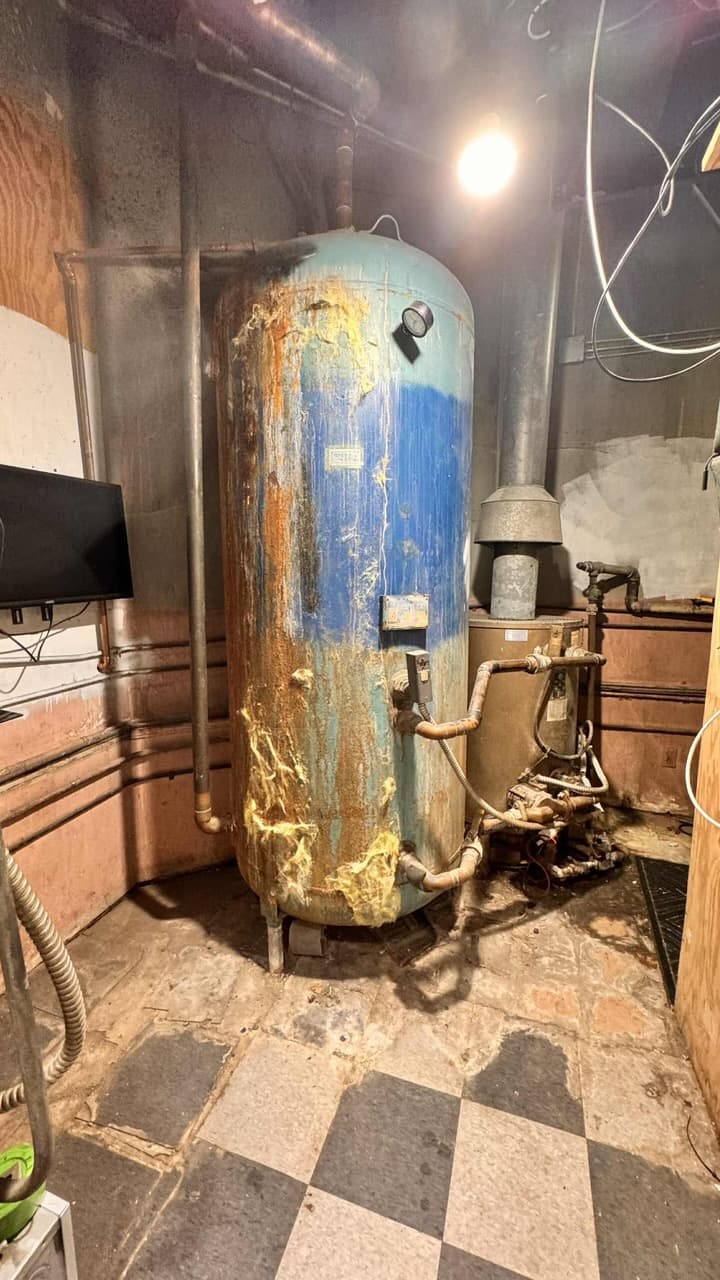
The buildings make replacement harder than the equipment does. Pre-war structures in the Historic Core and along Broadway have water heaters in basements reached by stairs that were never meant for a tank on a dolly, with venting that was adapted several times across decades. Multi-tenant retail on Melrose and Fairfax often has one tank serving several suites, and nobody is sure which tenant draws most of the load until it is measured. Gas supply, venting path, seismic strapping, and the physical route for removing the old unit all get checked before a model is chosen.
The right result is a system sized for actual recovery demand, vented and strapped to current requirements, and swapped during the window that hurts least: mid-morning for a hotel, mid-afternoon for a restaurant, a weekend for a medical office. The water heaters and boilers guide covers sizing and tank versus tankless trade-offs; in Los Angeles, the access path and the venting history of the building usually decide more than the brochure does.
Los Angeles's climate and what it does to this equipment
Los Angeles has a Mediterranean climate, but the city spans very different conditions. Areas near the coast stay under the marine layer through much of late spring and early summer, while the basin and downtown run noticeably hotter in late summer and early fall, and Santa Ana wind events can bring dry heat and blowing dust. Equipment sees long cooling seasons, and rooftop condensers in urban areas collect soot, leaf litter, and airborne grime. Older buildings with undersized airflow often show problems only during the first stretch of real heat, which is exactly when response time matters most.
For the equipment background behind this page, read our water heaters and boilers guide or the full Commercial Water Heaters service page.
- Downtown Los Angeles and the Historic CoreConverted older buildings, high-rise offices, and new mixed-use towers, with a mix of central plants, VRF, and rooftop equipment that often needs careful hoisting and access planning.
- Mid-Wilshire, Miracle Mile, and Century CityDense office towers and professional suites along Wilshire, where chilled water systems, after-hours scheduling, and tenant-sensitive work windows shape every service call.
- Hollywood and studio-related production spaceProduction offices, post-production suites, and sound-sensitive rooms where noise, humidity, and tight temperature control matter as much as capacity.
- Arts District, Vernon-adjacent industrial, and the LAX corridorFood distribution, cold storage, and warehouse buildings east of downtown, plus hotels and logistics buildings along the airport corridor on the west side.
- Combustion/ignition or element checks with descaling
- Venting, gas/electrical, condensate, and expansion tank review
- Temperature set-points confirmed for safety and code
- DaVinci Portal: full service history and proof-of-work on file
What a commercial water heaters visit includes, and the problems we most often find
- Check current output against actual peak demand, not just spec-sheet capacity
- Inspect combustion/ignition or heating elements and descale as needed
- Confirm venting, gas/electrical, and condensate are code-correct
- Set and verify temperature set-points for safety and code compliance
- Document the visit — proof-of-work you can show for inspection
- Undersized units that were never sized to actual peak demand
- Scale buildup reducing efficiency and shortening element/heat-exchanger life
- Venting or gas line sizing that doesn't match the installed unit
- Aging tanks nearing end of service life with no replacement plan in place
Commercial Water Heaters in Los Angeles: questions we get
Our Downtown LA restaurant is in a 1920s building with the water heater in the basement. Can it be replaced without tearing anything out?
Often, but the survey decides. The old tank has to come up the same stairs the new one goes down, and venting in older Historic Core buildings has frequently been modified in ways that would not pass today. If the path is too tight for a tank, a bank of wall-hung tankless units or a smaller tank with higher recovery can fit where a large tank cannot. Gas supply and venting are confirmed with current requirements before anything is ordered.
Our LAX-area hotel runs out of hot water on checkout mornings but not at night. Is the heater undersized or failing?
Either, and the readings tell which. A heater that has lost recovery to scale or a fouled exchanger looks undersized during a morning peak but fine at low demand. Measuring recovery rate, inlet and outlet temperatures, and burner performance separates a degraded unit from an undersized one. If the property has added laundry or kitchen load since the system was installed, sizing is the issue; if not, restoring the heater usually solves it.
Tank or tankless — which is right for a commercial site?
It depends on peak demand and available gas/electrical service. We'll size the recommendation to your actual usage, not just replace like-for-like.
Do you handle code-required inspections?
Yes — venting, gas line, and combustion work is documented to pass inspection, and we coordinate with your building department when needed.