What we do and what we don't
Clarity on scope saves restaurant owners from the wrong phone call. Hood and duct cleaning is a fire-safety service performed by certified exhaust cleaning companies. Our work begins where the fans, motors, heating, and airflow are.
| Task | Davinci Mechanical | Hood cleaning contractor |
|---|---|---|
| Hood, duct, and fan grease removal | No | Yes |
| Exhaust fan motor, belt, and bearing repair or replacement | Yes | Not typically |
| Make-up air unit service, heating, and replacement | Yes | No |
| Airflow measurement and kitchen balancing | Yes | No |
| Interlocks between hood, exhaust, and make-up air | Yes | No |
| Access panels and fan hinge kits for cleaning access | Coordinated | Identifies need |
Air balance: where the air goes matters
A kitchen usually has an exhaust hood, a make-up air source, and a dining room that sits next door. The goal is for the kitchen to run slightly negative to the dining area, so cooking odors do not drift out to guests, without being so negative that doors are hard to open or flue gases from gas appliances spill back into the space.
Direct-fire make-up air units supply tempered outdoor air near the hood. Some systems use air-handler-fed transfer air or short-cycle hoods with their own supply plenums. Each arrangement has different failure modes, and we start by measuring rather than assuming. Hood face velocity, exhaust cfm, make-up cfm, and room pressure tell us whether the system meets its design or has drifted after years of added equipment and adjusted dampers.
Symptoms and likely causes
| What staff notice | Often means |
|---|---|
| Smoke rolls out of the hood | Insufficient exhaust, make-up air starving the hood, a slipping fan belt, or a dirty or damaged baffle path |
| Dining room smells like the kitchen | Kitchen not negative enough, transfer air path blocked, or make-up air overpowering the exhaust |
| Cold air blasts on the line cooks | Make-up air heat not firing, supply too close to the hood, or poorly aimed diffusers |
| Exterior door pulls hard or slams | Make-up air short on volume relative to exhaust |
| Make-up air unit trips on safeties | Plugged filters, gas supply or ignition problem, failed airflow switch, or a blocked outside air path |
| Fan runs loudly or vibrates | Belt wear, bearing failure, imbalance, or a fan wheel with buildup |
Interlocks, fire code awareness, and our boundaries
NFPA 96 sets the framework for commercial cooking exhaust systems, including cleaning frequency, access, clearance, and fan arrangements. Enforcement runs through local fire and building officials, and the details can vary, so confirm current requirements with your jurisdiction. We are not a hood cleaning contractor and do not certify cleaning, but because we install and service the equipment, we deal with its consequences constantly.
- Exhaust fan and make-up air operation interlocked so one cannot run without the other.
- Fire suppression activation shutting down fuel and appropriate fans as designed; any changes coordinated with the licensed suppression contractor.
- Fan access and hinge kits that make proper cleaning possible, a frequent gap in older buildings.
- Clearance to combustibles and rooftop discharge locations that do not blow grease or heat onto roofing or equipment.
If your hood contractor flags something mechanical, such as a missing access panel or a fan that will not hinge, we can resolve it and leave the cleaning to them.
Make-up air units: what we service and replace
Make-up air units live a hard life: they ingest grease-laden outside air near restaurants, sit in rooftop heat, and run during every service. We service burners, heat exchangers, blowers, belts, filters, motors, control boards, and gas trains. When a unit reaches the end of its life, we size the replacement to the real exhaust load, review heating capacity and gas requirements, and confirm that Title 24 and local air-quality requirements are met for the new equipment. Roof curbs, structural, and crane access are handled as part of the installation. See also our RTU and split installs for comparable rooftop work.
Our approach versus the quick-fix approach
A smoky hood often gets a bigger fan or a motor swap. That sometimes helps and sometimes makes the building worse, because a more powerful exhaust with no additional make-up air just deepens the negative pressure. We measure first, identify whether the shortfall is supply, exhaust, or obstruction, and then correct the actual constraint.
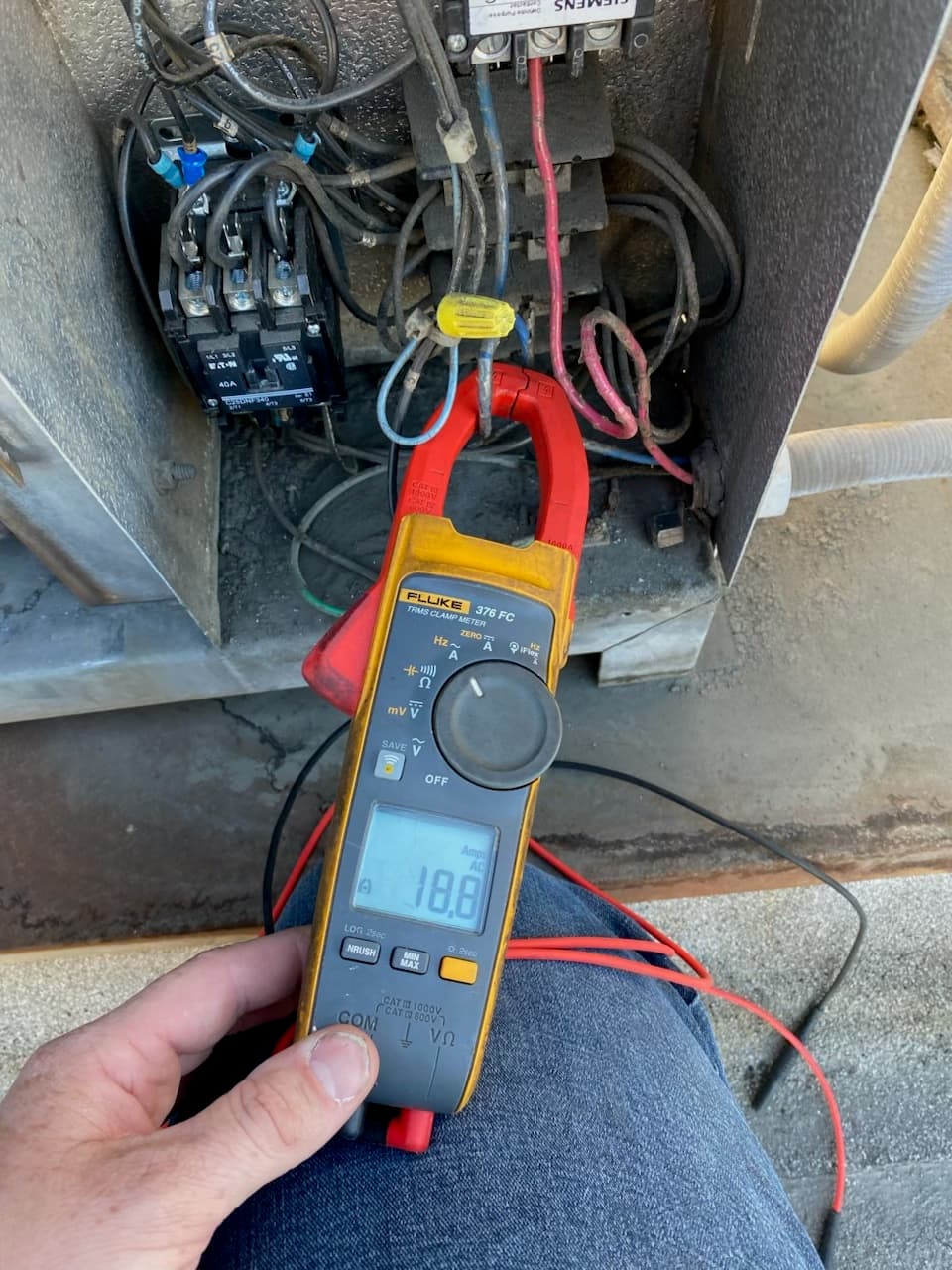
We also write the final balance down: measured exhaust and make-up cfm, hood velocities where applicable, motor amp draws, belt and pulley data, and photographs, all attached to the equipment record in the DaVinci Portal. When the hood cleaner, the fire marshal, or the next technician asks what the system should be doing, the answer is on file.
What to gather before we visit
- Equipment nameplates for hood, exhaust fan, and make-up air unit if accessible.
- Any mechanical plans, permits, or previous balance reports.
- A list of cooking equipment added or moved since the hood was installed.
- Dates of recent hood cleaning and any notes from the cleaning company.
- A description of when problems appear: peak lunch, hot afternoons, or windy days.
Who this is for (and who it isn't)
We work with restaurant groups, institutional and hospital kitchens, school and campus dining, hotels, grocery and prepared-food operations, and property managers handling multi-tenant food courts. Projects range from recurring service to full kitchen mechanical packages on bid.
If you need a hood or duct cleaned, we are not that contractor and will say so. If you are looking for the cheapest possible fan swap without looking at the air balance, or you operate a residential kitchen, this is not a match. For a commercial kitchen that needs to ventilate correctly and pass inspection, call (714) 594-9194 or see our restaurant industry page.
What a typical visit looks like
- Walk the kitchen during or near service to see what the building actually does
- Measure exhaust and make-up airflow, temperatures, and building pressure
- Inspect fans, belts, motors, dampers, burners, and controls
- Repair or adjust, then re-measure to confirm the balance
- Document results and flag items for the hood-cleaning and fire-protection vendors to handle
Problems we most often find
- Make-up air that is undersized or off, pulling conditioned air from the dining room
- Exhaust fan belts and bearings worn, cutting airflow below what the hood needs
- Kitchens running negative, causing hard-to-open doors, drafts, and burner issues
- Make-up air units with failed burners or controls during cold or hot weather
FAQ
Do you clean hoods and ducts?
No. Hood and duct cleaning is a separate specialty. We handle the mechanical side: exhaust fans, make-up air, and HVAC balance.
Why is my dining room hot when the kitchen is running?
Often the make-up air is not matched to the exhaust, so the kitchen pulls conditioned air from the dining room. Measuring airflow and pressure shows where the balance is off.
Can you replace a make-up air unit?
Yes. We size to the hood's exhaust requirement, coordinate permits, and handle rigging and controls.
Kitchen Ventilation & Make-Up Air: where we work
Orange County is our home base. For larger commercial and public projects we also work across Los Angeles County, the Inland Empire, San Diego County, and Ventura County.