Commercial Water Heaters in Burbank, CA
Commercial hot water in Burbank serves restaurants, hotels near the airport, medical offices, and studio support buildings such as commissaries and wardrobe or prop shops with washing needs. Tanks in older buildings often sit in cramped mechanical rooms, which complicates removal and replacement. Planning includes recovery sizing, venting, gas supply, seismic bracing, and local requirements. Scheduling replacements to avoid peak service hours prevents disruption. Studio commissaries that feed large crews in a short window need recovery capacity checked carefully.
Studio and media campuses, airport-area industrial buildings, a restaurant-rich Magnolia Park, and hospital facilities in the heat of the San Fernando Valley.
How commercial water heaters work plays out in Burbank
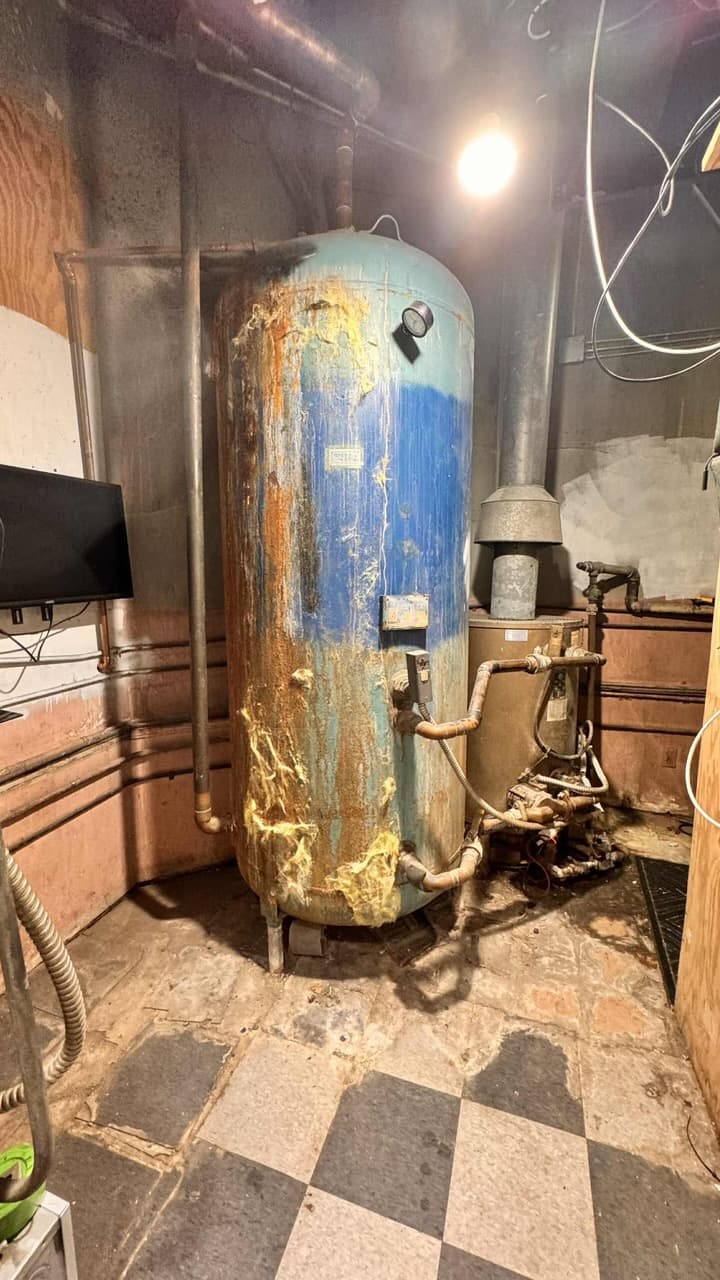
Studio commissaries define Burbank's hot water problem. A commissary that feeds several hundred people inside a 90-minute window needs recovery capacity that an ordinary restaurant never does, and when the tank was sized for a smaller crew the dish machine runs cold by the end of service. Wardrobe and laundry operations supporting productions add washer loads. Hotels near Hollywood Burbank Airport run storage tanks and long recirculation loops for guest rooms and laundries with early-morning peaks tied to flight schedules. Magnolia Park restaurants, medical offices near the hospital, and the offices downtown have smaller systems but the same failure modes.
Scale and age do the damage. Burbank's water leaves mineral on burners, heat exchangers, and tank bottoms, cutting recovery and raising flue temperatures until a heater that used to keep up no longer does. Recirculation pumps on older hotel and office loops fail quietly, so the far end of a building goes cold while the tank reads fine. Replacement in an older building is usually constrained by the mechanical room: narrow doors, stacked equipment, venting routed through remodeled space, and gas piping sized for the original unit. Gas supply, combustion air, venting, and seismic strapping are surveyed before anything is ordered.
The swap is timed to the operation: between breakfast and lunch for a commissary, a low-occupancy weekday for a hotel, a weekend with tenant notice for a medical office building. Recovery sizing is confirmed in advance rather than assumed from the old nameplate, and startup readings go into the DaVinci Portal. The commercial water heater page and the water heaters and boilers guide walk through tank, tankless, and recovery sizing for commercial loads.
Burbank's climate and what it does to this equipment
Burbank sits in the San Fernando Valley, and the valley holds heat. Summer days regularly reach the upper 90s and into the 100s during heat waves, with warm nights that limit equipment recovery. The marine layer that cools coastal cities rarely reaches this far, so cooling seasons are long and intense. Santa Ana winds add dry air, dust, and fire-season smoke that load filters and coils. In these conditions, rooftop condensers and chillers work close to their limits more often than elsewhere in the county.
For the equipment background behind this page, read our water heaters and boilers guide or the full Commercial Water Heaters service page.
- Media District and studio campusesProduction lots, office buildings, edit suites, and server areas with steady cooling loads and limited tolerance for interruption.
- Magnolia ParkIndependent restaurants, cafes, and shops in older commercial buildings, where kitchens, coolers, and rooftop equipment are compact.
- Airport-area industrial and business parksLarge industrial and light-industrial buildings near Hollywood Burbank Airport with substantial rooftop equipment counts.
- Downtown Burbank and hospital campusesOffices, retail, and medical buildings where comfort, filtration, and scheduling around clinical or business hours are essential.
- Combustion/ignition or element checks with descaling
- Venting, gas/electrical, condensate, and expansion tank review
- Temperature set-points confirmed for safety and code
- DaVinci Portal: full service history and proof-of-work on file
What a commercial water heaters visit includes, and the problems we most often find
- Check current output against actual peak demand, not just spec-sheet capacity
- Inspect combustion/ignition or heating elements and descale as needed
- Confirm venting, gas/electrical, and condensate are code-correct
- Set and verify temperature set-points for safety and code compliance
- Document the visit — proof-of-work you can show for inspection
- Undersized units that were never sized to actual peak demand
- Scale buildup reducing efficiency and shortening element/heat-exchanger life
- Venting or gas line sizing that doesn't match the installed unit
- Aging tanks nearing end of service life with no replacement plan in place