Commercial Water Heaters in Glendale, CA
Commercial hot water in Glendale supports restaurants, medical offices, hotels, and mixed-use buildings with shared tank systems. Older buildings may have limited mechanical room space and long recirculation loops that lose heat. Replacement planning includes recovery sizing, venting, gas supply, seismic bracing practice, and local requirements. For multi-tenant properties, communicating a short interruption to occupants in advance prevents unnecessary complaints. Long recirculation loops should be checked at the same time, since heat loss there often masquerades as a tank problem.
Brand Boulevard retail and mixed-use, entertainment and animation offices, hospital campuses, and the Glendale Galleria area at the edge of the San Fernando Valley.
How commercial water heaters work plays out in Glendale
Hot water problems in Glendale tend to surface in three kinds of buildings. Restaurants and bakeries along Brand, Glenoaks, and Central depend on high-recovery water heaters for dish machines and prep sinks, and a unit that was sized for a smaller menu starts losing the race on busy evenings. Hotels and medical office buildings run storage tanks with long recirculation loops, and in older buildings those loops shed enough heat that tenants at the far end complain while the tank itself reads fine. Mixed-use buildings around the Americana share a central plant between retail and residential-adjacent spaces, which means a short outage affects far more than one tenant.
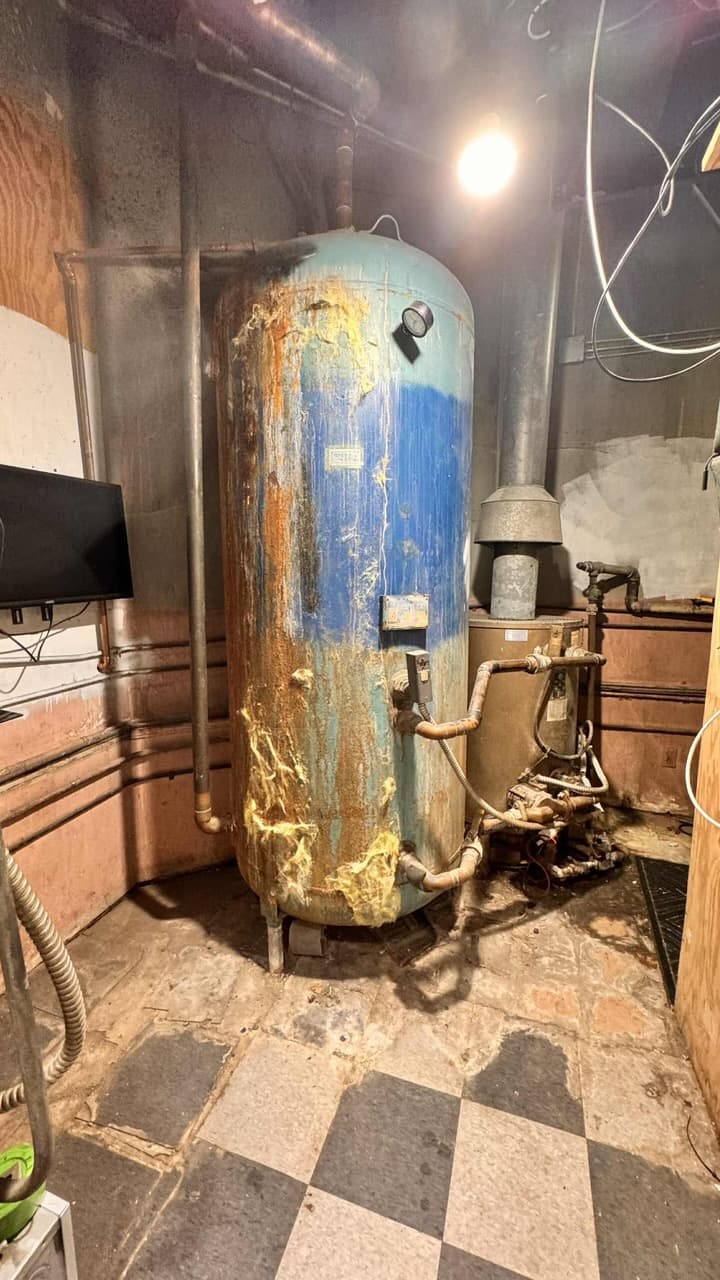
Water chemistry and age are the usual villains. Scale builds on burners and heat exchangers, cutting recovery and raising flue temperatures; sediment in a storage tank reduces usable volume; and recirculation pumps on old loops quietly fail, leaving a loop that no longer circulates. When a replacement is warranted, the mechanical room in an older Glendale building is often the real constraint: narrow doors, stacked equipment, and venting routed through a space that has been remodeled around it. Gas supply, combustion air, venting, and seismic strapping are all reviewed before a tank is ordered.
The swap is planned so the interruption is short and announced. A restaurant gets a morning changeover between breakfast and lunch prep; a medical office building gets a weekend window with notice to tenants; a hotel gets the shortest possible gap with recovery sizing confirmed in advance. Readings and photos go into the DaVinci Portal. The commercial water heater page and the water heaters and boilers guide explain tank versus tankless and recovery sizing for commercial loads.
Glendale's climate and what it does to this equipment
Glendale is warmer than the coast, with hot, dry summers shaped by its position against the Verdugo Mountains and the edge of the San Fernando Valley. Summer afternoons regularly reach the 90s, with heat waves that go higher, and nights offer less relief than coastal cities. Santa Ana winds bring dry air, dust, and fire-season smoke that clog filters and coils. Hillside and foothill conditions also deposit leaves and debris in outdoor equipment, and long cooling seasons make efficient airflow essential.
For the equipment background behind this page, read our water heaters and boilers guide or the full Commercial Water Heaters service page.
- Downtown Glendale, Brand Boulevard, and AmericanaMixed-use retail, restaurants, offices, and residential-adjacent commercial space with central equipment rooms and extensive rooftop packages.
- Glendale Galleria areaLarge-format retail, food courts, and parking structures with long operating hours and high cooling demand.
- Entertainment and animation officesCreative campuses and studio-style offices with irregular schedules, server and edit rooms, and specialized comfort needs.
- Hospital campuses and medical officesMedical buildings where filtration, redundancy, and careful scheduling shape every service visit.
- Combustion/ignition or element checks with descaling
- Venting, gas/electrical, condensate, and expansion tank review
- Temperature set-points confirmed for safety and code
- DaVinci Portal: full service history and proof-of-work on file
What a commercial water heaters visit includes, and the problems we most often find
- Check current output against actual peak demand, not just spec-sheet capacity
- Inspect combustion/ignition or heating elements and descale as needed
- Confirm venting, gas/electrical, and condensate are code-correct
- Set and verify temperature set-points for safety and code compliance
- Document the visit — proof-of-work you can show for inspection
- Undersized units that were never sized to actual peak demand
- Scale buildup reducing efficiency and shortening element/heat-exchanger life
- Venting or gas line sizing that doesn't match the installed unit
- Aging tanks nearing end of service life with no replacement plan in place