Commercial Water Heaters in Oxnard, CA
Restaurants, food-processing washdown, hospitals and the hospitality properties near the coast generate Oxnard's hot water demand. Salt air shortens the life of exterior venting and combustion air components, and Ventura County water can be hard enough to scale heat exchangers and tank bottoms if flushing is skipped. We service and replace tank and tankless systems, check venting, anode and relief components, and size recovery for washdown cycles instead of simply matching the old tag.
Ventura County's largest city, built around agricultural packing, cold storage and food processing, the Port Hueneme harbor area, regional retail at The Collection and the Esplanade, and several hospitals, all under a salt-laden coastal climate.
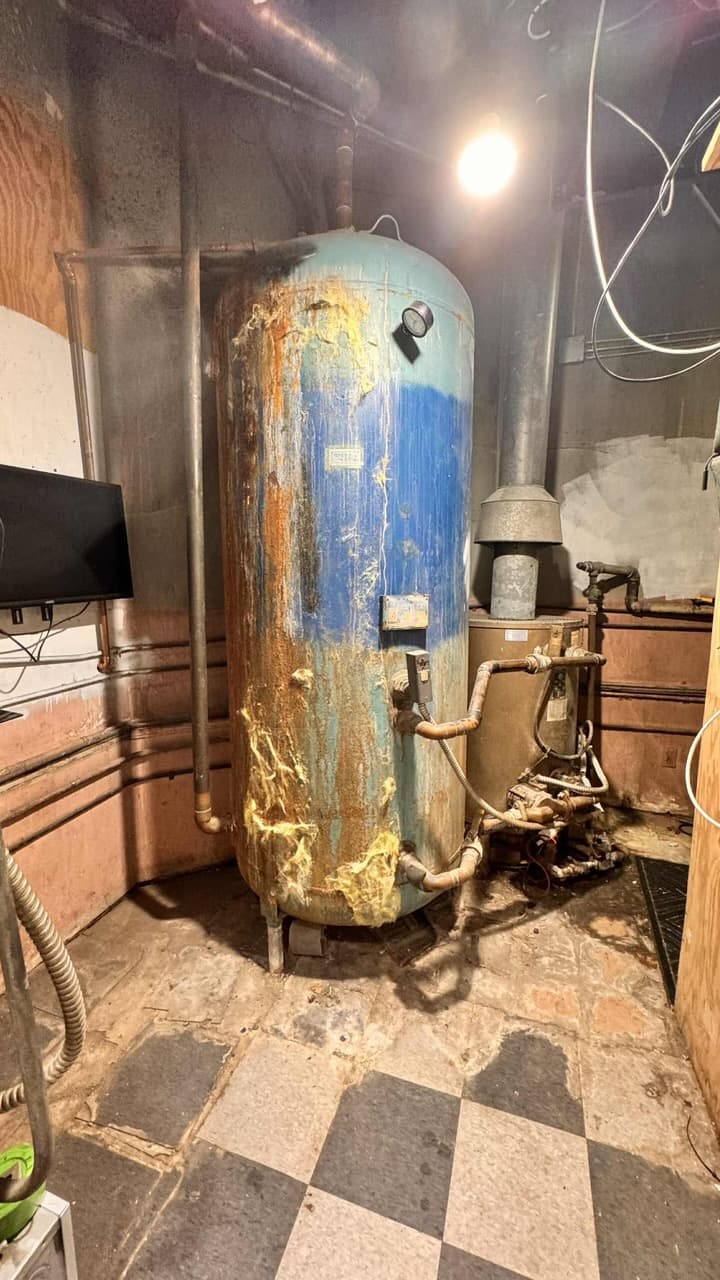
How commercial water heaters work plays out in Oxnard
Hot water in Oxnard is a food-safety and sanitation utility more than a comfort utility. Packing and processing plants wash down lines and equipment at the end of every shift and need recovery that keeps up with a crew on hoses. Restaurants at RiverPark and in the harbor area run dish machines that fail inspection if rinse temperature sags. The hospital campuses and dialysis and surgery centers near Rose Avenue and Gonzales Road need steady temperature and a recirculation loop that reaches every fixture. Hotels along the 101 and near the beach have morning peaks that expose any heater running below its rated recovery.
The coastal factors are specific. Exterior flue terminations and combustion-air louvers near the harbor and beach corrode, and a blocked or pitted vent is a safety issue, not only a service issue. Hard water in the region scales tankless heat exchangers and builds sediment in tank bottoms, so a heater that is never flushed runs louder, slower and shorter-lived than it should. Older buildings along Oxnard Boulevard and downtown often have water heaters in tight closets with venting that was adapted more than once, and gas supply and seismic strapping that predate current requirements.
On a replacement we size from measured demand rather than copying the old nameplate, which in a washdown plant or a hotel frequently means a different configuration than what is there: multiple tankless units in a rack, a larger storage tank with a smaller burner, or a recirculation redesign. Service visits cover flushing, anode and relief valve checks, venting inspection, combustion verification and recirculation pump condition, all logged by asset. The water heaters and boilers guide walks through tank versus tankless trade-offs in commercial settings.
Oxnard's climate and what it does to this equipment
Oxnard has one of the mildest climates in Southern California, with a persistent marine layer, cool nights, and summer highs that stay moderate near the water. The mildness is deceptive for equipment. Salt-laden air, morning fog and high humidity attack condenser coils, fasteners, cabinet panels and electrical terminals, while airborne farm dust and fine soil clog coils and filters during dry, windy stretches. Santa Ana wind events occasionally push hot, dry air to the coast and spike loads quickly. Systems here tend to fail from corrosion and fouling long before they fail from heat.
For the equipment background behind this page, read our water heaters and boilers guide or the full Commercial Water Heaters service page.
- Agricultural packing and cold-storage corridorsPacking houses, coolers and processing buildings on the Oxnard Plain, where walk-in-scale and engineered refrigeration runs through harvest peaks.
- Port Hueneme and the Channel Islands Boulevard industrial beltMarine-adjacent warehouses, distribution and light industrial space in the harshest salt-air band of the city.
- The Collection at RiverPark and the EsplanadeOpen-air retail, restaurants, theaters and big-box tenants with dense rooftop equipment and heavy kitchen loads.
- Hospital and medical-office clustersAcute-care and outpatient buildings around the central city where reliable cooling, pressure relationships and hot water are non-negotiable.
- Combustion/ignition or element checks with descaling
- Venting, gas/electrical, condensate, and expansion tank review
- Temperature set-points confirmed for safety and code
- DaVinci Portal: full service history and proof-of-work on file
What a commercial water heaters visit includes, and the problems we most often find
- Check current output against actual peak demand, not just spec-sheet capacity
- Inspect combustion/ignition or heating elements and descale as needed
- Confirm venting, gas/electrical, and condensate are code-correct
- Set and verify temperature set-points for safety and code compliance
- Document the visit — proof-of-work you can show for inspection
- Undersized units that were never sized to actual peak demand
- Scale buildup reducing efficiency and shortening element/heat-exchanger life
- Venting or gas line sizing that doesn't match the installed unit
- Aging tanks nearing end of service life with no replacement plan in place