Commercial Water Heaters in Corona, CA
Across Corona, hot water use varies widely: industrial restrooms and wash stations draw it in bursts, restaurants need constant recovery, and medical offices need dependable temperature with mixing protection. We check sizing against actual use, inspect gas supply and venting, flush sediment on hard water systems, and evaluate recirculation. Tankless units can work where demand is steady and maintenance access is good, but we recommend them selectively, not by default.
A manufacturing and industrial-park city along the 91 and 15 with retail centers, Temescal Canyon heat, and plenty of mid-size rooftop and process cooling loads.
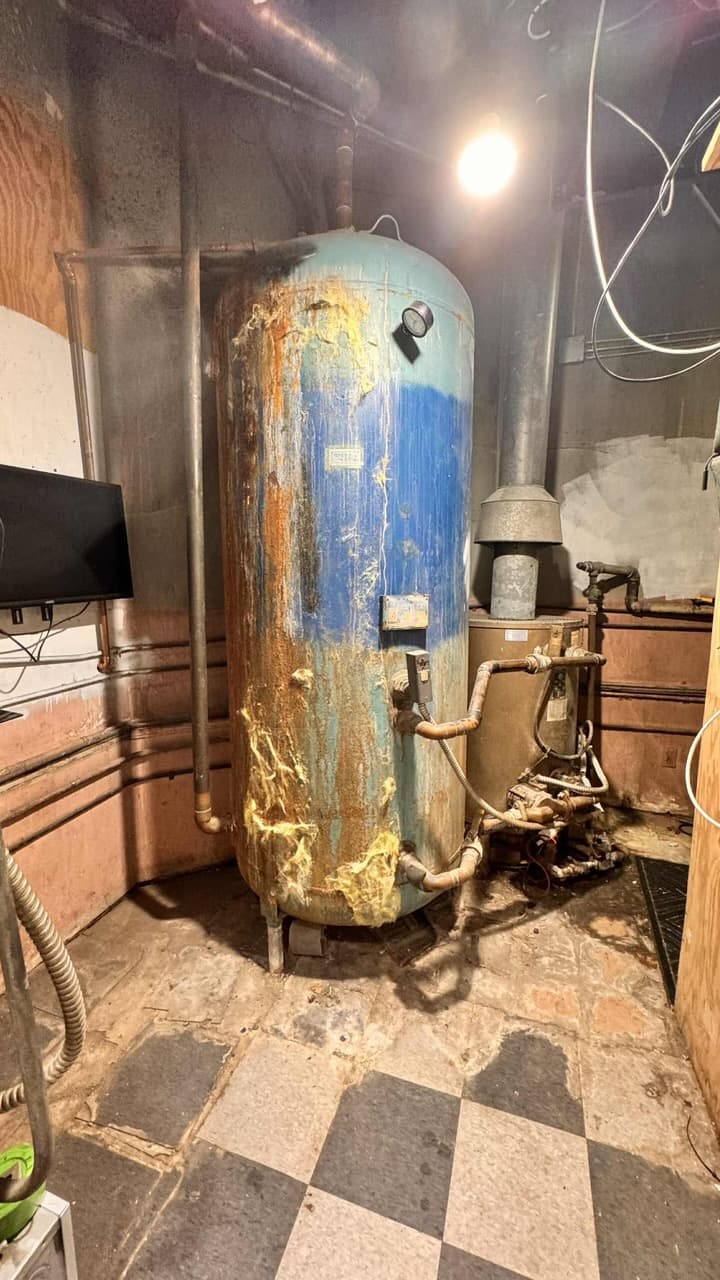
How commercial water heaters work plays out in Corona
Hot water in Corona is a story of mismatched demand. A fabrication shop in the Rimpau park draws it in bursts at shift change when forty people wash up at once, then nothing for hours. A restaurant at Dos Lagos needs constant recovery through a four-hour dinner service. A dental practice near Corona Regional Medical Center needs a stable, safe temperature at the chair all day. A hotel off the 91 needs recirculation that delivers hot water to the farthest room at 6 a.m. The same tank heater installed in all four would fail at least two of them, and often the heater that is in place was chosen by whoever built the space, not by anyone who understood the use.
Hard water does the rest. Corona's water carries enough mineral content that tank heaters accumulate sediment quickly and tankless heat exchangers scale. A heater that has never been flushed is heating through an insulating layer of scale, burning more gas for less recovery and running its flue hotter than it should. The symptoms owners notice are a dish machine that cannot reach sanitizing temperature, a wash station that runs cold during the shift change rush, or a gas bill that has crept up. We flush, inspect anodes, check combustion and venting, and test recirculation flow and temperatures before concluding anything about size.
Replacements in Corona are usually straightforward on the newer industrial and retail stock and more constrained in the older Main Street buildings, where gas capacity, flue routing, and the physical path to a mezzanine or back room set the limits. Tankless makes sense for steady, predictable demand with scale control in place, such as a medical office; it is a poor fit for the burst loads of a plant wash-up area without careful sizing. Booster heaters for dish machines solve the sanitizing temperature problem more cheaply than a larger primary heater in most restaurants. The water heaters and boilers guide covers sizing against measured demand.
Corona's climate and what it does to this equipment
Corona is a heat pocket at the mouth of Temescal Canyon. Daytime temperatures can reach well past 100 degrees for long stretches, and when onshore flow weakens the 91 corridor traps both heat and smog. Santa Ana winds from the northeast drive dust and debris across industrial rooftops and into condenser coils, and wildfire smoke from the surrounding hills and nearby counties can load filters rapidly. The result is equipment that runs at high head pressure much of the summer, with coil fouling and belt or bearing wear that arrives earlier than the manufacturer's schedule suggests.
For the equipment background behind this page, read our water heaters and boilers guide or the full Commercial Water Heaters service page.
- Sampson and Rimpau industrial parksManufacturing and warehouse buildings with a mix of rooftop packaged units, process cooling, and office suites sharing one mechanical footprint.
- Temescal Canyon corridorBusiness parks and industrial space along the canyon, fully exposed to heat, wind, and dust funneling toward the 15 interchange.
- Corona Mall and Auto Center areaRetail, restaurants, and big-box tenants along the 91 frontage, where rooftop equipment is dense and operating hours are long.
- Main Street and downtown CoronaThe Circle, civic buildings, older commercial storefronts, and small restaurants with aging split systems and compact rooftop units.
- Combustion/ignition or element checks with descaling
- Venting, gas/electrical, condensate, and expansion tank review
- Temperature set-points confirmed for safety and code
- DaVinci Portal: full service history and proof-of-work on file
What a commercial water heaters visit includes, and the problems we most often find
- Check current output against actual peak demand, not just spec-sheet capacity
- Inspect combustion/ignition or heating elements and descale as needed
- Confirm venting, gas/electrical, and condensate are code-correct
- Set and verify temperature set-points for safety and code compliance
- Document the visit — proof-of-work you can show for inspection
- Undersized units that were never sized to actual peak demand
- Scale buildup reducing efficiency and shortening element/heat-exchanger life
- Venting or gas line sizing that doesn't match the installed unit
- Aging tanks nearing end of service life with no replacement plan in place
Commercial Water Heaters in Corona: questions we get
Is tankless a good choice for a Corona manufacturing plant's restrooms and wash stations?
Our Corona restaurant water heater is only six years old but recovery has dropped badly. Is it failing?
Tank or tankless — which is right for a commercial site?
Do you handle code-required inspections?
Other services in Corona
Commercial Water Heaters nearby in Inland Empire (Riverside & San Bernardino Counties)
Commercial HVAC and refrigeration across Inland Empire (Riverside & San Bernardino Counties)