Commercial Water Heaters in Culver City, CA
Restaurant kitchens, wardrobe and makeup departments, studio facilities and medical offices all draw on Culver City's hot water systems. Demand patterns vary widely: a restaurant sees a dinner rush, a production building sees spikes during shooting days, and a medical office sees steady daytime use. Space constraints are common, so tankless or compact condensing equipment is frequently considered. We check gas supply, venting, seismic anchoring and recirculation, and we right-size equipment to actual use instead of repeating what was installed last time.
Studio and creative offices, Downtown Culver City restaurants, converted Hayden Tract buildings and medical offices on the Westside.
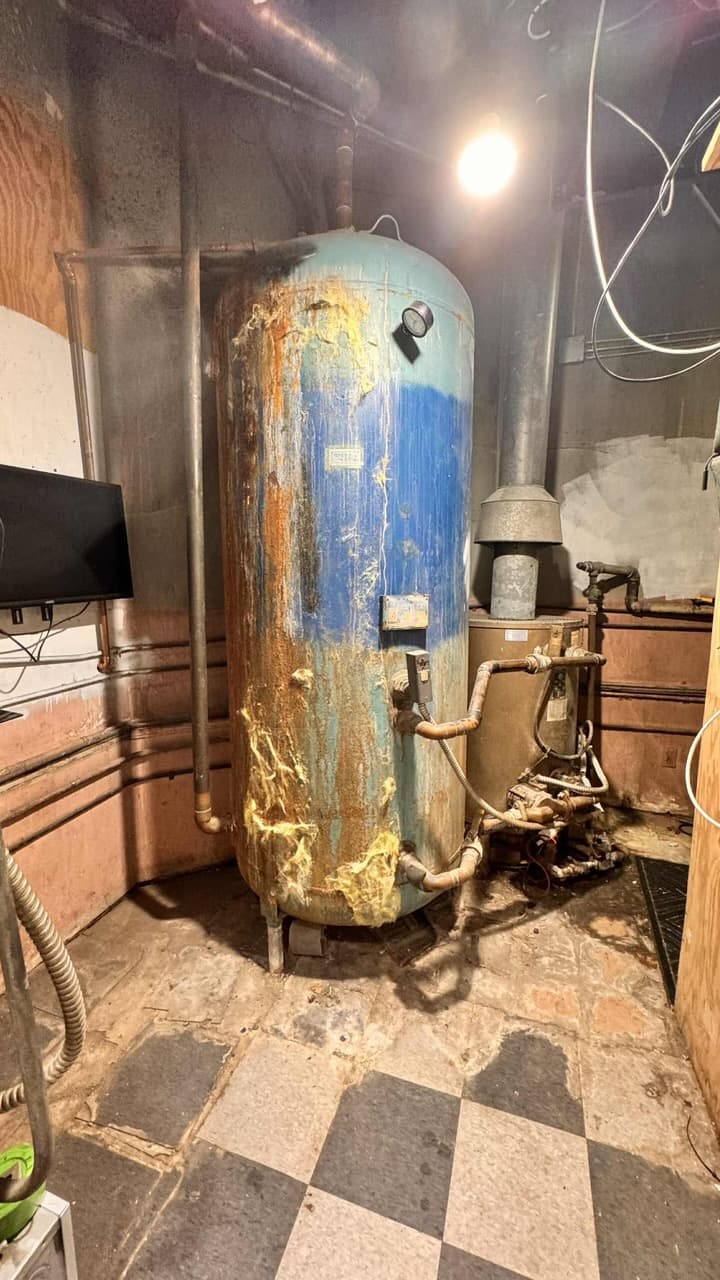
How commercial water heaters work plays out in Culver City
The hot water story in Culver City is about space. Downtown restaurants occupy shells where the water heater lives in a closet that also holds the mop sink and the electrical panel. Converted Hayden Tract buildings may have a single heater serving a kitchen, showers for a bike-commuting staff and a wardrobe department. Studio facilities see demand spike on shoot days, when makeup, wardrobe and commissary all draw at once, then drop to nothing. Medical offices on Sepulveda and Venice and the hospital campus off Venice Boulevard need steady, safe delivery through the day. Fitness studios and salons along Washington and Sepulveda are the properties most often undersized.
Because floor space is expensive and closets are small, tankless banks and compact condensing tanks come up on almost every Culver City replacement. The limiting factors are gas capacity and venting. Older buildings often have a gas line sized for an atmospheric tank, and vent routes through a converted roof with skylights and trusses can be long. We check the meter, the gas line, the available vent path and the electrical supply before proposing anything, and we size to the real draw pattern rather than the fixture count alone.
On replacement day we work in the window the operation gives us, often overnight downtown or on a dark day at a studio, and we leave the installation with seismic anchoring, expansion control and, where recirculation exists, a balanced loop. For clinics we verify mixing valves and storage temperatures with legionella awareness and document the readings. The water heaters and boilers guide explains the sizing trade-offs.
Culver City's climate and what it does to this equipment
Culver City sits a few miles inland from the coast on the Westside, so the marine layer regularly cools mornings and evenings, and the city sees fewer extreme heat days than the valleys. Afternoons in summer are warm, with a heat wave now and then, and humidity is moderate. That mildness means free cooling is available much of the year, which makes economizer function valuable. Salt is a lesser concern than at the beach, but sea breeze, traffic and nearby freeway particulate still load coils. Equipment runs a long cooling season with moderate peak stress.
For the equipment background behind this page, read our water heaters and boilers guide or the full Commercial Water Heaters service page.
- Studio campuses (Sony Pictures Studios and the Culver Studios area)Soundstages, edit suites, chilled-water systems and noise-sensitive spaces with strict uptime and acoustic requirements.
- Downtown Culver City (Culver and Washington Boulevards)Restaurants, food halls and boutique retail in older low-rise buildings with tight kitchens and shared roofs.
- Hayden Tract and the Helms Bakery DistrictConverted warehouse and creative-office buildings with exposed systems, unusual roof structures and mixed-generation equipment.
- Sepulveda, Venice and Fox Hills medical and office corridorsMedical offices and mid-rise professional buildings with zoned comfort and after-hours service needs.
- Combustion/ignition or element checks with descaling
- Venting, gas/electrical, condensate, and expansion tank review
- Temperature set-points confirmed for safety and code
- DaVinci Portal: full service history and proof-of-work on file
What a commercial water heaters visit includes, and the problems we most often find
- Check current output against actual peak demand, not just spec-sheet capacity
- Inspect combustion/ignition or heating elements and descale as needed
- Confirm venting, gas/electrical, and condensate are code-correct
- Set and verify temperature set-points for safety and code compliance
- Document the visit — proof-of-work you can show for inspection
- Undersized units that were never sized to actual peak demand
- Scale buildup reducing efficiency and shortening element/heat-exchanger life
- Venting or gas line sizing that doesn't match the installed unit
- Aging tanks nearing end of service life with no replacement plan in place