Commercial Water Heaters in Rancho Cucamonga, CA
Restaurants, medical offices, and industrial restrooms around Rancho Cucamonga all rely on hot water, but each has different needs. Dental and medical suites want stable temperature, restaurants need recovery during rushes, and industrial users need steady supply for breaks and shifts. We examine sizing, venting, sediment, and recirculation, and recommend replacements that match actual load, with attention to gas supply and available space in tenant spaces.
A foothill city mixing Victoria Gardens retail, medical offices, Foothill Boulevard commercial strips, and large industrial parks that sit directly in the path of canyon wind.
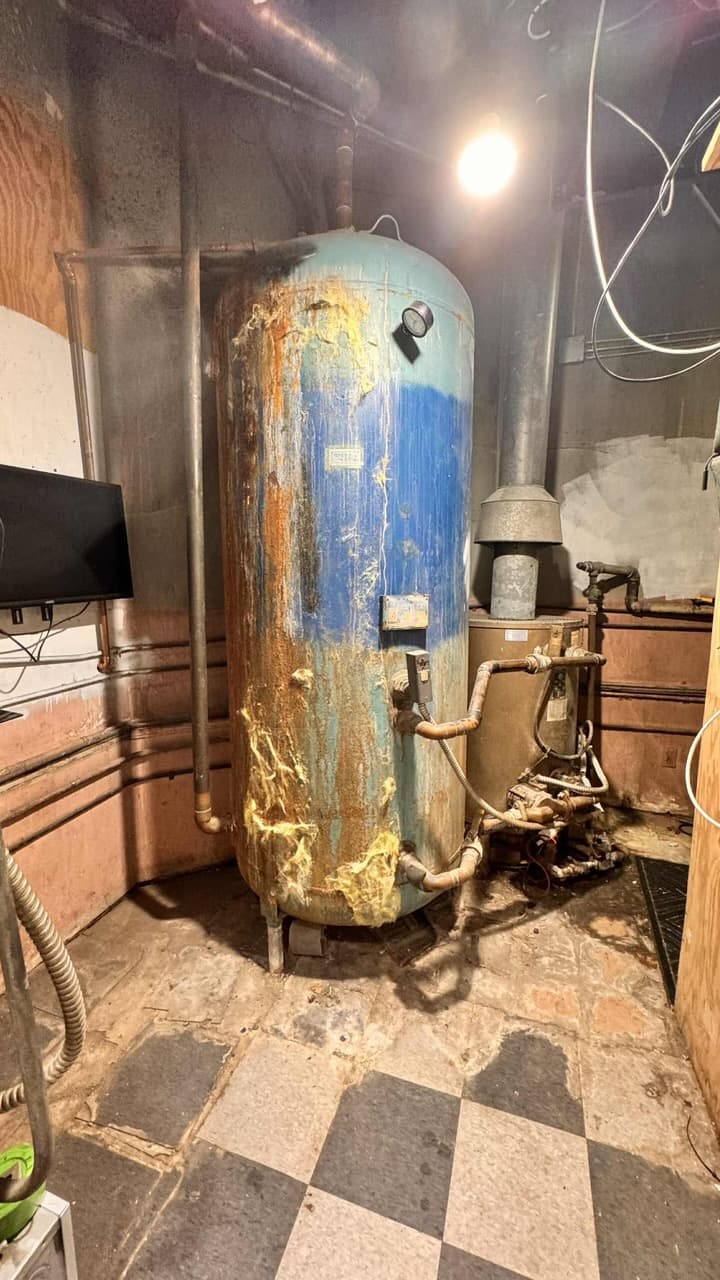
How commercial water heaters work plays out in Rancho Cucamonga
Restaurant hot water failures in Rancho Cucamonga concentrate in the same places refrigeration problems do: the dining clusters around Victoria Gardens and the Epicenter, and the long run of restaurants on Foothill Boulevard. A commercial tank heater in a cramped back room with a dish machine demanding sanitizing temperatures during a rush is a predictable stress point. Local water hardness adds sediment that insulates the burner from the tank, and recovery slows until the dish machine's booster cannot keep up. We size against actual kitchen demand, flush sediment, inspect venting and combustion, and verify the mixing valve and recirculation loop before recommending anything larger.
Medical and dental offices have a different requirement. They need stable, safe temperatures at every fixture, which depends on mixing valves and recirculation that nobody has looked at since the tenant improvement. Industrial tenants near Haven and Arrow Route have restrooms and sometimes wash stations with sudden demand at shift changes. In both cases the building's gas line capacity and venting path, often shared with other equipment, limit what can be installed without a larger project.
For tankless, we are selective. Where demand is steady and the unit can be maintained and descaled on schedule, it works well. Where water hardness is high and nobody will flush the heat exchanger, a well-maintained tank with the right recovery rate is the more dependable choice. We give owners the measured demand, the constraints of the space, and a clear recommendation. The water heater and boiler guide covers the tradeoffs in more depth.
Rancho Cucamonga's climate and what it does to this equipment
The city's position at the base of the San Gabriel Mountains defines its climate. Canyon winds through Cucamonga and Day Creek can arrive suddenly and hard, throwing dust, leaves, and debris across rooftops and into condenser coils. Summers are hot and dry, with the foothills adding to afternoon temperatures, and fall brings Santa Ana conditions and heightened fire risk in the surrounding hills. Wildfire smoke can load filters quickly. Winter nights are noticeably cooler than elsewhere in the Inland Empire, so equipment sees a wide range and economizers and heating components actually get used.
For the equipment background behind this page, read our water heaters and boilers guide or the full Commercial Water Heaters service page.
- Victoria Gardens and Day Creek areaOutdoor retail, dining, and entertainment with long operating hours and many tenant-controlled rooftop and split systems.
- Foothill Boulevard corridorRestaurants, medical offices, and older commercial strips along the historic route, many with mixed equipment generations.
- Industrial parks near Arrow Route and Haven AvenueManufacturing, food-related production, and distribution buildings with large rooftop packaged-unit arrays and refrigerated spaces.
- Epicenter and Etiwanda mixed-use areasEvent-oriented dining, newer offices, and developing commercial pads toward the city's northern and eastern edge.
- Combustion/ignition or element checks with descaling
- Venting, gas/electrical, condensate, and expansion tank review
- Temperature set-points confirmed for safety and code
- DaVinci Portal: full service history and proof-of-work on file
What a commercial water heaters visit includes, and the problems we most often find
- Check current output against actual peak demand, not just spec-sheet capacity
- Inspect combustion/ignition or heating elements and descale as needed
- Confirm venting, gas/electrical, and condensate are code-correct
- Set and verify temperature set-points for safety and code compliance
- Document the visit — proof-of-work you can show for inspection
- Undersized units that were never sized to actual peak demand
- Scale buildup reducing efficiency and shortening element/heat-exchanger life
- Venting or gas line sizing that doesn't match the installed unit
- Aging tanks nearing end of service life with no replacement plan in place