Commercial Water Heaters in San Diego, CA
San Diego's hot water demand is anything but uniform. Downtown hotels and restaurants need recovery capacity for peak periods, while medical campuses and life-science buildings in Sorrento Valley need reliable supply with attention to temperature control and, where relevant, mixing and recirculation. Coastal air shortens the life of exterior flues and jackets on rooftop and courtyard installs. We size, replace and service tank and tankless systems with venting and gas-line details handled in scope.
A large, varied commercial market spanning downtown and Gaslamp hospitality, Kearny Mesa and Mira Mesa industrial space, Sorrento Valley life-science buildings, and the marine-industrial waterfront around the Port and Barrio Logan.
How commercial water heaters work plays out in San Diego
Hot water failures in San Diego show up first in hospitality. A hotel on Harbor Island or in Hotel Circle with several hundred rooms and a banquet kitchen is sized for a morning peak and a dinner service, and when a tank heater or a bank of tankless units loses capacity, the complaints arrive before maintenance even knows. Downtown restaurants with dish machines and bar sinks run a smaller version of the same problem. In both cases, the first diagnosis is often whether the building has a recovery problem, a recirculation problem or a scale problem, because each looks like not enough hot water.
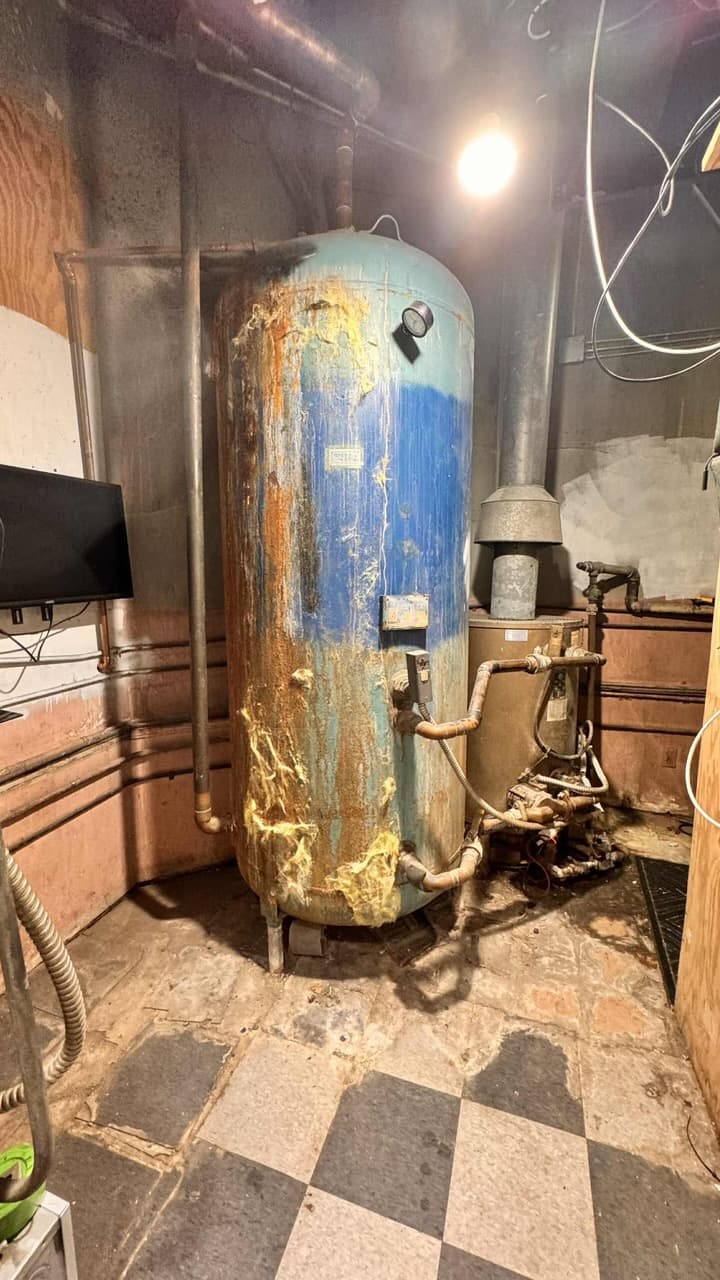
Scale is the local constant. San Diego's water is hard enough that tank heat exchangers, tankless units and recirculation components accumulate mineral deposits on a predictable schedule, and a neglected unit loses efficiency and then fails early. We build descaling and anode inspection into service rather than waiting for a cold shower to force the issue. Near the bay and in Point Loma, exterior venting and jackets on rooftop or courtyard installations corrode faster, which means flue inspections matter more than they would inland.
Medical and institutional buildings add a different requirement. Hillcrest, Kearny Mesa and La Jolla medical campuses and the medical office buildings around them need stable supply temperatures, working mixing valves and, where relevant, documented temperature control for patient areas. Replacements involve gas supply sizing, venting through occupied floors or podium roofs, seismic strapping and a City permit, and in a working building the changeover has to be planned to a short window. The finished install goes into the Portal with the model, capacity, venting details and service schedule. The water heaters and boilers guide walks through the sizing choices in more depth.
San Diego's climate and what it does to this equipment
San Diego's climate is mild on paper and punishing in the details. Near the bay and the coast, the marine layer brings persistent humidity and salt-laden air that attacks coil fins, fan housings, electrical enclosures and rooftop cabinet seams, so condenser coils on waterfront roofs fail earlier than the same models inland. Mesas such as Kearny Mesa and Mira Mesa sit a little warmer and drier. Late-summer and early-fall heat events, along with the occasional Santa Ana wind period, push cooling equipment hard just when many owners assume the season is over.
For the equipment background behind this page, read our water heaters and boilers guide or the full Commercial Water Heaters service page.
- Downtown and Gaslamp QuarterRestaurants, bars, hotels and mixed-use towers with rooftop equipment, shared riser systems, and kitchens that run late and hard through weekends and convention weeks.
- Kearny Mesa and Mira MesaA dense grid of flex-industrial, office and light manufacturing buildings along the Convoy, Ruffin and Miramar corridors, with large inventories of aging rooftop units.
- Sorrento Valley and Torrey Pines MesaLife-science and technology buildings where lab exhaust, tight temperature bands and documented control sequences matter as much as raw capacity.
- Port, Barrio Logan and the bayfrontMarine-industrial shops, cold storage, food distribution and support facilities exposed to salt air, with equipment that corrodes faster than anywhere inland.
- Combustion/ignition or element checks with descaling
- Venting, gas/electrical, condensate, and expansion tank review
- Temperature set-points confirmed for safety and code
- DaVinci Portal: full service history and proof-of-work on file
What a commercial water heaters visit includes, and the problems we most often find
- Check current output against actual peak demand, not just spec-sheet capacity
- Inspect combustion/ignition or heating elements and descale as needed
- Confirm venting, gas/electrical, and condensate are code-correct
- Set and verify temperature set-points for safety and code compliance
- Document the visit — proof-of-work you can show for inspection
- Undersized units that were never sized to actual peak demand
- Scale buildup reducing efficiency and shortening element/heat-exchanger life
- Venting or gas line sizing that doesn't match the installed unit
- Aging tanks nearing end of service life with no replacement plan in place