Commercial Water Heaters in Oceanside, CA
Hot water is critical for Oceanside's medical offices, hospitals, hotels and restaurants, and a single failure can disrupt operations. Harbor-area flues and exterior jackets suffer in salt air, and recirculation systems in older buildings are often undersized or neglected. We size and install tank and tankless equipment, check venting, gas supply and mixing valves, and set up service routines that catch problems early.
A harbor and downtown city on the north coast with hospitals, light-industrial space along the Oceanside Boulevard and Mission Avenue corridors, and an economy shaped by neighboring Camp Pendleton.
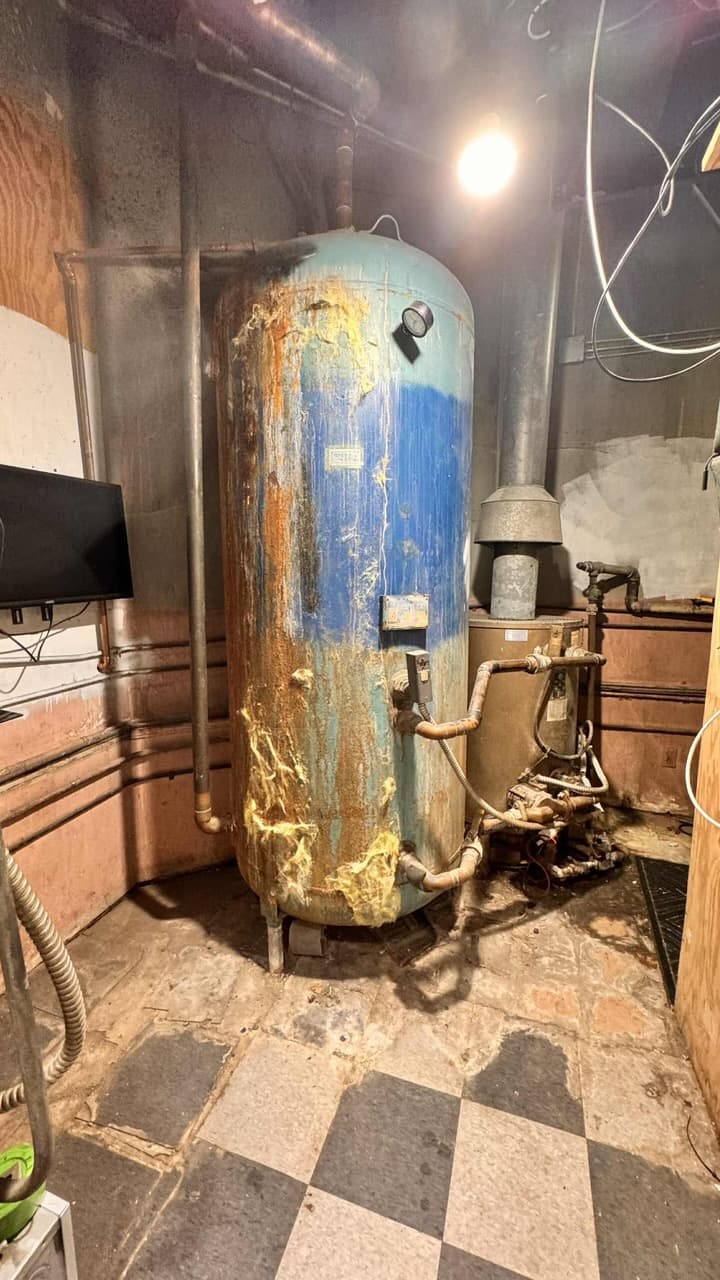
How commercial water heaters work plays out in Oceanside
Hotels along the Oceanside beachfront and around the harbor are the heaviest hot water users in the city, and their failures are the most public. Guest showers, laundry and a restaurant kitchen draw on the same plant, and a recirculation pump that fails on a Friday night gets noticed by every room on the far wing. Many of these properties have had piecemeal upgrades over the years, leaving a tank or two paired with a tankless bank and a recirc loop that nobody has balanced. Our first visit on a hotel system usually includes mapping what is actually there before diagnosing anything.
Restaurants downtown and along Mission Avenue and Oceanside Boulevard have a simpler problem: dish machines and hand sinks that need temperature at the fixture, and a water heater in a closet, under a stair or outside against a wall where the flue and jacket see salt air. Corroded venting is a safety issue, not just a maintenance item, and we check draft and combustion along with temperature and recovery. Where a tank is undersized for a new menu or longer hours, we size the replacement for the real demand rather than matching the old nameplate.
Medical and dental offices across the city, the hospital-adjacent buildings and the inland flex spaces with wash areas need reliable, well-controlled hot water with mixing valves set correctly and inspected. These are the systems where documentation earns its keep, because the question that eventually comes is not whether the water was hot but whether anyone can prove the temperatures were controlled. The water heaters and boilers guide explains the tank, tankless and recirculation choices in detail.
Oceanside's climate and what it does to this equipment
Oceanside's weather follows the coast: cool, damp mornings under the marine layer, mild afternoons and persistent humidity. Salt carried inland by onshore breezes works on equipment near the harbor and the beach, corroding coils, housings and electrical terminals more quickly than in nearby inland cities. Summers are comfortable by Southern California standards, but the eastern, inland parts of the city can warm noticeably on days when the marine layer retreats. Equipment therefore faces two different problems depending on the street: salt and moisture near the water, and longer, hotter run times farther east.
For the equipment background behind this page, read our water heaters and boilers guide or the full Commercial Water Heaters service page.
- Downtown and Oceanside HarborRestaurants, hotels and mixed-use buildings near the pier and harbor, where kitchens and rooftop equipment live in salt air and tight service access.
- Oceanside Boulevard and Mission Avenue corridorsShopping centers, professional offices and older retail with aging rooftop units and tenants that change faster than the equipment is updated.
- Rancho del Oro and the inland industrial areasLight-industrial, warehouse and flex buildings serving local trades and distribution, with large open volumes and a mix of heating and cooling needs.
- Medical campusesHospital and medical office buildings that depend on continuous cooling, reliable hot water and documented maintenance records.
- Combustion/ignition or element checks with descaling
- Venting, gas/electrical, condensate, and expansion tank review
- Temperature set-points confirmed for safety and code
- DaVinci Portal: full service history and proof-of-work on file
What a commercial water heaters visit includes, and the problems we most often find
- Check current output against actual peak demand, not just spec-sheet capacity
- Inspect combustion/ignition or heating elements and descale as needed
- Confirm venting, gas/electrical, and condensate are code-correct
- Set and verify temperature set-points for safety and code compliance
- Document the visit — proof-of-work you can show for inspection
- Undersized units that were never sized to actual peak demand
- Scale buildup reducing efficiency and shortening element/heat-exchanger life
- Venting or gas line sizing that doesn't match the installed unit
- Aging tanks nearing end of service life with no replacement plan in place
Commercial Water Heaters in Oceanside: questions we get
Our beachfront hotel has a recirculation loop that takes minutes to deliver hot water to the end rooms. Is that a heater problem?
Usually not the heater itself. Long waits at distant fixtures point to a failed or undersized recirculation pump, a check valve stuck closed, a loop that was never balanced, or a timer that shuts the pump off during the hours guests actually shower. We trace the loop, verify flow and temperature at the far points, and correct the control sequence. Only if the plant cannot keep up with the loop load does heater capacity enter the conversation.
Tank or tankless for a restaurant two blocks from the Oceanside pier?
It depends on the menu, the hours and the gas and venting available in the building. Tankless banks handle peak dish machine demand well and take little floor space, but they need adequate gas supply, proper venting and regular descaling. A tank with a recirc loop is simpler and forgiving of hard water. Near the coast, whichever you choose, the venting materials and the location of any exterior components should be selected with salt exposure in mind.
Tank or tankless — which is right for a commercial site?
It depends on peak demand and available gas/electrical service. We'll size the recommendation to your actual usage, not just replace like-for-like.
Do you handle code-required inspections?
Yes — venting, gas line, and combustion work is documented to pass inspection, and we coordinate with your building department when needed.