Commercial Water Heaters in Whittier, CA
Whittier's hot water demand is driven by restaurant dish machines, medical office sinks, salon and personal-care tenants and industrial break rooms. Many of the water heaters in older buildings are located in tight closets or above ceilings, where venting, combustion air and drain pan conditions matter. Mineral scale from local water shortens tank life, so flushing and valve checks are standard. When replacement is due, we check gas capacity, vent routing and seismic strapping, and consider tankless options where space and demand justify them.
Uptown Whittier restaurants, hospital and medical campuses, light industrial streets and Quad-area retail on aging but well-kept commercial buildings.
How commercial water heaters work plays out in Whittier
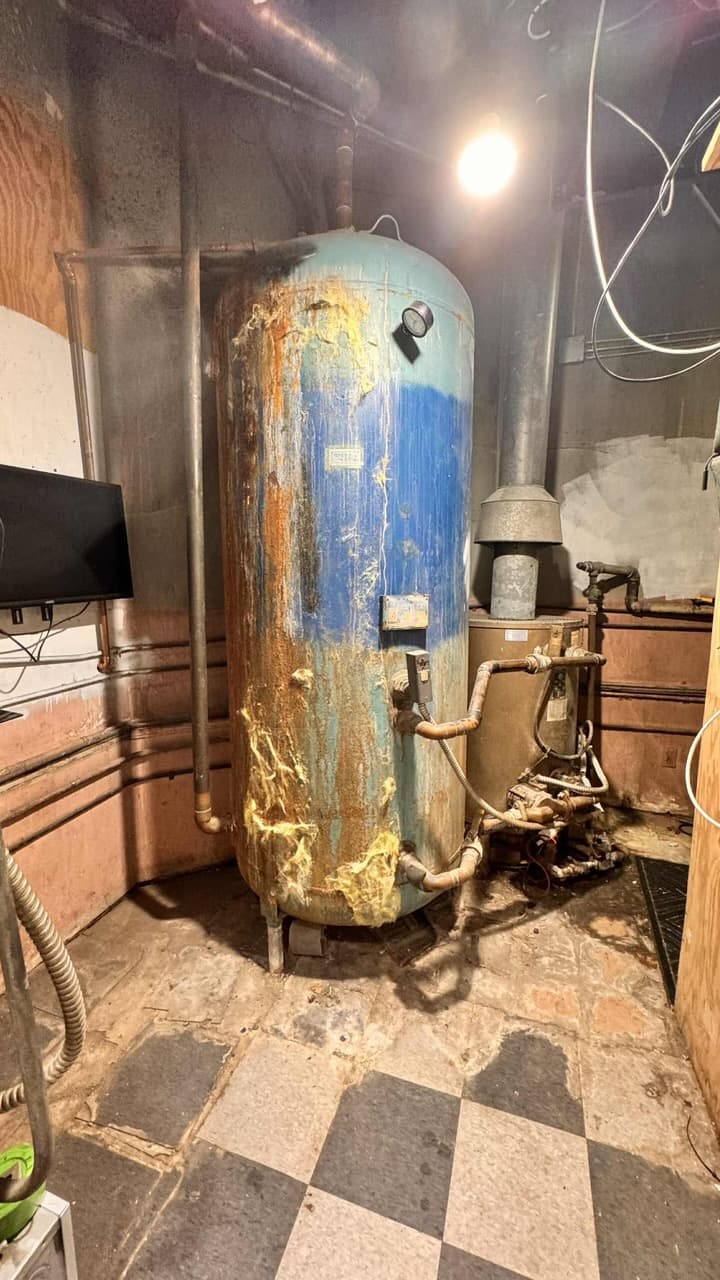
Ask where the water heater is in an older Whittier commercial building and you often get a pause. It may be above a ceiling in a hallway, in a closet behind the dish pit, on a mezzanine reached by a ladder, or in a shared utility room where two tenants' systems were never clearly separated. Uptown restaurants need sanitizing-temperature water for dish machines, salons and personal-care tenants along Whittier Boulevard draw hot water constantly, medical offices need reliable supply for hand-wash and instrument processing, and the hospital campus runs hot water at a scale and reliability level that is a plant of its own.
Age and water quality are the two enemies. Scale from the local supply shortens tank life and fouls heat exchangers, and in a building that has not flushed its heater in a decade the sediment layer at the bottom of the tank is already doing damage. Venting in older buildings is a frequent finding: flues that were adequate for the original heater but not the replacement, combustion air closed off by a later remodel, drain pans missing or draining nowhere. These are the items an inspector will note and an owner will not see until there is a leak into a ceiling.
Replacement is where the decisions get made. We size to measured demand, verify gas capacity and vent routing before recommending tankless, include mixing valves, recirculation pump checks, expansion control and seismic strapping in the scope, and document the installation so the next owner inherits a record rather than a mystery. The service page is commercial water heaters; the background is in the water heaters and boilers guide.
Whittier's climate and what it does to this equipment
Whittier sits in the foothills edge of the Los Angeles basin, with the Puente Hills to the east, and the marine layer reaches it more often than it reaches the San Gabriel Valley. Summers are warm to hot, commonly in the 80s and 90s with periodic heat waves, and nights cool enough to give economizers real use. Hillside areas see higher fire-season smoke and ash, which clog filters and coils. Santa Ana winds bring dust and heat in fall. Equipment faces moderate heat but significant air quality swings and the wear of buildings that are decades old.
For the equipment background behind this page, read our water heaters and boilers guide or the full Commercial Water Heaters service page.
- Uptown Whittier (Greenleaf Avenue)Historic low-rise restaurants, cafes and shops with retrofitted kitchens, walk-ins and shared or hard-to-reach roofs.
- Whittier Boulevard and Painter Avenue retailMid-size centers and freestanding pads with grocery, pharmacy and restaurant tenants and aging packaged units.
- PIH Health Whittier Hospital and medical office areaHospital-adjacent buildings with strict temperature, humidity and ventilation needs and after-hours service demands.
- Telegraph Road and light-industrial blocksSmall manufacturing, auto and contractor buildings with a handful of older rooftop units and limited controls.
- Combustion/ignition or element checks with descaling
- Venting, gas/electrical, condensate, and expansion tank review
- Temperature set-points confirmed for safety and code
- DaVinci Portal: full service history and proof-of-work on file
What a commercial water heaters visit includes, and the problems we most often find
- Check current output against actual peak demand, not just spec-sheet capacity
- Inspect combustion/ignition or heating elements and descale as needed
- Confirm venting, gas/electrical, and condensate are code-correct
- Set and verify temperature set-points for safety and code compliance
- Document the visit — proof-of-work you can show for inspection
- Undersized units that were never sized to actual peak demand
- Scale buildup reducing efficiency and shortening element/heat-exchanger life
- Venting or gas line sizing that doesn't match the installed unit
- Aging tanks nearing end of service life with no replacement plan in place