Still Not Fixed?
A real diagnosis finds the cause. Guessing just replaces parts.
If your commercial HVAC or refrigeration equipment has already been "fixed" once — or twice — and the same problem keeps showing up, the issue usually isn't the equipment. It's that the actual root cause was never found. We test first, replace second, and document everything we find.
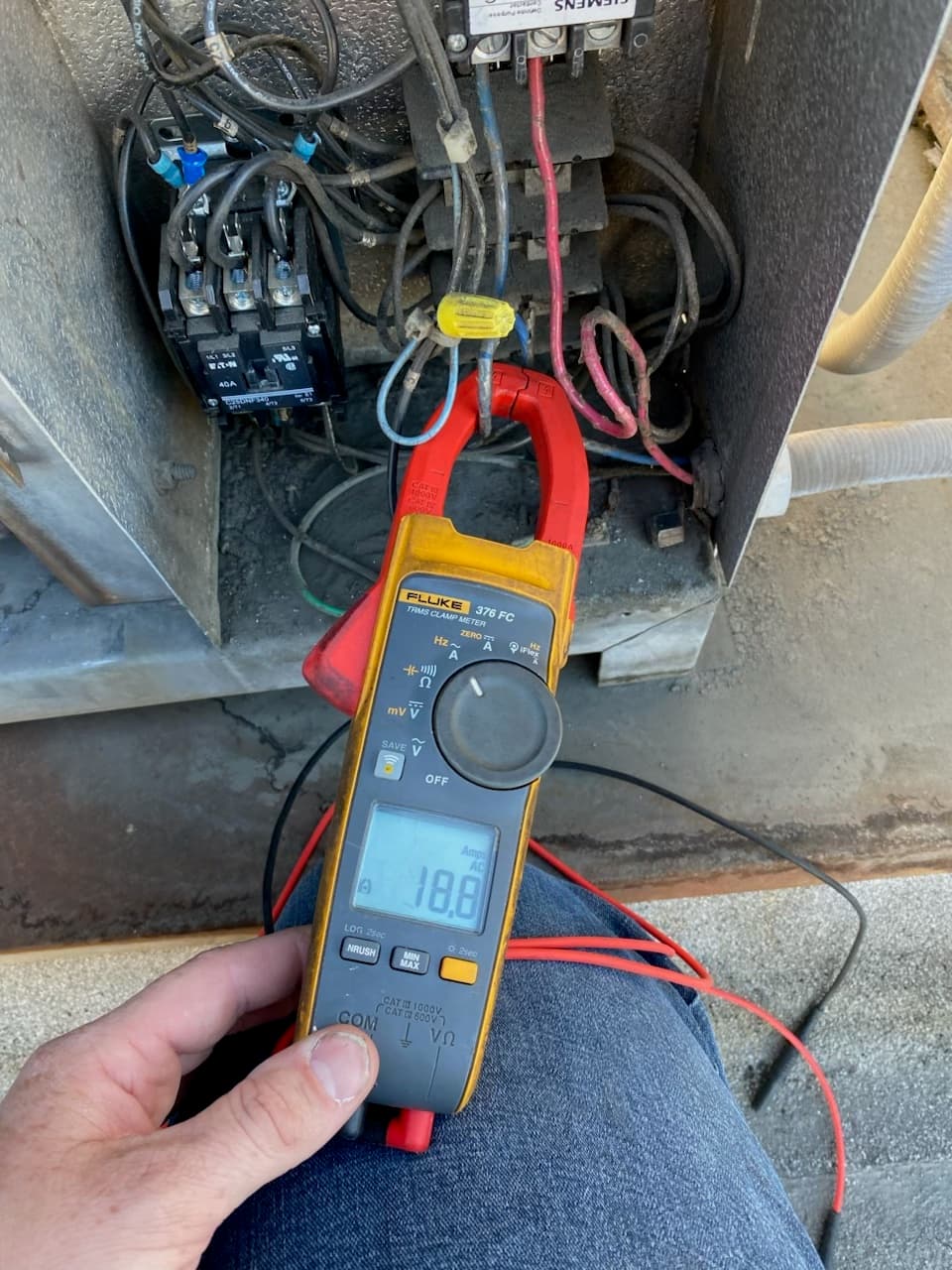
Signs it's time for a second opinion
A capacitor, then a contactor, then a compressor — and the unit still isn't right. That pattern usually means the root cause was never actually found.
If a repair visit doesn't leave you with the actual numbers — pressures, amp draws, temperatures — there's no way to know what was really tested.
Sometimes replacement is genuinely the right call. Sometimes it's the answer when the real fault was never isolated. We'll tell you which one it is, with the readings to back it up.
Every reading and finding logged to DaVinci Portal — so you have a record, not just our word for it.
How a second-opinion diagnostic actually works
- 1Tell us what's happened so far — what was replaced, what the symptoms are, when it started.
- 2We run our own independent diagnostic from scratch, without assuming the prior work was correct or incorrect.
- 3Readings — pressures, amp draws, temperatures — taken and recorded, not estimated.
- 4You get a straight answer: what's actually wrong, what fixing it involves, and why — with the numbers to back it up, logged to DaVinci Portal.
FAQ
Does a second opinion cost more than a regular diagnostic?
No. It's the same diagnostic process and the same rate as any other service call — we're not charging a premium to tell you what's actually wrong, and the fee applies toward the repair if you approve it the same visit.
Do I need to cancel with my current contractor first?
No — you're free to get a second opinion at any point. We'll do our own independent diagnostic regardless of what's already been done.
What if you find the same thing the other contractor found?
Then you'll have independent confirmation with our own readings attached — which is still useful information, not a wasted visit.
What if the equipment was already 'fixed' but the issue is still happening?
That's exactly the situation this is for. We start from the actual symptoms and take our own readings rather than assuming the previous diagnosis was correct.
When a second opinion is worth getting
Not every repair recommendation deserves a second look. If a technician shows you a burned contactor, replaces it, and the unit runs correctly afterward, you have what you paid for. A second opinion earns its place when the stakes are high, the explanation is thin, or the pattern is wrong. Four situations account for nearly all of the second-opinion calls we take from commercial operators.
- A large replacement recommendation. You have been told a rooftop unit, a condensing unit, a chiller, or a walk-in system needs to be replaced. The recommendation may well be right, but replacement is a capital decision, and a capital decision should rest on documented readings and a stated failure mode, not on a sentence that says the unit is old and tired.
- Repeat failures on the same equipment. The unit was repaired in March, again in June, and now it is September and the same symptom is back. Each visit replaced something. A system that keeps failing after each repair is telling you the actual cause has not been found.
- A vague diagnosis. You were told the system is low on refrigerant, or has a bad board, or is just worn out, with no pressures, temperatures, or amp readings to support it. A diagnosis without measurements is an opinion.
- A compressor declared failed with no root cause. Compressors rarely die of old age alone. They fail because of flooding, overheating, contamination, electrical problems, or a lubrication issue, and each of those has an upstream cause. If a quote proposes replacing a compressor without naming why the old one failed, the new one is at risk of the same fate.
There is a fifth situation that is less about the equipment than about the decision-maker: you are responsible for approving the work but you are not the person who stood on the roof. Property managers, regional directors, school facilities staff, and public-agency procurement officers approve mechanical work on the strength of someone else's description. An independent assessment gives that approval a documented basis.
What a real diagnostic includes, by equipment type
A diagnostic is a set of measurements compared against what the equipment should be doing, followed by reasoning about the difference. The measurements change with the equipment. Here is what we consider a minimum for each major category we serve.
Rooftop units and split systems
Suction and discharge pressures with saturation temperatures; superheat and subcooling, compared against the manufacturer's charging method for that metering device; supply and return air temperatures with the resulting split; compressor, condenser fan, and blower amp draws against nameplate; incoming voltage and voltage balance on three-phase equipment; static pressure across the filters and coil; condition of the condenser and evaporator coils; economizer damper position and sensor behavior; control sequence and safety circuit operation. On heat pumps and gas-heat units, the heating cycle is checked separately. The rooftop unit guide explains how these readings relate to one another.
Walk-in coolers, freezers, and display cases
Box temperature against setpoint over time, not a single glance at a thermometer; evaporator and condensing pressures with superheat and subcooling; defrost timer or control settings and whether defrost actually terminates; evaporator fan operation and coil frost pattern; condenser cleanliness and ambient conditions at the condensing unit; door gaskets, closers, and strip curtains; drain line heater operation on freezers; refrigerant leak search when charge is low. A box that cannot hold temperature because its door is propped open during deliveries does not need a compressor. See the walk-in cooler and freezer guide for the operational side of this.
Ice machines
Water supply pressure and temperature, inlet filter condition, water level and float or sensor operation, harvest cycle timing, refrigeration pressures during freeze and harvest, condenser condition (air-cooled units in hot kitchens are chronically starved for airflow), and scale accumulation on the evaporator. Many ice machine 'failures' are water quality and sanitation problems that no refrigeration part will fix. The commercial ice machine guide covers the sanitation side.
Chillers, cooling towers, and hydronic systems
Entering and leaving chilled water temperatures and the resulting approach, condenser water temperatures and approach, refrigerant pressures and saturation temperatures per circuit, oil pressure and level where applicable, compressor amperage against rated load, flow verification across evaporator and condenser, tower fan and fill condition, pump operation and strainer condition, and a review of alarm and trend history from the chiller controller. A high condenser approach almost always points to tube fouling or tower problems rather than to the compressor. Our chillers and hydronic systems guide goes deeper.
Boilers and commercial water heaters
Gas supply and manifold pressure, combustion analysis (oxygen, carbon monoxide, flue temperature), ignition sequence and flame signal, water temperature rise against firing rate, condition of the heat exchanger and burners, operation of low-water and high-limit safeties, venting integrity, and for hydronic systems, loop pressure, expansion tank condition, and pump operation. Scale and combustion air are the two most common causes of symptoms blamed on the burner or the control.
Kitchen ventilation and make-up air
Exhaust fan amperage and airflow, make-up air unit operation and discharge temperature, building pressure relative to outdoors with the kitchen running, interlock sequence between hood and make-up air, belt and bearing condition, and a check of whether the dining room rooftop units are fighting a negative building. A great many 'the dining room will not cool' complaints are kitchen balance problems, which is why we treat kitchen ventilation and make-up air as part of HVAC diagnostics rather than a separate trade.
How we document findings so you can compare
A second opinion is useful only if it can be laid side by side with the first. We structure our findings so that comparison is straightforward even for someone without a mechanical background.
- The symptom as reported, in your words, with dates and any pattern you have noticed, such as time of day, weather, or occupancy.
- The prior diagnosis and proposed scope, summarized from the quote or report you give us, so our findings respond to specific claims rather than talk past them.
- Our measured readings, recorded as numbers with the conditions under which they were taken (outdoor temperature, load, time), and photographed where a photo adds proof.
- Our diagnosis, stated as a failure mode and a cause, with the readings that support it. Where we are not certain, we say what we would need to confirm it.
- Agreement and disagreement, item by item, with the first contractor's assessment. If they were right about the compressor but wrong about why, we say both.
- Options, usually two or three, from the minimum repair that restores reliable operation to full replacement, with the trade-offs of each in plain language.
Everything is logged to the unit's record in DaVinci Portal, so the readings are time-stamped and attached to the specific asset rather than living in an email. If you later choose a different contractor to do the work, you can hand them that record. The format is the same one we use on every repair call, described in our diagnostics and root-cause guide.
Common misdiagnoses we see
The patterns below are not accusations against anyone. They are the predictable result of time pressure, incomplete measurement, and the habit of fixing the component that failed rather than asking why it failed. We have made some of these mistakes ourselves earlier in our careers, which is part of why we measure the way we do now.
| Symptom | Quick diagnosis | What a full diagnostic often finds |
|---|---|---|
| Unit not cooling, low suction pressure | Low on refrigerant, add charge | A leak that will keep recurring, a restricted metering device, a dirty evaporator, or low airflow from a failed blower belt or clogged filters |
| Compressor tripping on overload | Bad compressor, replace | High head pressure from a dirty condenser or failed condenser fan, voltage imbalance, a failing run capacitor, or liquid refrigerant returning to the compressor |
| Repeated compressor failures on the same unit | Bad luck, replace again | Flooded starts from a missing crankcase heater, acid in the system from a prior burnout that was never cleaned up, or chronic overheating from low charge |
| Walk-in will not hold temperature | Compressor is weak | Defrost not terminating, evaporator iced over, door gasket or closer failure, blocked airflow from product stacking, or a condensing unit cooking behind a wall with no ventilation |
| Space too warm, unit runs constantly | Undersized unit, replace with larger | Economizer stuck open pulling in hot air, duct leakage above the ceiling, outside air damper failed, or a kitchen exhaust pulling the building negative |
| Intermittent shutdown, no fault found | Replace control board | Loose or corroded low-voltage connection, a safety switch tripping at the edge of its range, or a float switch on a slow condensate drain |
| Ice machine producing less ice | Refrigeration problem | Scale on the evaporator, a clogged water filter, low water pressure, or an air-cooled condenser packed with kitchen grease |
| Boiler short-cycling or lockouts | Bad gas valve or ignition module | Flue restriction, inadequate combustion air, a failing flame sensor that only needs cleaning, or scale causing the high-limit to trip |
The common thread is that each quick diagnosis replaces the component that showed the symptom. The full diagnostic asks what made that component show the symptom. Sometimes the answer really is a worn-out part, and we say so. More often, the part was a casualty of a condition that is still present.
A repair-versus-replace framework
Once the cause is known, the question becomes whether to fix the existing equipment or replace it. We work through the same questions on every unit, and we encourage you to ask them of any contractor.
- Age relative to expected service life. A rooftop unit in a coastal Orange County location and the same unit on an Inland Empire roof have different realistic lifespans. Age alone is not a verdict, but a unit near the end of its typical life with a major component failure deserves a harder look than a young one.
- What failed and why. A compressor failure caused by an upstream condition that can be corrected is a different case from a compressor failure caused by a cracked heat exchanger or a rusted-through cabinet. The first is repairable; the second may be throwing good money at a dying chassis.
- Repair history. A unit with its record in DaVinci Portal or in your own files showing three significant repairs in two years is signaling that further repairs are likely. A unit with one failure in a decade is not.
- Refrigerant type. Equipment running on refrigerants that are being phased down becomes progressively more expensive and harder to service. Confirm the current regulatory status of your equipment's refrigerant; our refrigerant compliance guide explains the general trajectory.
- Efficiency and operating hours. A unit that runs 18 hours a day in a grocery store or restaurant will repay an efficiency improvement far faster than one serving a lightly used storage building. Replacement makes more sense where the hours are long.
- Collateral condition. Curb, ductwork, electrical disconnect, condensate drains, gas piping, and roof condition all affect whether a replacement is a simple swap or a larger project. These are evaluated before we recommend a swap. See our RTU replacement page for how that process runs, including permits and Title 24 requirements.
- Your plans for the property. A tenant with two years left on a lease and a landlord planning a redevelopment have different horizons than an owner-occupant who intends to hold for twenty years. The right answer depends on who is asking.
A second-opinion service that always finds a cheaper repair is as unreliable as one that always recommends replacement. When the equipment is at the end of its life and the failure confirms it, we say so and document why, so the capital request you take to ownership has a basis an auditor would accept.
If the first contractor was right
A meaningful share of second opinions confirm the original diagnosis. When that happens, you have not wasted a visit. You now have two independent sets of readings reaching the same conclusion, which is a much stronger basis for a capital expenditure than one, and you have the documentation to show whoever approves the spending. We put that confirmation in writing, name the points of agreement, and note any difference in proposed scope or approach.
You are also under no obligation to move the work to us. If your existing contractor diagnosed correctly, has the relationship, and offers a sound scope, proceeding with them is a reasonable choice and we will say so. Our interest is in being the contractor you call when you want measurements rather than reassurance, and that reputation is worth more than one replacement project. If you do want us to perform the work, we will quote it from our own findings; if you want a third proposal to compare, the record we leave you with makes that easier for the next contractor too.
How to prepare for the visit
A little preparation makes the diagnostic faster and the comparison cleaner. Gather what you can of the following before we arrive.
- The quote or report you are questioning, including any readings, photos, or part numbers the other contractor provided. We want to respond to specific claims.
- Service history on the unit, however informal: invoices, emails, work orders, or your own notes on when problems started and what has been replaced.
- A description of the symptom from the people who experience it. The kitchen manager who notices the walk-in is warm every afternoon knows something the invoice does not.
- Roof and equipment access: keys, ladder or hatch access, lift arrangements where needed, and permission to enter tenant spaces if the air handler or thermostat is inside one. On multi-tenant properties, a heads-up to the affected tenant avoids delays.
- Electrical and gas access: the location of disconnects and panels, and any lockout procedures your facility requires.
- Operating schedule: when the equipment is under load. A rooftop unit cannot be fully evaluated on a cool morning with the building empty, and a kitchen's make-up air cannot be judged with the hoods off.
- Who can approve work on site, so that if we find something that should be corrected immediately for safety or food-protection reasons, the decision does not wait for a callback.
If the unit is already tagged in DaVinci Portal from prior service, most of this is already on hand. If not, our first visit establishes the record, so even a second opinion that confirms the original diagnosis leaves you with a documented baseline for the future.
For landlords and property managers reviewing tenant quotes
Many commercial leases make the landlord responsible for replacing HVAC equipment while the tenant handles routine maintenance, or cap the tenant's repair obligation so that larger items revert to the owner. In practice this means a property manager regularly receives a quote from a contractor the tenant selected, asking the owner to pay for a replacement the owner has never evaluated. Approving it blind is poor stewardship; refusing it without basis strains the tenancy.
An independent assessment resolves this. We inspect the unit, take our own readings, and report whether the proposed scope is justified, whether a smaller repair would restore reliable operation, and whether the failure was caused by a maintenance lapse that the lease assigns to the tenant. The report gives the property manager a documented position to take back to both the owner and the tenant. Where the tenant's contractor was right, the owner can approve with confidence; where the condition traces to neglected filters or a blocked condenser, the lease language rather than our opinion decides who pays. Our property management industry page and the tenant improvement HVAC guide cover related questions, including how to establish a condition baseline at move-in so the next dispute is shorter.
For portfolios, the same assessment can be run across a group of units flagged for replacement in a single season, producing a ranked list that distinguishes the units that genuinely need capital from those that need a competent repair and a maintenance plan.
For public agencies and institutions
School districts, cities, counties, special districts, and other public bodies face a specific version of this problem. A maintenance vendor or an on-call contractor recommends replacement, and the facilities director must justify the expenditure to a board, a purchasing department, and eventually an auditor, often under procurement rules that require documented need and, above certain thresholds, competitive bidding. A recommendation from the vendor who would perform the work does not satisfy that burden on its own.
An independent condition assessment, with measured readings and photographs attached to each asset, provides the record a public body needs. It can support a repair decision, justify a replacement in a capital request, or form the technical basis for a bid specification so that competing contractors price the same scope. As the commercial and union division of Scottish Tom's Heating & Air, licensed in California (#1083101) and prevailing-wage ready with certified payroll, we are set up to perform assessments on public property under the requirements that typically apply. Our public agency and school procurement guide and bid projects page describe how an assessment can lead into a properly procured project. Confirm your agency's current procurement thresholds and rules, since they vary and change.
The same independence matters for institutions outside government: hospitals and clinics, universities, and senior living operators whose boards and regulators expect maintenance decisions to be documented. Where a facility has its own maintenance staff, our role is to supply measurements and an outside perspective, not to replace the in-house team's judgment.