Projects & Public Works

PLA-ready. Local 250. Built for compliance.

Davinci Mechanical is a proud UA Local 250 member. We deliver HVAC, refrigeration, chillers, and boilers under PLA and prevailing wage requirements with certified payroll, safety documentation, and clear communication—on bases, post offices, schools, DMVs, and civic facilities.

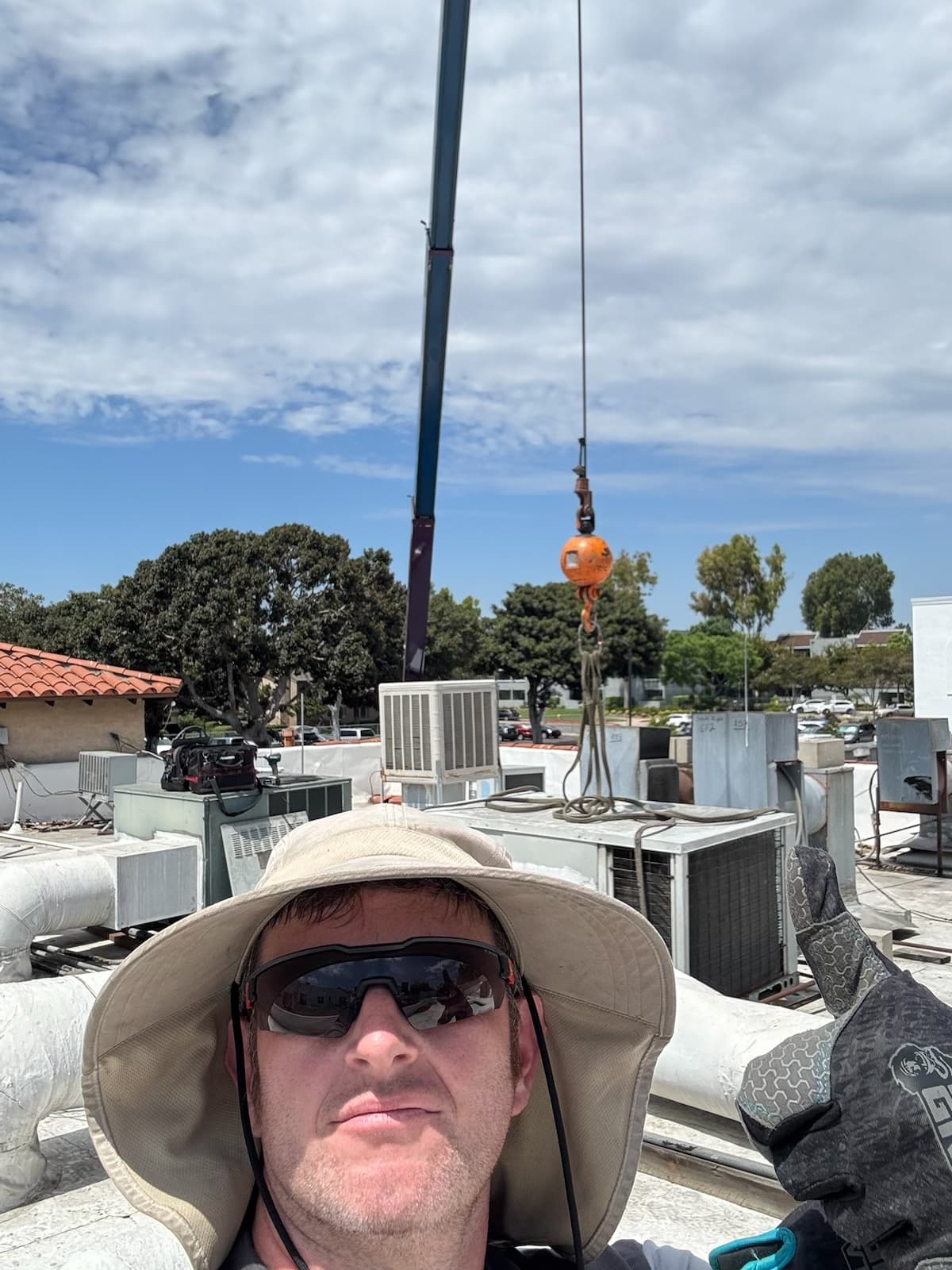
Crane pick for RTU replacement
School mechanical room
USPS facility service
Military base commissary support
PLA coordination meeting
UA Local 250 Member
PLA / Prevailing Wage
Certified Payroll & Compliance
OSHA 10/30 • Site Safety Plans
Badging & Backgrounds (as required)
Licensed • Bonded • Insured

Where we work

Military Bases / Federal Facilities
USPS / Post Offices
K-12 / Colleges / Universities
State Agencies (DMV, etc.)
County & Municipal Buildings
Public Works / Civic Projects

Delivery methods: Prime or subcontractor; plan-spec or design-assist. Emergency response available by agreement.
UA Local 250
Bid & Pre-Con

Send plans/specs or invite us to pre-qualify

We turn submittals quickly, coordinate lead times, and keep paperwork clean.

What we mean by a project

A service call fixes a unit. A project changes a building. The line between them is less about dollar value than about the number of parties involved and the amount of coordination the work demands. Replacing one rooftop unit on a strip center is a service job with a crane. Replacing twelve across a school campus during a nine-week summer window, under a Project Labor Agreement, with a design professional reviewing submittals and a district inspector on site, is a project. Chiller plant retrofits, boiler replacements in occupied buildings, refrigeration rack installations in a grocery remodel, and mechanical scopes within a larger construction job all fall on the project side of that line.

Projects require a different set of habits. Someone has to own the schedule. Someone has to read the specification closely enough to catch the paragraph that changes the equipment selection. Someone has to produce submittals that a reviewer can approve on the first pass. Someone has to coordinate with the roofer, the electrician, the controls contractor, and the owner's operations staff. On smaller projects we do all of that ourselves. On larger ones we fit into a general contractor's structure as the mechanical subcontractor. Either way, the discipline is the same, and this page describes it.

For the specifics of inviting us to bid, what a package needs to contain, and how we handle work outside Southern California, see the bid projects page. For the agencies and institutions whose solicitations we follow, see bid work. This page is about how we run a project once it is ours.

Delivery methods and where we fit

Most mechanical projects reach us through one of four delivery structures. Under traditional design-bid-build, an engineer produces plans and specifications, the owner bids the work, and we price exactly what is drawn. Under design-assist, we are brought in before the design is complete to advise on equipment selection, constructability, and phasing, and then price the resulting design. Under design-build, we or a partner carry design responsibility along with construction. And under a construction manager or general contractor structure, we are one trade among many, bidding to and contracting with the builder rather than the owner.

We work as prime contractor on mechanical-only scopes and as subcontractor on multi-trade projects. Public agencies in California frequently use design-bid-build for mechanical replacements and increasingly use lease-leaseback or design-build for larger school and civic work, each with its own selection process. Private owners tend toward negotiated or design-assist arrangements where the relationship matters more than the low bid. We are comfortable in all of them, and the project delivery and bidding guide explains each structure's strengths and weaknesses in more depth.

Delivery methods and our typical role
MethodOur roleBest suited to
Design-bid-buildPrime (mechanical-only) or sub to GCPublic agencies, clearly defined replacement scopes
Design-assistPre-construction advisor, then installing contractorComplex retrofits, phased replacements, occupied buildings
Design-buildMechanical design-builder or team memberOwners who want a single point of responsibility
CM or GC subcontractMechanical subcontractorNew construction, tenant improvements, multi-trade renovations

Whichever structure applies, we want to be involved early enough to influence equipment lead times and phasing. The most expensive change on a mechanical project is the one discovered after the equipment is ordered.

Pre-construction: reading the job before building it

Pre-construction is where a project is won or lost, and it happens before anyone lifts a tool. We walk the site with the people who will run the work, not only the estimator. We verify that the existing conditions match the drawings, which on older buildings they often do not: a curb that is a different size, a gas line that is undersized for the new unit, a structural member where the drawings show open space. We identify every long-lead item and confirm current manufacturer lead times rather than assuming last year's numbers. And we build the schedule backward from the owner's constraint, whether that is a school's first day of instruction, a grocery's grand reopening, or a hospital's planned shutdown window.

This is also when labor compliance is set up. On prevailing-wage and PLA work, the certified payroll process, apprenticeship paperwork, and any project-specific labor agreements are in place before mobilization. As a UA Local 250 signatory, that setup is routine for us; the prevailing wage guide describes the general framework for owners who are new to it.

The pre-construction meeting with the owner's facility team is not a formality. The people who operate the building know which rooftop unit has a bad history, which electrical panel is full, which door the night crew uses, and which neighbor complains about noise. Ten minutes with them saves days later.

Submittals, RFIs and substitutions

A submittal is the contractor's proof that what it intends to install matches what the specification requires. It covers equipment data, performance ratings, dimensions, weights, electrical requirements, controls interfaces, and the accessories the specification calls for. The reviewing engineer approves, approves with comments, or rejects. Each cycle takes time, and equipment cannot be ordered until approval is in hand, so the submittal process sits directly on the critical path of nearly every mechanical project.

We turn submittals quickly because we prepare them completely. A first submission that is missing the controls sequence or the seismic calculation will come back, and the second cycle costs the schedule two or three weeks. We check the specification section by section against what we are submitting. Where we think a substitution is in the owner's interest, because the specified product has an unworkable lead time or because a different unit fits the existing curb without an adapter, we say so at submittal, with the technical case, rather than at delivery.

Requests for information work the same way. When drawings and site conditions disagree, or when two specification sections contradict each other, an RFI gets the question in front of the engineer in writing, with our recommended resolution attached. RFIs that arrive early with a proposed answer get resolved. RFIs that arrive late and open-ended stall the job.

  • Complete first submissions, checked against every applicable specification section.
  • Substitutions proposed at submittal with a technical justification, never at delivery.
  • RFIs written with a recommended resolution so the engineer can approve rather than research.
  • Long-lead equipment identified in pre-construction so submittal order matches schedule need.

Construction: coordination, occupied buildings and inspections

Mechanical work touches the roof, the structure, the electrical system, the gas system, the controls, and the people in the building. On a rooftop replacement, that means coordinating the crane pick, the roofer who will seal the curb, the electrician who will land the new disconnect, and the controls contractor who will integrate the unit. On a central plant project it means pumps, piping, chemical treatment, electrical gear, and a sequence of operations that has to be agreed before startup. Our job is to make those handoffs happen on the day they are scheduled, which depends on the pre-construction work described above.

Most of our projects happen in buildings that are open for business. Schools are in session or running summer programs. Grocery stores are selling. Clinics are seeing patients. Civic buildings have the public walking through. We plan phasing so that the occupants keep conditioning, we protect work areas and paths of travel, and we follow the site's own rules on badging, background checks, noise, and hours. Where a shutdown is unavoidable, it is scheduled with the operator, communicated in advance, and kept as short as the work allows.

Permits and inspections run alongside. Replacement work in California generally triggers Title 24 energy code requirements and local permits; school projects may involve the Division of the State Architect; federal and health facility projects have their own authorities. We schedule inspections as the work reaches each milestone rather than batching them at the end, and we keep the inspector's sign-offs with the project record.

Startup, testing and commissioning

Installing equipment correctly and making a building work are two different achievements. Startup confirms that each unit runs: refrigerant charge, airflow, electrical readings, safety controls, and manufacturer startup procedures documented on the startup form. Test and balance confirms that the air and water are going where the design says they should, at the quantities the design requires, which almost always means adjusting dampers and valves away from where they were installed. Commissioning confirms that the system as a whole does what the owner intended under real operating conditions, including the controls sequences, the schedules, and the interactions between pieces of equipment.

Whether a project has a formal commissioning agent depends on its size and the owner's requirements; Title 24 mandates commissioning on certain nonresidential projects. Either way, we approach startup as the beginning of verification rather than the end of installation. Economizer operation, sensor calibration, and schedule programming in the building controls are where new installations most often underperform, and we check them specifically. Our diagnostics guide explains why a unit that runs is not necessarily a unit that works.

Startup readings on every new asset go into the DaVinci Portal at the time they are taken. That gives the owner's maintenance staff a baseline against which every future reading can be compared, which is the single most useful thing a project can leave behind.

Closeout and turnover

Closeout is where projects most often lose momentum, because the installing crew has moved on and the paperwork feels like an afterthought. We treat it as a deliverable with the same weight as the installation. The closeout package includes operation and maintenance manuals for every piece of equipment, manufacturer and contractor warranties with start dates, as-built drawings reflecting what was actually installed, test and balance and commissioning reports, permit and inspection records, startup forms, and training for the owner's staff on how the new equipment and controls operate.

Because we assemble this package as the project runs, it is ready when the work is done rather than weeks later. On public projects, where retention is released only after closeout is accepted, that timing matters to everyone. Every new asset is tagged and loaded into the Portal with its submittal data, startup readings, warranty dates and photos, so the owner's team is not handed a box of binders but a working record they can scan on the roof.

Turnover is also where the maintenance conversation belongs. New equipment under warranty still needs filter changes, coil cleaning, belt inspection, and controls verification, and warranties generally require documented maintenance. We can structure a maintenance program that begins at turnover, and for projects outside our regular service area we describe in the proposal how the equipment will be supported after we leave.

  1. O&M manuals, warranties, and as-builts compiled during construction, not after.
  2. Test and balance, commissioning, and startup reports delivered with the package.
  3. Owner training on equipment and controls, scheduled before substantial completion.
  4. Every new asset tagged and loaded into the Portal with baseline readings.
  5. Maintenance coverage discussed and, where wanted, in place at turnover.

Who is doing the work

Davinci Mechanical is the commercial and union division of Scottish Tom's Heating & Air, operating under California contractor license #1083101 from a home base in Orange County. We are a UA Local 250 signatory, PLA and prevailing-wage ready with certified payroll, and we take on commercial, institutional, and public work only. Our project work spans Orange County, Los Angeles County, the Inland Empire, San Diego County and Ventura County; we do not keep offices outside Orange County, and we are clear about staffing and service arrangements for any site elsewhere. For larger projects outside California, we bid project by project with the licensing and labor path settled before we submit.

The facility types we work in most, and how each one shapes a project, are described under sectors. The public works page covers the agency side of the process. When you are ready to send a package, the bid projects page lists exactly what we need.

More questions, answered

Do you work as a prime contractor or a subcontractor on projects?
Both. On mechanical-only scopes such as multi-unit rooftop replacements or central plant retrofits, we often contract directly with the owner as prime. On multi-trade construction and renovation, we bid to and contract with the general contractor or construction manager as the mechanical subcontractor. We also participate in design-assist and design-build arrangements where the owner wants mechanical input before the design is finished.
How do you keep submittals from delaying the schedule?
By preparing complete first submissions checked against every applicable specification section, so approval happens in one cycle rather than two or three. We identify long-lead equipment during pre-construction so its submittals go first, and we propose any substitutions at the submittal stage with a technical justification rather than at delivery. RFIs go in early with a recommended resolution attached.
Can you work in a building that stays open during construction?
Yes, and most of our projects are in occupied buildings: schools, stores, clinics, offices, and civic facilities. We phase the work so occupants keep conditioning, protect work areas and paths of travel, follow the site's rules on access and hours, and schedule any unavoidable shutdowns with the operator in advance. The site's own constraints are built into the schedule during pre-construction.
What does commissioning involve on a mechanical project?
Startup confirms each unit runs correctly with documented readings. Test and balance confirms air and water are delivered at design quantities. Commissioning confirms the whole system performs as intended under real conditions, including controls sequences, schedules, and economizer operation. Title 24 requires commissioning on certain nonresidential projects; where it does not, we still verify controls and sensors, since that is where new installations most often underperform.
What do we receive at closeout?
O&M manuals, warranties with start dates, as-built drawings, test and balance and commissioning reports, permit and inspection records, startup forms, and staff training. Every new asset is also tagged and loaded into the DaVinci Portal with its submittal data, baseline readings, warranty dates, and photos, so your maintenance team inherits a working record rather than a box of paper.
Do you support the equipment after the project is finished?
Yes. Warranty work and ongoing maintenance can be structured to begin at turnover, which also satisfies the documented-maintenance requirements most manufacturer warranties carry. For sites in Southern California that is straightforward. For projects elsewhere, we describe in the proposal how the equipment will be supported after we demobilize, so the owner knows the plan before award.