Commercial Water Heaters in Santa Monica, CA
Along the Santa Monica coast, hotels, restaurants, and medical offices all depend on commercial hot water. Coastal air attacks exhaust components and external fittings, and tight mechanical rooms in older downtown buildings complicate replacement. Planning covers recovery sizing, venting, gas supply, seismic bracing practice, and access routes for removing old tanks. For hotels, scheduling a swap to minimize guest-facing interruption is often the main logistical challenge. Restaurants face the same challenge during dinner service.
A coastal commercial market of Third Street Promenade retail, Main Street restaurants, creative and tech offices, and hospitals, all exposed to salt air.
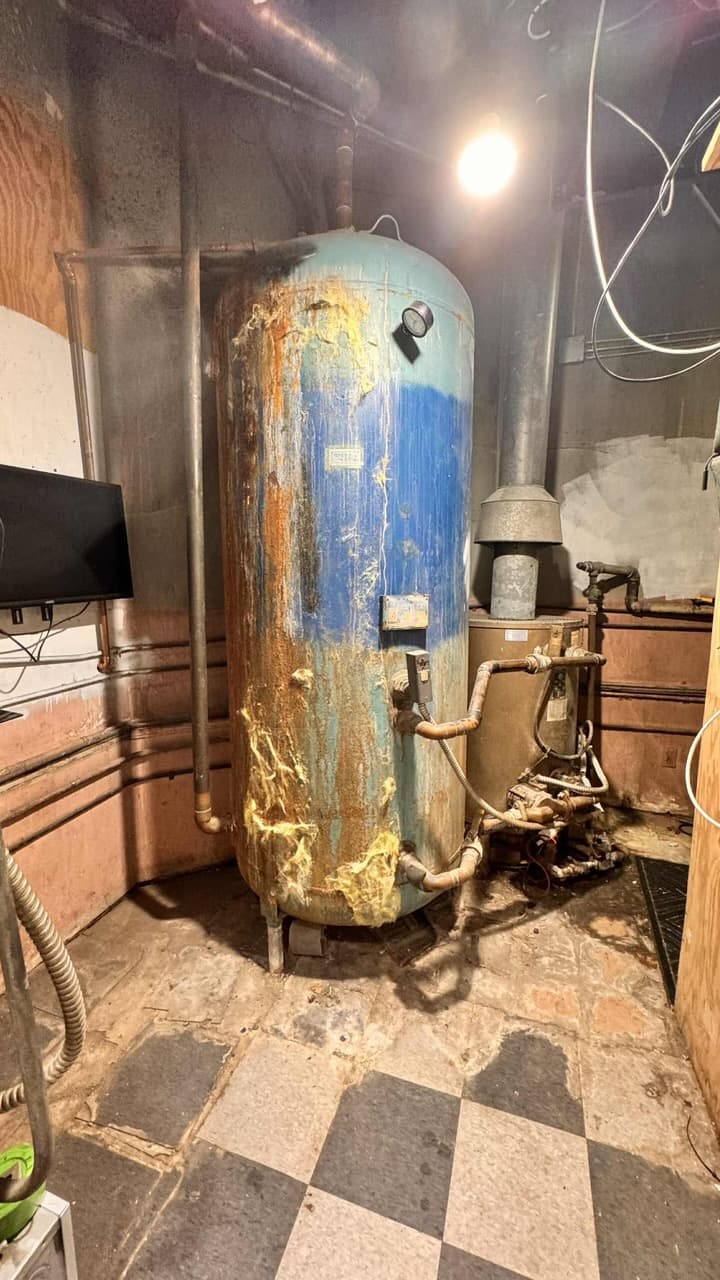
How commercial water heaters work plays out in Santa Monica
Hot water in Santa Monica is a hotel story first. The properties along Ocean Avenue and the beach-facing blocks run laundry, guest showers, pools, spas, and kitchens off storage tanks, recirculation loops, and in newer buildings, banks of condensing tankless units. Morning checkout and the evening return from the beach create two sharp demand peaks, and a weak recirculation pump or a failed mixing valve shows up as guest complaints within hours. Mechanical rooms in older hotels are below grade or in tight back-of-house corridors, and the route to get an old tank out and a new one in has to be walked before anything is ordered.
Restaurants on Main Street and the Promenade, medical offices near the hospital corridors, and the fitness and spa operators scattered through the city make up the rest of the demand. Salt air shows up on these systems too: exterior vent terminations corrode, intake screens clog with salt crust, and tankless units mounted on exterior walls facing the ocean need their heat exchangers and burners inspected more often than the same units inland. Scale from local water adds to the maintenance load on tankless heat exchangers.
A replacement here means confirming gas supply capacity, venting that meets current code and clears neighboring windows in dense blocks, seismic strapping practice, condensate handling for condensing units, and a swap window that keeps hot water flowing. For a hotel, that often means temporary heating or a staged replacement of multiple tanks so laundry and guest floors never go cold. Permits run through the city's building department; confirm current requirements before scheduling. See commercial water heaters and the water heaters and boilers guide.
Santa Monica's climate and what it does to this equipment
Santa Monica is directly on the Pacific, so salt air is the defining condition. Marine layer keeps summers mild and mornings gray, but the constant moist, salty air corrodes condenser coils, fasteners, electrical enclosures, and exposed copper far faster than inland conditions. Heat waves are less severe than in the valleys, although occasional offshore wind events can briefly drive temperatures up. Because equipment runs fewer extreme hours but suffers from corrosion, coil protection, frequent inspection, and careful hardware choices matter more than raw capacity.
For the equipment background behind this page, read our water heaters and boilers guide or the full Commercial Water Heaters service page.
- Downtown and Third Street PromenadeDense retail, restaurants, hotels, and offices with shared rooftops, limited access, and heavy foot traffic.
- Main Street and the shorelineRestaurants, cafes, and small hotels near the beach, where salt air accelerates corrosion on exposed equipment.
- Bergamot, Olympic Boulevard, and creative or tech officesConverted industrial buildings and newer mid-rise offices with modern comfort expectations and often VRF or advanced rooftop systems.
- Hospital and medical corridorsHospital campuses and medical office buildings where filtration, redundancy, and coordination with in-house engineers are central.
- Combustion/ignition or element checks with descaling
- Venting, gas/electrical, condensate, and expansion tank review
- Temperature set-points confirmed for safety and code
- DaVinci Portal: full service history and proof-of-work on file
What a commercial water heaters visit includes, and the problems we most often find
- Check current output against actual peak demand, not just spec-sheet capacity
- Inspect combustion/ignition or heating elements and descale as needed
- Confirm venting, gas/electrical, and condensate are code-correct
- Set and verify temperature set-points for safety and code compliance
- Document the visit — proof-of-work you can show for inspection
- Undersized units that were never sized to actual peak demand
- Scale buildup reducing efficiency and shortening element/heat-exchanger life
- Venting or gas line sizing that doesn't match the installed unit
- Aging tanks nearing end of service life with no replacement plan in place