Commercial Water Heaters in Riverside, CA
Riverside's older downtown buildings often have hot water systems that have been patched across multiple owners. Hard water scales tanks and heat exchangers, recirculation loops lose balance, and restaurants and clinics feel the failure first. We assess sizing against actual demand, inspect anodes, flues, and mixing valves, and plan replacements that respect venting and gas-line constraints in older structures, with tankless considered only where recovery and maintenance make sense.
A government, university, and healthcare center with historic downtown buildings, Magnolia Avenue retail, and a hot, dry summer that keeps rooftop equipment near its limits for months.
How commercial water heaters work plays out in Riverside
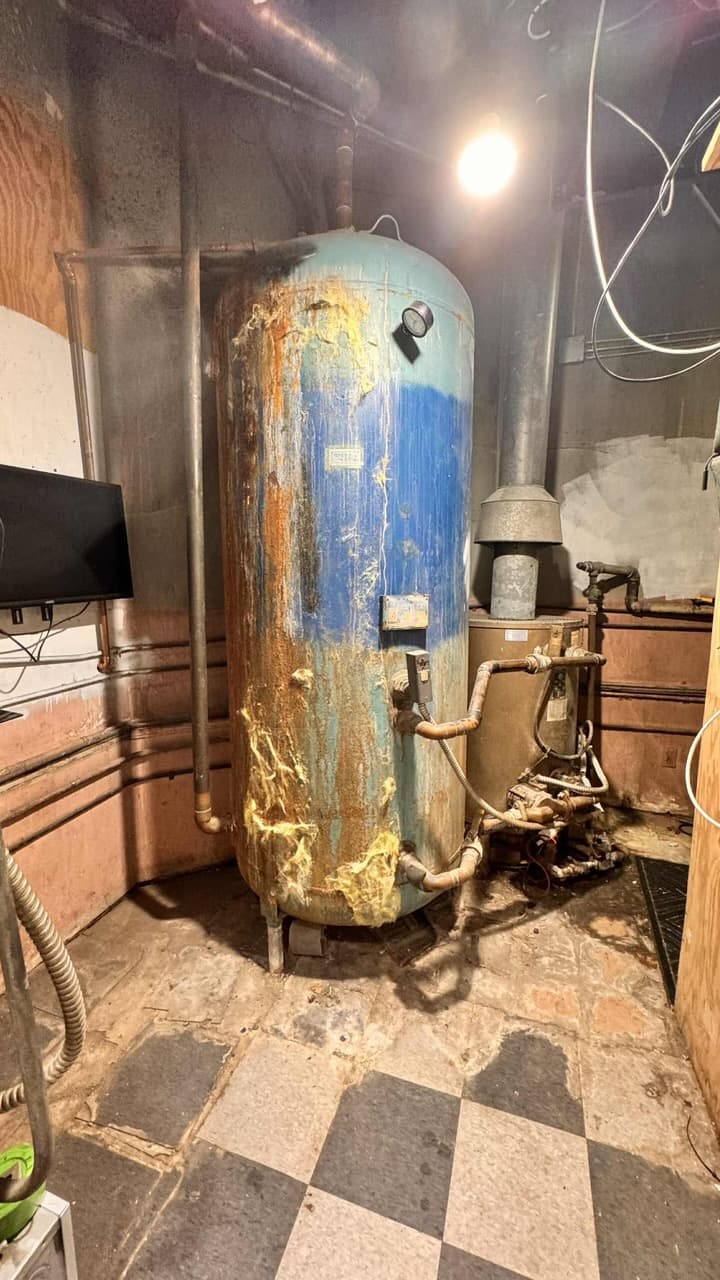
Hot water problems in Riverside tend to surface in buildings with history. A restaurant in a converted storefront on Main Street or University Avenue inherits a water heater that was sized for a previous use, vented through a chase that has been altered twice, and connected to a recirculation loop that stopped circulating years ago. The symptom is a dish machine that cannot reach sanitizing temperature during the rush, or a restroom that takes two minutes to deliver warm water. Medical and dental suites along Magnolia and Central have their own version: a mixing valve that nobody has serviced delivering water that is either too hot for safety or too cool for the procedure room.
Water hardness drives the maintenance side. Scale accumulates on the bottom of tank heaters and inside tankless heat exchangers quickly in this part of the Inland Empire, insulating the burner from the water and pushing flue temperatures up. A tank heater that has never been flushed will often be running at a fraction of its rated recovery, which is why a kitchen that was fine for years suddenly runs out of hot water. We flush, inspect anode rods, check combustion and venting, and test recirculation flow and temperature as a system rather than replacing the heater and inheriting the same loop problems.
When replacement is the right answer, the older downtown building sets the constraints: available gas capacity, the condition and route of the existing flue, combustion air, and the physical path for getting a new tank into a basement or mezzanine. Tankless units can work well in medical offices and some restaurants with good scale control and steady demand, but we recommend them where they fit and not by default. The water heaters and boilers guide explains how we size against measured demand.
Riverside's climate and what it does to this equipment
Riverside sits in a basin that traps heat. Summer afternoons routinely climb well past the point where a rooftop condenser is working near its design limit, and nights often fail to cool the building structure enough to give equipment a rest. Smog and fine particulate settle on coils faster than in coastal Orange County, citrus-area dust and pollen add to the load, and wildfire smoke events in the surrounding hills can clog filters in days. Santa Ana conditions in fall bring dry heat and debris. Equipment here needs coil cleaning cadence and refrigerant charge checks built around peak season, not the calendar average.
For the equipment background behind this page, read our water heaters and boilers guide or the full Commercial Water Heaters service page.
- Downtown and Mission Inn areaGovernment buildings, courts, restaurants, and older multi-story commercial properties where mixed equipment generations share one roof or mechanical room.
- UCR and University Avenue corridorCampus-adjacent dining, student-oriented retail, and research and instructional buildings with strict space-temperature expectations.
- Magnolia Avenue medical and retail corridorMedical office buildings, outpatient clinics, and strip retail running along one of the city's busiest commercial arteries.
- Hunter Park and Airport Industrial areasLight industrial, distribution, and manufacturing buildings near the 91 and 60 interchange and the municipal airport, many with rooftop packaged units and walk-in refrigeration.
- Combustion/ignition or element checks with descaling
- Venting, gas/electrical, condensate, and expansion tank review
- Temperature set-points confirmed for safety and code
- DaVinci Portal: full service history and proof-of-work on file
What a commercial water heaters visit includes, and the problems we most often find
- Check current output against actual peak demand, not just spec-sheet capacity
- Inspect combustion/ignition or heating elements and descale as needed
- Confirm venting, gas/electrical, and condensate are code-correct
- Set and verify temperature set-points for safety and code compliance
- Document the visit — proof-of-work you can show for inspection
- Undersized units that were never sized to actual peak demand
- Scale buildup reducing efficiency and shortening element/heat-exchanger life
- Venting or gas line sizing that doesn't match the installed unit
- Aging tanks nearing end of service life with no replacement plan in place
Commercial Water Heaters in Riverside: questions we get
How often should a commercial water heater be flushed in Riverside given the water hardness?
Our restaurant's dish machine will not reach 180 degrees during the dinner rush. Is the water heater undersized?
Tank or tankless — which is right for a commercial site?
Do you handle code-required inspections?
Other services in Riverside
Commercial Water Heaters nearby in Inland Empire (Riverside & San Bernardino Counties)
Commercial HVAC and refrigeration across Inland Empire (Riverside & San Bernardino Counties)