Commercial Water Heaters in Thousand Oaks, CA
Restaurants, medical suites, hotels and lab sinks in Thousand Oaks all depend on hot water. Many buildings here are newer and sensibly laid out, yet they still need attention to scale from hard supply water, recirculation loop balance and proper venting. We service tank and tankless systems, flush and inspect components, and evaluate recirculation so remote fixtures reach temperature promptly. For labs and clinics, we confirm temperature setpoints against the facility's own standards.
An inland Conejo Valley city anchored by biotech and pharmaceutical campuses, Oaks Mall and Thousand Oaks Boulevard retail, suburban business parks and medical offices, with hot summers and real wildfire-smoke exposure.
How commercial water heaters work plays out in Thousand Oaks
Hot water in Thousand Oaks is a quieter problem than cooling, which is exactly why it gets neglected until it fails. The large users are hotels along the 101 and near Westlake Boulevard, restaurants on Thousand Oaks Boulevard and in the Janss Marketplace area, the outpatient and surgical buildings around Los Robles, senior living communities, fitness clubs and the cafeterias and lab sinks on the Rancho Conejo campuses. Most of these buildings are newer than their coastal counterparts, with mechanical rooms that were actually designed as mechanical rooms, so access is rarely the issue.
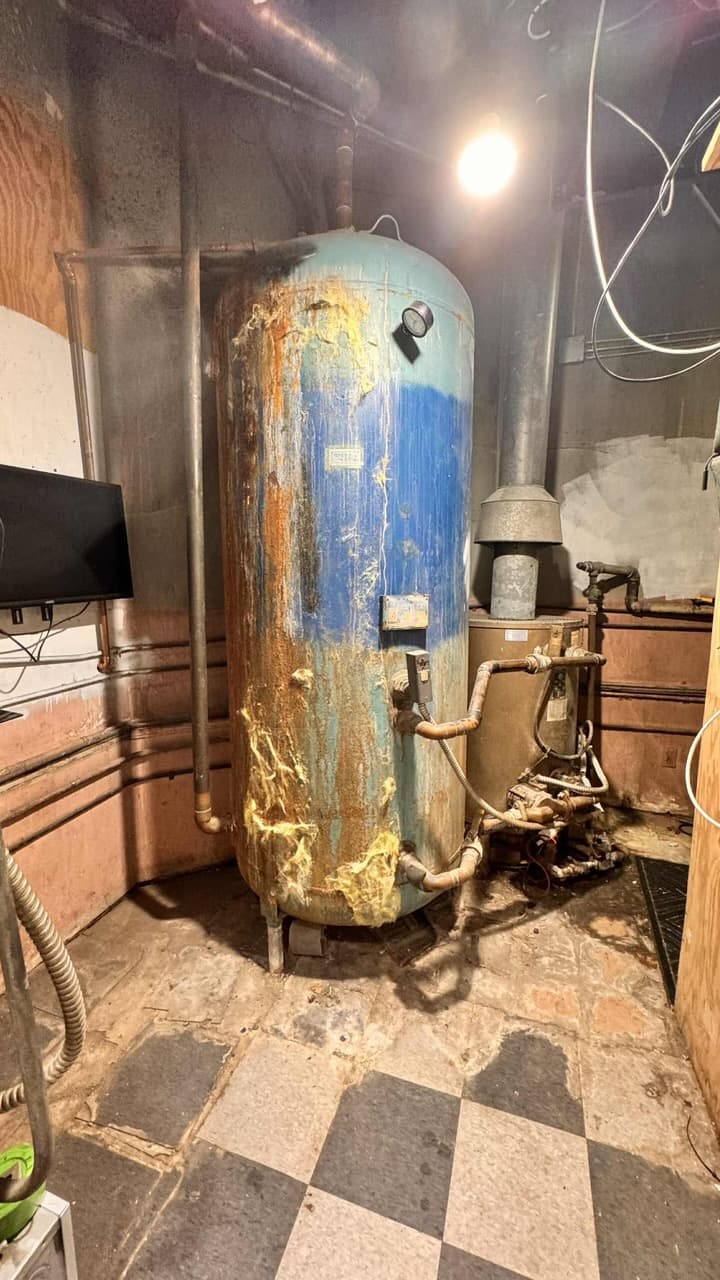
The issue is scale and recirculation. Conejo Valley water is hard enough that tank bottoms and tankless heat exchangers accumulate mineral deposits quickly if descaling and flushing are skipped, and the first symptom is longer recovery and a louder burner, not a leak. Long recirculation loops in hotels and medical buildings hide failed check valves and dying circulator pumps, which show up as a guest or a surgery prep room waiting too long for hot water. We flush, inspect anodes and relief components, test recirculation balance and check venting, and we size replacements against measured peak demand, since a hotel's morning draw or a restaurant's dish cycle rarely matches the tag on the heater being replaced.
For clinics and labs, temperature setpoints and mixing valve performance are verified against the facility's own standard, and the readings are recorded. The water heaters and boilers guide covers equipment choices; locally, the decision usually comes down to hard-water maintenance discipline and whether a tankless bank or a tank-and-recirculation design fits the building's draw pattern.
Thousand Oaks's climate and what it does to this equipment
Thousand Oaks is cut off from the ocean's moderating effect by the hills, so it runs noticeably hotter in summer than coastal Ventura County, with long stretches of high temperatures and cooling-dominated operation. Cool nights soften the cycle, but afternoon peaks push condensers and compressors hard, particularly on dark roofs. Fall brings Santa Ana winds and the area's history of wildfires, and smoke can foul filters and coat outdoor coils with ash. Winters are mild with occasional frost, so heating is modest but not negligible for medical and laboratory space.
For the equipment background behind this page, read our water heaters and boilers guide or the full Commercial Water Heaters service page.
- Rancho Conejo and Conejo Valley business parksBiotech, pharmaceutical, light manufacturing and corporate buildings with precise cooling, humidity and exhaust requirements.
- Thousand Oaks Boulevard retail and diningRestaurants, specialty retail and small centers with numerous mid-size rooftop units and kitchen loads.
- Oaks Mall areaLarge-format retail and entertainment with big air handlers, long run hours and landlord-managed equipment.
- Los Robles and Conejo Valley medical officesHospital-adjacent clinics and outpatient buildings where cooling, ventilation and hot water must stay dependable.
- Combustion/ignition or element checks with descaling
- Venting, gas/electrical, condensate, and expansion tank review
- Temperature set-points confirmed for safety and code
- DaVinci Portal: full service history and proof-of-work on file
What a commercial water heaters visit includes, and the problems we most often find
- Check current output against actual peak demand, not just spec-sheet capacity
- Inspect combustion/ignition or heating elements and descale as needed
- Confirm venting, gas/electrical, and condensate are code-correct
- Set and verify temperature set-points for safety and code compliance
- Document the visit — proof-of-work you can show for inspection
- Undersized units that were never sized to actual peak demand
- Scale buildup reducing efficiency and shortening element/heat-exchanger life
- Venting or gas line sizing that doesn't match the installed unit
- Aging tanks nearing end of service life with no replacement plan in place
Commercial Water Heaters in Thousand Oaks: questions we get
Our Thousand Oaks hotel's tankless heaters need descaling constantly. Is that normal here, or do we have a problem?
Frequent descaling is consistent with the valley's water hardness, but the interval can be stretched. A properly sized and maintained water softener or scale-inhibition system ahead of the heaters, correct flow rates through each unit, and a descaling schedule tied to actual inlet hardness rather than a generic calendar all reduce the burden. If one heater in a bank scales faster than the others, that usually points to uneven flow or a failing isolation valve rather than the water itself.
A surgery center near Los Robles needs hot water at a specific temperature at every fixture. How do you verify that during service?
We measure delivered temperature at the farthest and nearest fixtures on the loop, check mixing valve output against the facility's standard, confirm recirculation flow and pump operation, and verify the heater setpoint and any anti-scald controls. The readings are logged with time stamps in the DaVinci Portal. If the facility operates under a specific regulatory temperature range, we work to that range and recommend confirming current requirements with the licensing authority.
Tank or tankless — which is right for a commercial site?
It depends on peak demand and available gas/electrical service. We'll size the recommendation to your actual usage, not just replace like-for-like.
Do you handle code-required inspections?
Yes — venting, gas line, and combustion work is documented to pass inspection, and we coordinate with your building department when needed.