Commercial Water Heaters in Anaheim, CA
Hot water in Anaheim's hospitality stock is a peak-load problem: laundry, kitchens, and hundreds of guest showers want the same supply in the same early-morning hour. A heater that looks adequate on paper can still run cold at checkout time if the recirculation loop is fouled or the mixing valves are drifting. We read inlet and outlet temperatures during real demand, inspect anodes, burners, and venting, and flag units whose age and sediment history point toward replacement. Where gas equipment is involved, the proposal notes the current South Coast AQMD requirements, which we ask owners to confirm before ordering.
Hospitality, convention, and light-industrial mix near the Anaheim Resort and Platinum Triangle — kitchens, walk-ins, and reach-ins run around the clock.
How commercial water heaters work plays out in Anaheim
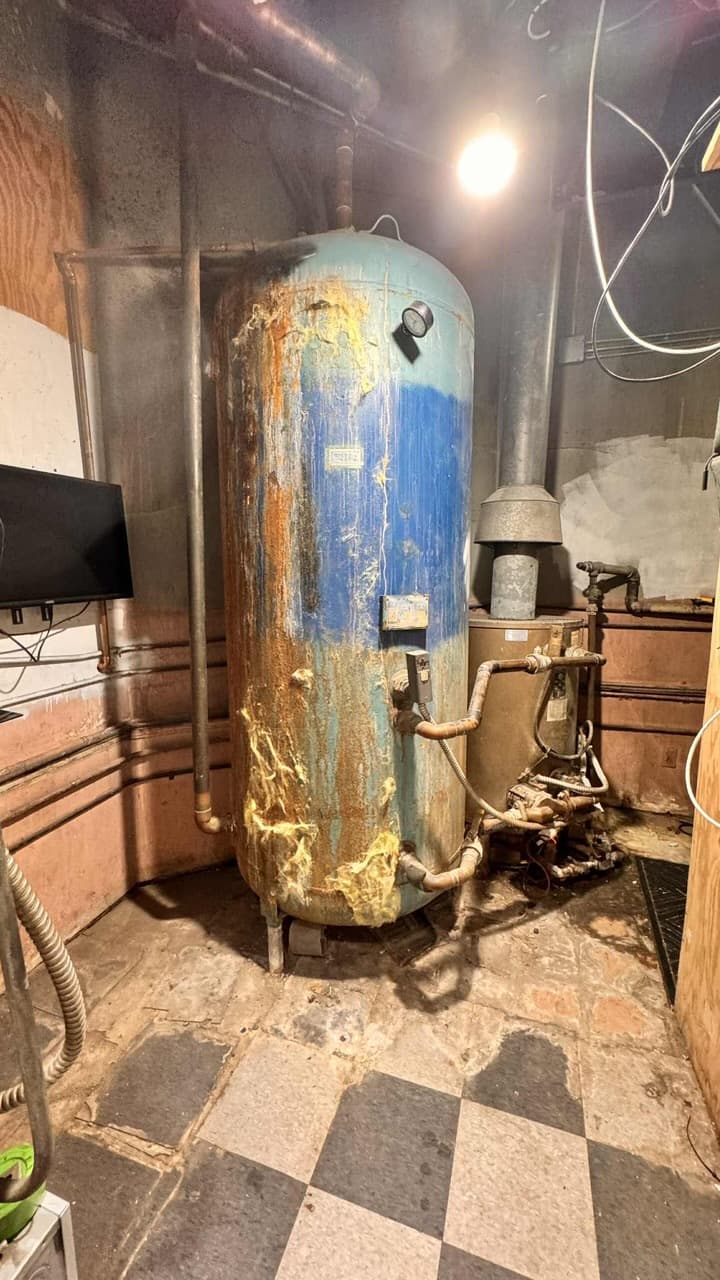
Checkout morning at a 500-room hotel is the most demanding hot-water event in Orange County commercial real estate, and Anaheim has dozens of properties that live it every day. Guest showers between six and nine, the laundry starting its first loads, banquet dish machines cleaning up from last night's event, and the pool heaters all draw at once. The systems that handle it are usually boiler-fed storage with large recirculation loops, sometimes supplemented by banks of tank heaters, and the failures are almost never a cold tank. They are a recirculation pump that quit, a mixing valve drifting, a storage tank with a failed anode and a leak, or a heater that has lost recovery capacity to scale.
Elsewhere the demand profile changes but the stakes stay high. Anaheim Canyon food processors and distributors need hot water for sanitation at specific temperatures with records. Restaurants in the Packing District and along Harbor need dish-machine recovery through a three-hour dinner service. Medical and dental offices along La Palma and in the Kaiser area need reliable temperature at every sink. Car washes and laundromats in West Anaheim run water heaters harder than almost any other small business. Anaheim's water carries enough mineral to scale heat exchangers and tankless units steadily, so descaling and flushing schedules are not optional here.
Replacing gas-fired equipment in Anaheim means working within South Coast AQMD requirements for the unit's size class, which should be confirmed for the current year because the low-NOx rules have been changing, and increasingly it means comparing heat pump water heating where the electrical service allows and the recovery profile fits. Anaheim's city-owned electric utility sometimes changes that calculation compared with neighboring cities, which is worth a conversation before anything is specified. The commercial water heaters and boilers guide walks through the options.
Anaheim's climate and what it does to this equipment
Anaheim is inland enough to see real summer heat and enough dust from industrial areas to load coils faster than coastal cities. Condenser head pressure is the recurring theme from July through September.
For the equipment background behind this page, read our water heaters and boilers guide or the full Commercial Water Heaters service page.
- Anaheim Resort districtHotels, restaurants, and attractions with 24/7 refrigeration, hot water, and kitchen make-up air demands.
- Platinum TriangleNewer mixed-use, office, and sports-and-entertainment adjacent buildings.
- Anaheim HillsRetail centers and offices in hotter, drier conditions toward the foothills.
- Industrial corridorsLarge-footprint RTUs, heaters, and temperature-sensitive storage.
- Combustion/ignition or element checks with descaling
- Venting, gas/electrical, condensate, and expansion tank review
- Temperature set-points confirmed for safety and code
- DaVinci Portal: full service history and proof-of-work on file
What a commercial water heaters visit includes, and the problems we most often find
- Check current output against actual peak demand, not just spec-sheet capacity
- Inspect combustion/ignition or heating elements and descale as needed
- Confirm venting, gas/electrical, and condensate are code-correct
- Set and verify temperature set-points for safety and code compliance
- Document the visit — proof-of-work you can show for inspection
- Undersized units that were never sized to actual peak demand
- Scale buildup reducing efficiency and shortening element/heat-exchanger life
- Venting or gas line sizing that doesn't match the installed unit
- Aging tanks nearing end of service life with no replacement plan in place