Commercial HVAC Repair in Chino, CA
Repair calls in Chino frequently involve food plants and cold storage where an outage has an immediate product consequence. Our approach is to stabilize first, then diagnose rigorously: what pressures, temperatures, and electrical readings were present when the failure occurred, and what contributed to it. In an environment with airborne dust and agricultural residue, fouled coils, plugged filters, and corroded connections are common root causes, so we look there before replacing components.
A food processing, manufacturing, and former dairy-region industrial city with an airport-area business cluster, Chino Spectrum retail, and heavy refrigeration demand.
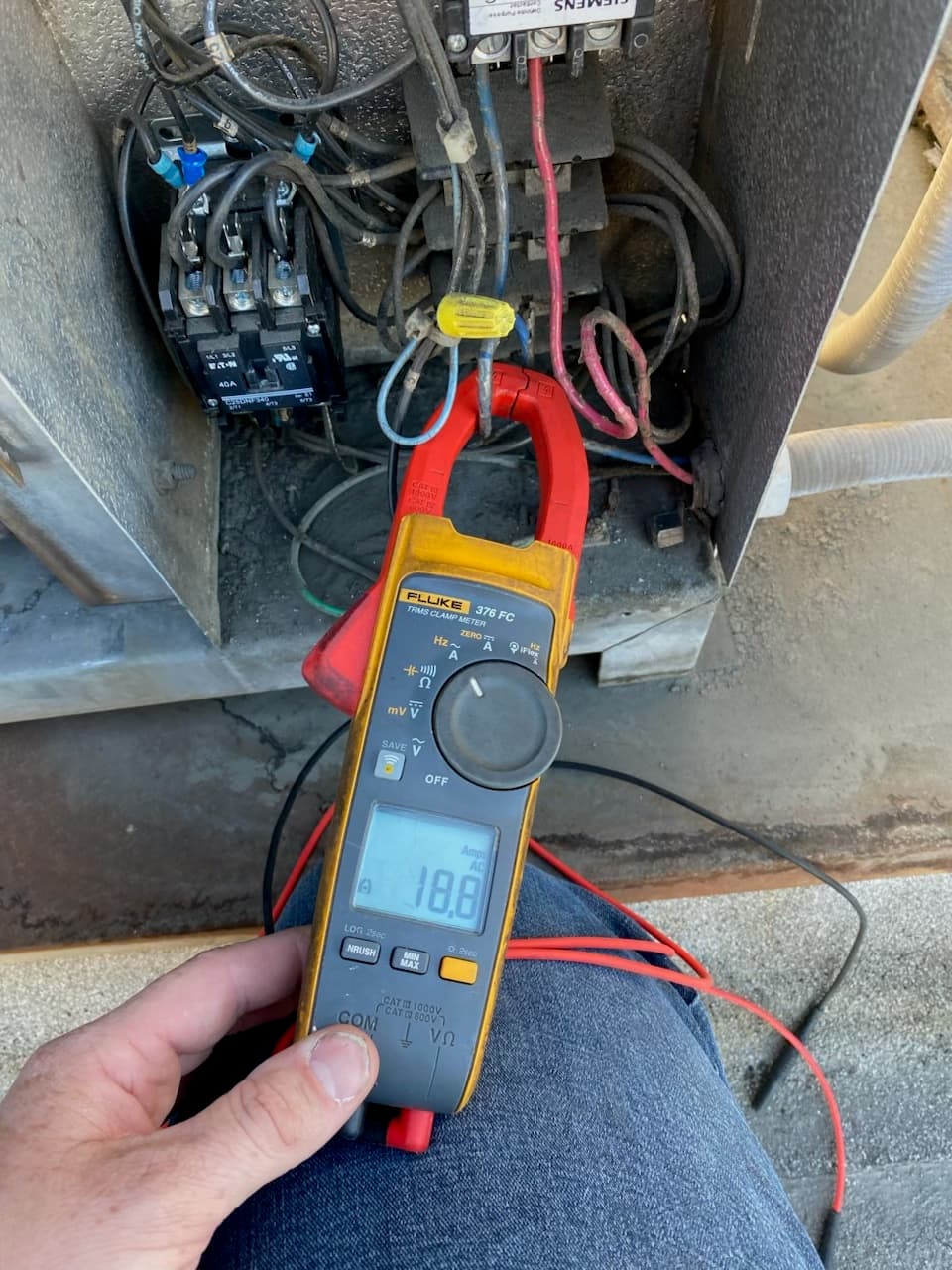
How commercial hvac repair work plays out in Chino
A food processor on the south side of Chino, in one of the buildings that replaced a dairy along Kimball or Schaefer Avenue, calls at 2 p.m. on a Thursday because the packaged unit over the packaging room has tripped and the room is climbing past the temperature their quality plan allows. The plant cannot simply wait; product in that room has a time and temperature limit. The repair call therefore has two phases. First, stabilize the space, whether by resetting and monitoring the unit, shifting load to a neighboring system, or arranging temporary cooling. Second, find out why it tripped, because a reset that holds for three days and fails again on the next hot afternoon has cost the plant twice.
What we usually find in Chino's industrial buildings is an environment problem wearing an equipment disguise. Condenser coils are packed with a mix of road dust from the truck routes, organic particulate that the remaining agricultural operations still put in the air, and the fine grit that the Santa Ana winds carry across open ground. High head pressure follows, then compressor overheating, then the trip. Washdown areas add corrosion to electrical connections and contactors. We measure airflow and coil condition before touching the refrigerant circuit, because replacing a compressor on a unit that cannot reject heat just schedules the next failure.
For the retail and restaurant tenants at Chino Spectrum and along Central Avenue and Riverside Drive, the pattern is more conventional: long operating hours, shared roofs with equipment of mixed age, and failures that show up on the hottest afternoons. Either way, the finding goes into a written record in the DaVinci Portal so the owner sees the cause, not just the invoice.
Chino's climate and what it does to this equipment
Chino's flat terrain and open surroundings make it hot, breezy, and dusty. Summer highs are intense, Santa Ana winds blow through with little obstruction, and remaining agricultural land and busy industrial sites contribute dust to the air. Dairy and agricultural operations also add ammonia and organic particulate that can foul coils and filters faster than in a typical commercial area, and regional smog and wildfire smoke add more. For food processing and cold storage, hot afternoons coincide with peak production, so refrigeration condensers must hold performance exactly when the load is greatest.
For the equipment background behind this page, read our root-cause diagnostics guide or the full Commercial Troubleshooting & Repair service page.
- Former dairy-region industrial areaFood processing, cold storage, manufacturing, and distribution buildings in the south and southeast, with large refrigeration and rooftop loads.
- Chino Spectrum and Ontario borderBig-box retail, restaurants, and entertainment with dense rooftop equipment and extended operating hours.
- Chino Airport and Merrill Avenue areaAviation-related users, light industrial tenants, and business space with wide-open exposure to wind.
- Downtown Chino and Chino Hills borderOlder storefronts, restaurants, medical offices, and community retail along the central corridors and at the city's northern edge.
- Root-cause diagnostics, not guesswork
- Truck-stocked parts for common same-day fixes
- Clear repair options before any work is authorized
- DaVinci Portal included: QR service history, notes, photos
What a commercial hvac repair visit includes, and the problems we most often find
- Call in the issue — what the equipment is doing, and what it's affecting
- Tech arrives with truck-stocked parts for the most common failures on that equipment type
- Root-cause diagnostic with readings taken and logged, not just symptom patching
- Repair options presented with pricing before anything is authorized
- Approved work completed same-visit where parts allow; readings logged to the Portal
- Electrical failures — contactors, capacitors, and control boards
- Refrigerant leaks and low-charge symptoms
- Failed motors, bearings, and belts on fans and blowers
- Clogged condensate drains causing water damage or shutdowns
Commercial HVAC Repair in Chino: questions we get
Our Chino plant's rooftop units fail every summer in the same month. Is that normal for this area?
It is common, but it is not inevitable. Repeated failures that cluster in July and August usually mean the units are running at the edge of their capacity because of fouled condensers, marginal charge, or heat loads inside the building that have grown since the units were installed. A pre-summer inspection that cleans coils, verifies charge, and checks electrical components addresses most of it. Where a unit is genuinely undersized for the current process load, we will measure and tell you.
Can airborne residue from the old dairy areas really damage HVAC equipment?
Yes. Ammonia and organic particulate from remaining agricultural operations, combined with dust from open ground and truck traffic, settle on coils and corrode aluminum fins and copper connections faster than in a typical commercial setting. The result is restricted airflow, higher head pressure, and shorter compressor life. Coil cleaning frequency should be set by inspection rather than by calendar, and coated coils are worth considering on replacement units in the southern industrial areas.
How fast can you get a tech on site?
Most diagnostics are same-day across our Orange County coverage area. Priority accounts and maintenance-plan members get first availability.
Do you charge a diagnostic fee?
Yes, a flat diagnostic fee that's disclosed up front and applied toward the repair if you approve it the same visit.
Other services in Chino
Commercial HVAC Repair nearby in Inland Empire (Riverside & San Bernardino Counties)
Commercial HVAC and refrigeration across Inland Empire (Riverside & San Bernardino Counties)