Commercial HVAC Repair in Corona, CA
Corona repair calls frequently trace to the same chain of events: a fouled condenser raises head pressure, a compressor runs hot, and the unit trips on a hot afternoon. Industrial tenants add another layer, because process loads and exhaust fans change the way a rooftop unit behaves. We measure airflow, pressures, amp draw, and temperatures across the system before deciding what failed, and we report whether the cause was the part, the environment, or an installation issue so the repair actually holds.
A manufacturing and industrial-park city along the 91 and 15 with retail centers, Temescal Canyon heat, and plenty of mid-size rooftop and process cooling loads.
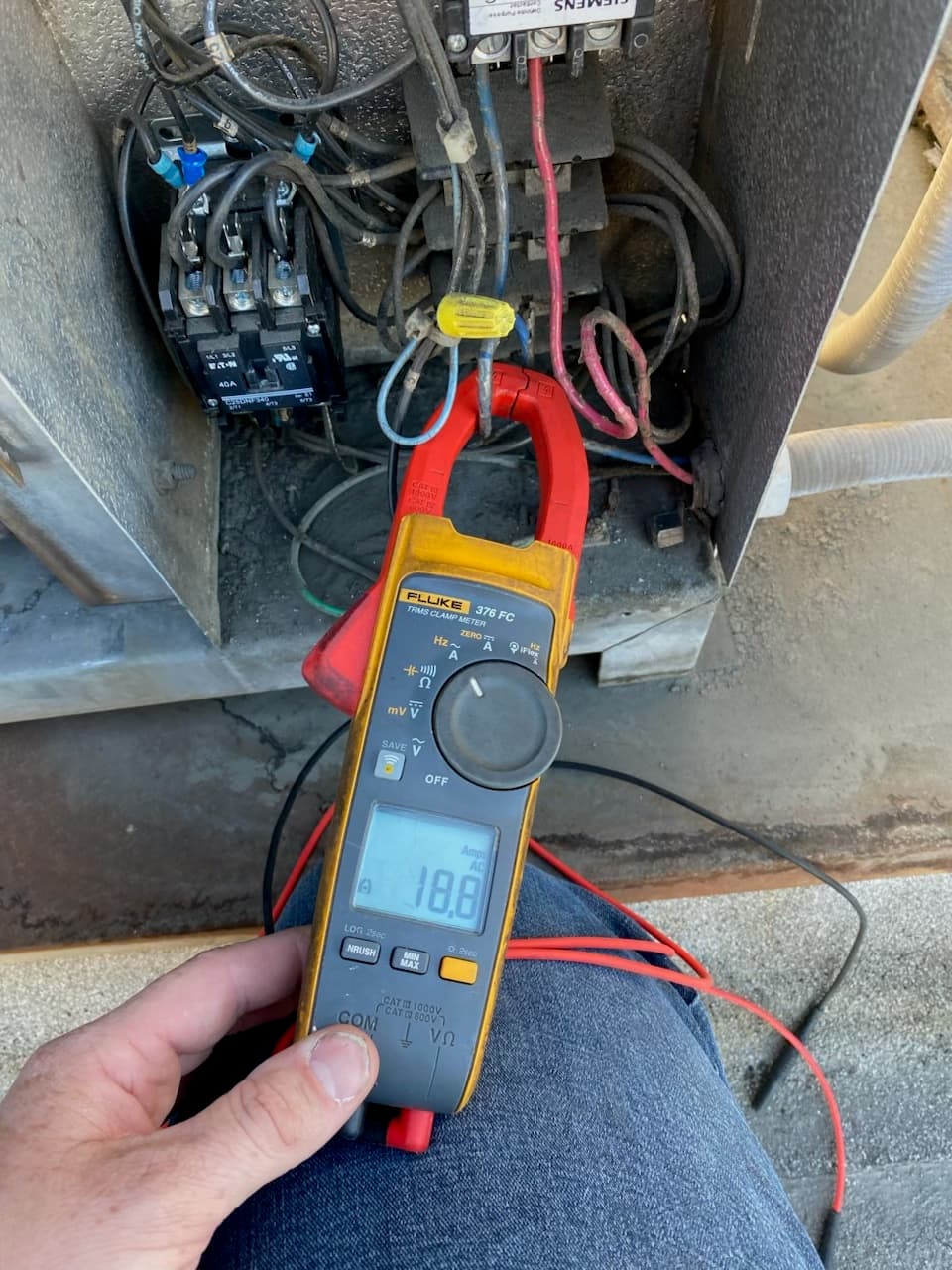
How commercial hvac repair work plays out in Corona
The rooftop unit on a Corona manufacturing building is not serving an office. It is serving a production floor with a paint booth exhaust, a compressor room dumping heat, and roll-up doors open to the yard on a 105-degree afternoon. When that unit trips on high pressure, the plant manager wants to know whether the unit is failing or the building is asking too much of it. Those are different problems with different answers, and a technician who replaces the contactor and leaves has solved neither. We measure what the unit is seeing, not just what it is doing, before we tell an owner off Sampson Avenue or Rimpau Avenue what to spend money on.
Retail and restaurant repairs along the 91 frontage, at The Crossings at Corona, Corona Hills Plaza, and the Auto Center, usually involve a landlord, a tenant, and a lease that says who pays for what. We write findings so both parties can read them: what failed, what caused it, whether it was wear, environment, or a prior installation shortcut, and what the unit needs to make it to the next season. On older Main Street and Sixth Street storefronts near The Circle, the equipment is often undersized split systems and compact rooftops that have been patched by a string of handymen, and the first job is establishing what is actually installed.
Logistics in Corona are mostly about truck traffic and shifts. Industrial parks run early, docks are busy in the morning, and roof access near active loading areas has to be coordinated. Retail wants work before opening or after close. The heat sets its own rules; readings taken at 2 p.m. in August are the ones that explain the failure. A good repair here ends with a unit that holds through the Temescal Canyon heat, a written cause in the DaVinci Portal, and a note on whether the sister units show the same early symptoms.
Corona's climate and what it does to this equipment
Corona is a heat pocket at the mouth of Temescal Canyon. Daytime temperatures can reach well past 100 degrees for long stretches, and when onshore flow weakens the 91 corridor traps both heat and smog. Santa Ana winds from the northeast drive dust and debris across industrial rooftops and into condenser coils, and wildfire smoke from the surrounding hills and nearby counties can load filters rapidly. The result is equipment that runs at high head pressure much of the summer, with coil fouling and belt or bearing wear that arrives earlier than the manufacturer's schedule suggests.
For the equipment background behind this page, read our root-cause diagnostics guide or the full Commercial Troubleshooting & Repair service page.
- Sampson and Rimpau industrial parksManufacturing and warehouse buildings with a mix of rooftop packaged units, process cooling, and office suites sharing one mechanical footprint.
- Temescal Canyon corridorBusiness parks and industrial space along the canyon, fully exposed to heat, wind, and dust funneling toward the 15 interchange.
- Corona Mall and Auto Center areaRetail, restaurants, and big-box tenants along the 91 frontage, where rooftop equipment is dense and operating hours are long.
- Main Street and downtown CoronaThe Circle, civic buildings, older commercial storefronts, and small restaurants with aging split systems and compact rooftop units.
- Root-cause diagnostics, not guesswork
- Truck-stocked parts for common same-day fixes
- Clear repair options before any work is authorized
- DaVinci Portal included: QR service history, notes, photos
What a commercial hvac repair visit includes, and the problems we most often find
- Call in the issue — what the equipment is doing, and what it's affecting
- Tech arrives with truck-stocked parts for the most common failures on that equipment type
- Root-cause diagnostic with readings taken and logged, not just symptom patching
- Repair options presented with pricing before anything is authorized
- Approved work completed same-visit where parts allow; readings logged to the Portal
- Electrical failures — contactors, capacitors, and control boards
- Refrigerant leaks and low-charge symptoms
- Failed motors, bearings, and belts on fans and blowers
- Clogged condensate drains causing water damage or shutdowns
Commercial HVAC Repair in Corona: questions we get
Our Corona production floor unit keeps tripping even after two repairs. What are we missing?
Probably the load, not the unit. Production spaces in Corona commonly have exhaust fans, process heat, and open dock doors that were added after the HVAC was designed, and a unit asked to do more than it can will keep tripping no matter how many parts are replaced. We measure the actual return air temperature, the pressure relationship with the outdoors, and the unit's performance against its rating at the ambient conditions on the roof. If the building is the problem, the fix is make-up air, a load reduction, or additional capacity, and we say so.
We lease retail space near the 91 in Corona. Who should call you, the tenant or the landlord?
Either, but the lease decides who pays. Many Corona retail leases make the tenant responsible for routine repair and the landlord responsible for replacement, with a dollar threshold or an age test in between. Our diagnostic report is written so both sides can see what failed and why, which usually settles the question. If we are called by the tenant and the findings point to a landlord item, we tell you that plainly so the conversation can happen before work starts.
How fast can you get a tech on site?
Most diagnostics are same-day across our Orange County coverage area. Priority accounts and maintenance-plan members get first availability.
Do you charge a diagnostic fee?
Yes, a flat diagnostic fee that's disclosed up front and applied toward the repair if you approve it the same visit.
Other services in Corona
Commercial HVAC Repair nearby in Inland Empire (Riverside & San Bernardino Counties)
Commercial HVAC and refrigeration across Inland Empire (Riverside & San Bernardino Counties)