Commercial HVAC Repair in Ontario, CA
On a large Ontario roof, a repair call is rarely about one unit. When a dozen packaged units are the same age and installed to the same specification, a failure on one often signals a pattern across the array. We diagnose the unit in front of us, then check sister units for the same weakness, whether it is a condenser fan motor, contactor wear, or refrigerant issues. That approach reduces repeat calls and gives property managers a realistic picture of what the whole roof needs.
Built around Ontario International Airport, enormous distribution and cold-storage buildings, Ontario Mills, and the Convention Center district, with Santa Ana wind and extreme heat exposure.
How commercial hvac repair work plays out in Ontario
Scale is what makes Ontario repair work different. A distribution building off Jurupa Street or Francis Street can carry thirty or forty packaged units across a roof measured in acres, and the tenant's facilities contact may be in another state. When one unit trips on a 108 degree afternoon, the question is not just what failed on that unit but how many of its siblings are a week behind it. Units bought together, installed together, and left to the same dust and sun tend to fail together, and a repair call that only looks at the unit with the alarm leaves the pattern in place.
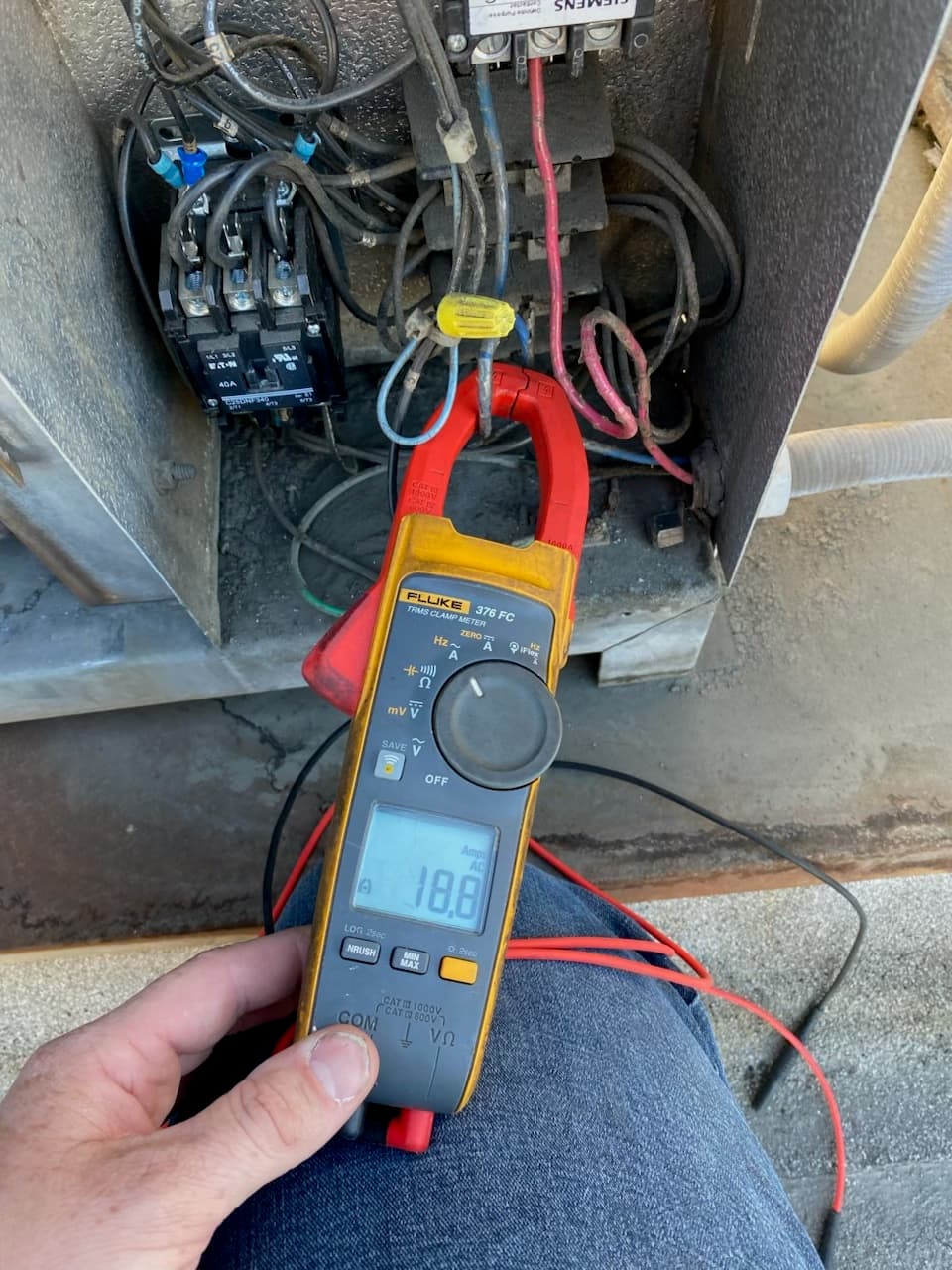
The dust is the recurring root cause. Ontario is flat and open, so Santa Ana wind and ordinary afternoon breezes carry grit from graded lots, truck yards, and the airport's surroundings straight onto condenser coils. A coil that looks acceptable from the roof hatch can be packed solid between the fins, which raises head pressure, overheats the compressor, and burns contactors. We check airflow and coil condition before we trust a pressure reading, because a pressure reading on a fouled coil points to a charge problem that is not there. On the retail side, at Ontario Mills and along Fourth Street and Inland Empire Boulevard, the issues are more about run hours: equipment that operates from early morning through late evening seven days a week and accumulates wear faster than its age suggests.
A good outcome on a large Ontario roof is a unit returned to service with a documented cause, plus a short list of sister units showing the same early signs, so the tenant and the landlord can decide whether to address them now or budget for them. That list, with readings and photos, lives in the DaVinci Portal under each unit's QR tag. Our root cause diagnostics guide explains the method.
Ontario's climate and what it does to this equipment
Ontario is flat, hot, and open, so Santa Ana winds arrive with little to slow them. Dry gusts carry dust from nearby industrial sites and open ground onto huge rooftops, where condenser coils collect it quickly. Summer highs are routinely well above 100 degrees on the hottest days, and large dark roofs raise local rooftop air temperatures further. Regional smog and wildfire smoke affect filtration, and sharp swings between day and night temperatures stress controls and refrigeration defrost cycles. For cold storage, this means condensers are working against the worst ambient conditions of the year, usually with the heaviest product loads.
For the equipment background behind this page, read our root-cause diagnostics guide or the full Commercial Troubleshooting & Repair service page.
- Airport and logistics corridorsDistribution and cargo buildings near Ontario International Airport, including cold storage and large rooftop equipment arrays.
- Ontario Mills and Ontario GatewayLarge-format retail, entertainment, and hospitality properties with extended operating hours and heavy rooftop equipment loads.
- Convention Center and arena districtEvent venues, hotels, and surrounding offices where ventilation and cooling demand surges during conventions and games.
- Guasti, Inland Empire Boulevard, and Ontario RanchMixed office, restaurant, and newer warehouse and commercial development south and east of the core.
- Root-cause diagnostics, not guesswork
- Truck-stocked parts for common same-day fixes
- Clear repair options before any work is authorized
- DaVinci Portal included: QR service history, notes, photos
What a commercial hvac repair visit includes, and the problems we most often find
- Call in the issue — what the equipment is doing, and what it's affecting
- Tech arrives with truck-stocked parts for the most common failures on that equipment type
- Root-cause diagnostic with readings taken and logged, not just symptom patching
- Repair options presented with pricing before anything is authorized
- Approved work completed same-visit where parts allow; readings logged to the Portal
- Electrical failures — contactors, capacitors, and control boards
- Refrigerant leaks and low-charge symptoms
- Failed motors, bearings, and belts on fans and blowers
- Clogged condensate drains causing water damage or shutdowns
Commercial HVAC Repair in Ontario: questions we get
We manage a distribution building with dozens of rooftop units and no service history. Where does a repair call even start?
How do you get roof access on a secured logistics site where the tenant controls the dock and the landlord controls the building?
How fast can you get a tech on site?
Do you charge a diagnostic fee?
Other services in Ontario
Commercial HVAC Repair nearby in Inland Empire (Riverside & San Bernardino Counties)
Commercial HVAC and refrigeration across Inland Empire (Riverside & San Bernardino Counties)