Maintenance Plans in Long Beach, CA
Corrosion control and coil care should anchor Long Beach's preventive maintenance. A good program here includes frequent coil cleaning and inspection, drain checks, electrical connection tightening, and protective measures on exposed hardware, in addition to the standard filter and belt work. Port logistics buildings, downtown offices, and medical suites all have different schedules, so visit timing is built around each property's operating pattern and recorded in the DaVinci Portal for the property manager.
Port-driven logistics and warehousing, a dense downtown, large hospital campuses, and an airport-area business park cluster, all within reach of salt air.
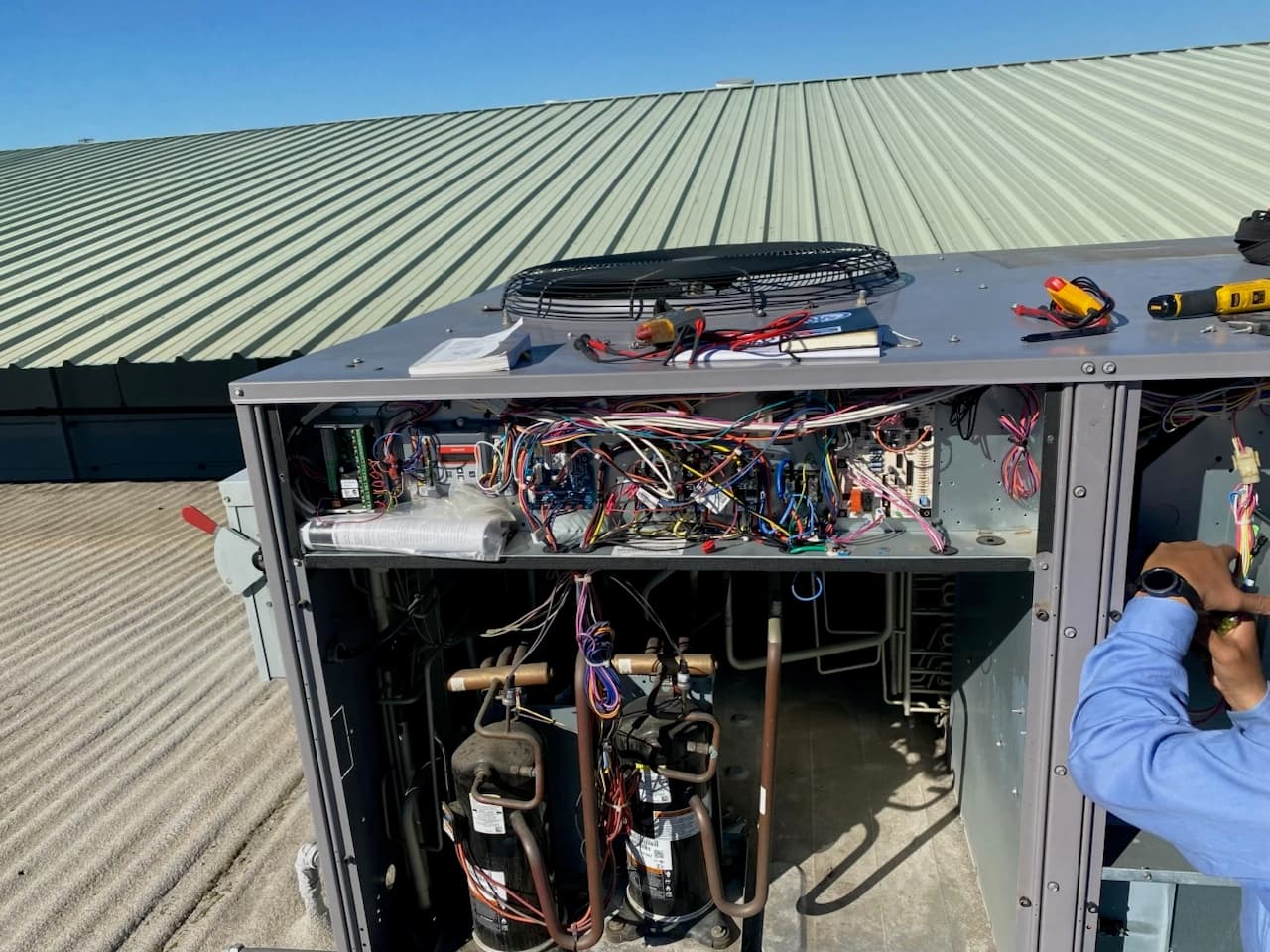
How maintenance plans work plays out in Long Beach
The interval is the whole conversation in Long Beach. A rooftop package on a Shoreline Drive hotel needs its condenser rinsed and inspected more often than the same unit in Douglas Park, which in turn needs more attention than one in Lakewood across the city line. A maintenance program here is built on a map: equipment within a mile or so of the water goes on a quarterly cycle with coil rinsing, corrosion inspection, and electrical terminal checks on every visit, while business park and inland retail equipment can run bi-annual with a heavier coastal check once a year. The program fails if it treats the city as one climate.
Property types layer on top of that. Port-adjacent cold storage and logistics buildings on the Westside run refrigeration and dock ventilation that never stops, so visits are scheduled mid-day after receiving and focus on defrost performance, condenser condition, and compressor readings. Hospital campuses along Atlantic Avenue and the VA need filter programs and documentation on a strict calendar, coordinated with in-house engineering. The Pine Avenue and Second Street restaurant rows need pre-summer coil and ice machine work before event season. Downtown office towers want after-hours windows and a report for the building engineer.
The deliverable is a corrosion history. Photographs of coils, pans, and hardware taken on every visit and stored in DaVinci Portal show an owner how fast each unit is aging, which is the only honest basis for deciding when to replace a coastal rooftop fleet rather than keep repairing it. Programs span property types under one owner, as described on the property management industry page, and the preventive maintenance guide covers how tiers are structured in general.
Long Beach's climate and what it does to this equipment
Long Beach sits directly on the coast, so salt-laden marine air is a constant at the shoreline, in downtown, and across the port. That air attacks condenser coils, fasteners, panel hardware, and exposed copper far faster than inland conditions, and it is humid enough to feed corrosion and mold in poorly ventilated spaces. Summers are milder than the valleys and basin, but humid afternoons and occasional heat waves still push rooftop equipment hard. Coil protection, drain pan cleaning, and regular inspection of corroded components are central to keeping equipment alive here.
For the equipment background behind this page, read our preventive maintenance program guide or the full Commercial Maintenance Plans service page.
- Downtown Long Beach and the ShorelineOffices, hotels, and waterfront restaurants where salt air shortens coil life and ice machines run hard through event season.
- Douglas Park and the airport areaBusiness park and light industrial buildings with dense rooftop equipment, newer tilt-up construction, and corporate tenants with defined comfort expectations.
- Port-adjacent logistics and the Westside industrial areaLarge distribution buildings and cold storage serving container traffic, with dock refrigeration, ventilation, and make-up air needs that run nearly around the clock.
- Medical campuses and the central corridorHospital campuses and medical office buildings where redundancy, filtration, and coordination with in-house engineers shape the work.
- Free diagnostic on repairs for plan members
- Included labor per tier, with a member rate for anything over
- Photo-logged reports with temps, pressures, and amp draws
- DaVinci Portal included with QR tracking and self-service scheduling
What a maintenance plans visit includes, and the problems we most often find
- Walk every covered asset — RTUs, refrigeration, ice machines, water heaters
- Take and log readings against each unit's history, not a generic checklist
- Flag anything trending toward failure before it becomes a breakdown
- Deliver a photo-logged report after every visit
- Free diagnostic on any repair that comes out of the visit
- Equipment that 'seemed fine' failing without any maintenance history to catch the trend
- Multiple pieces of equipment aging out around the same time with no replacement plan
- Surprise repair costs that a documented PM history would have flagged months earlier
- Multi-location accounts with no consistent record across sites
Maintenance tiers for Long Beach properties
Plans for Long Beach properties emphasize corrosion control, frequent coil work, and cold-dock reliability near the port. Visit frequency can be set higher for waterfront and port-adjacent equipment and recorded in the DaVinci Portal.
See maintenance plan tiers