Kitchen Ventilation & Make-Up Air in Long Beach, CA
Long Beach restaurants range from compact spaces on the avenues near downtown to larger waterfront operations with heavy cooking loads. Exhaust that is not matched by adequate make-up air creates drafts, stuck doors, and poor hood capture, and coastal humidity makes grease-laden airflow problems feel worse in the dining room. Davinci Mechanical evaluates fans, make-up air units, and balance across the whole kitchen. This is not hood or duct cleaning; it is the air side of the kitchen working as designed.
Port-driven logistics and warehousing, a dense downtown, large hospital campuses, and an airport-area business park cluster, all within reach of salt air.
How kitchen ventilation & make-up air work plays out in Long Beach
Second Street in Belmont Shore is a good place to understand kitchen ventilation in Long Beach. Dozens of restaurants in older single-story buildings share walls and rooflines, each with a hood sized for whatever concept came before, and a steady onshore breeze that changes how exhaust fans behave depending on which way the wind is blowing across the roof. A kitchen that is balanced on a calm morning goes negative when the afternoon wind pushes against the exhaust discharge, and the front door starts slamming. Pine Avenue, Retro Row, and the Pike have the same mix in slightly different buildings.
Humidity makes imbalance worse here than inland. When a dining room is pulled negative, the make-up comes through the front door, and in Long Beach that air is damp. It condenses on cold surfaces, makes the dining room feel clammy, and loads the rooftop unit with latent heat it was never sized for. The hotels along Ocean Boulevard and the Convention Center kitchens run larger systems with dedicated make-up air units whose coils and fan housings corrode in salt air, so a make-up air unit that is running but delivering half its design volume is a common finding.
The work is measurement and correction: exhaust and supply airflow at the hood and the make-up unit, interlock and tempering operation, wind effects on the discharge, and balance against the dining room and neighboring tenants. Corroded make-up air components are identified and replaced with coastal-appropriate parts. To be plain about what this is not: hood and duct grease cleaning is a separate trade. The restaurants industry page describes how ventilation, refrigeration, and rooftop service are coordinated for Long Beach operators.
Long Beach's climate and what it does to this equipment
Long Beach sits directly on the coast, so salt-laden marine air is a constant at the shoreline, in downtown, and across the port. That air attacks condenser coils, fasteners, panel hardware, and exposed copper far faster than inland conditions, and it is humid enough to feed corrosion and mold in poorly ventilated spaces. Summers are milder than the valleys and basin, but humid afternoons and occasional heat waves still push rooftop equipment hard. Coil protection, drain pan cleaning, and regular inspection of corroded components are central to keeping equipment alive here.
For the equipment background behind this page, read our kitchen ventilation and make-up air guide or the full Kitchen Ventilation & Make-Up Air service page.
- Downtown Long Beach and the ShorelineOffices, hotels, and waterfront restaurants where salt air shortens coil life and ice machines run hard through event season.
- Douglas Park and the airport areaBusiness park and light industrial buildings with dense rooftop equipment, newer tilt-up construction, and corporate tenants with defined comfort expectations.
- Port-adjacent logistics and the Westside industrial areaLarge distribution buildings and cold storage serving container traffic, with dock refrigeration, ventilation, and make-up air needs that run nearly around the clock.
- Medical campuses and the central corridorHospital campuses and medical office buildings where redundancy, filtration, and coordination with in-house engineers shape the work.
- Make-up air unit service, repair, and replacement
- Exhaust fan belts, motors, and airflow verification
- Kitchen-to-dining pressure balance so doors and hoods behave
- Documented readings, not guesses, on airflow and temperature
What a kitchen ventilation & make-up air visit includes, and the problems we most often find
- Walk the kitchen during or near service to see what the building actually does
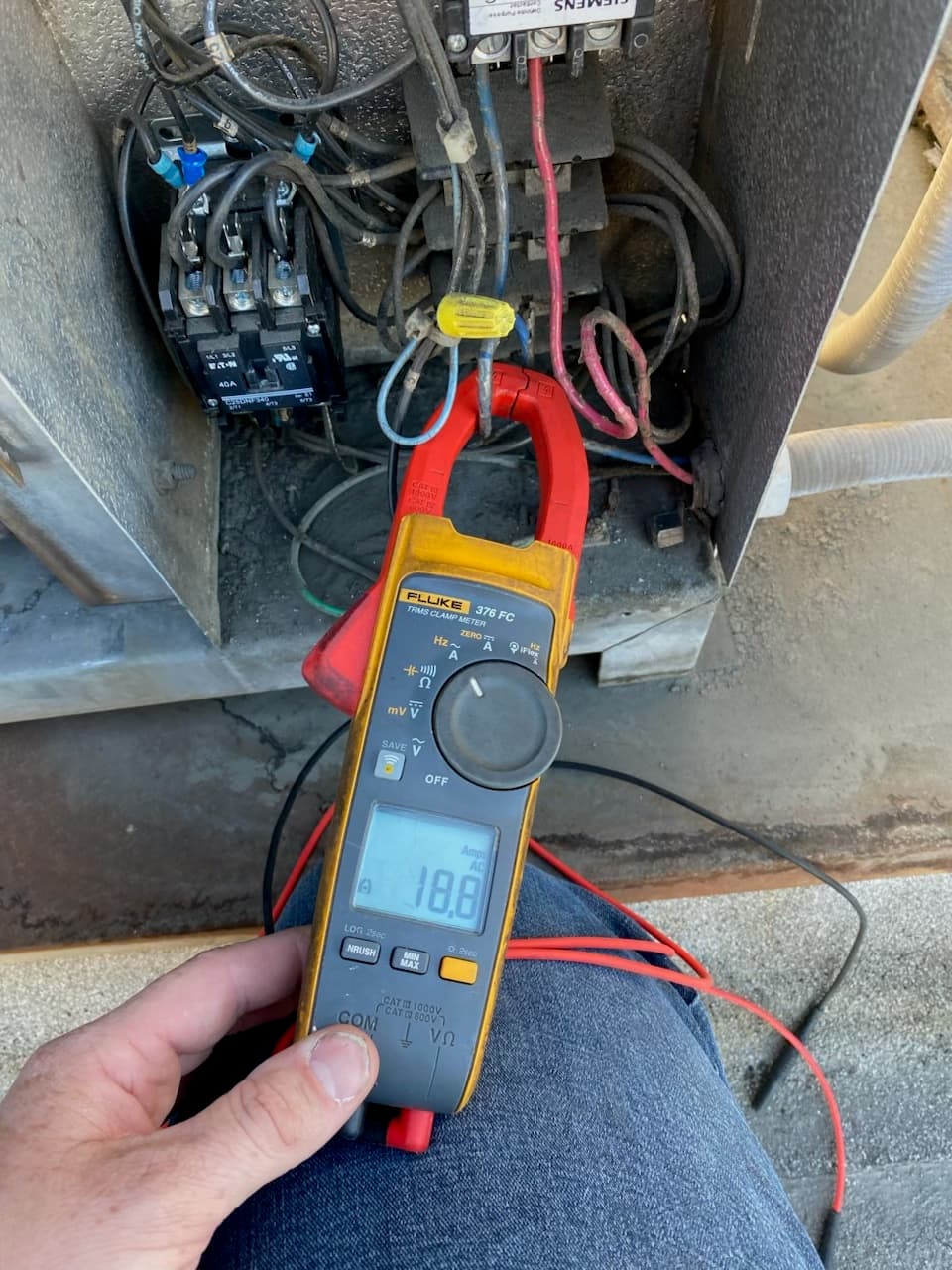
- Measure exhaust and make-up airflow, temperatures, and building pressure
- Inspect fans, belts, motors, dampers, burners, and controls
- Repair or adjust, then re-measure to confirm the balance
- Document results and flag items for the hood-cleaning and fire-protection vendors to handle
- Make-up air that is undersized or off, pulling conditioned air from the dining room
- Exhaust fan belts and bearings worn, cutting airflow below what the hood needs
- Kitchens running negative, causing hard-to-open doors, drafts, and burner issues
- Make-up air units with failed burners or controls during cold or hot weather
Kitchen Ventilation & Make-Up Air in Long Beach: questions we get
Our Belmont Shore restaurant's kitchen is fine in the morning but the dining room gets smoky and the door slams in the afternoon. What changes?
The wind. Afternoon onshore breezes along the Long Beach coast push against rooftop exhaust discharges and change pressure on the building, which lowers exhaust fan performance and worsens any make-up air shortfall. A system that is marginal in calm conditions fails under that load. The fix is usually more make-up air, a change to the exhaust discharge configuration, or both, confirmed by measurements taken during the afternoon when the problem actually occurs.
Our hotel kitchen's make-up air unit runs constantly but the line still feels starved. What is likely wrong?
A make-up air unit near the Long Beach shoreline can be running at full speed while delivering far less than its rated volume because its coil is salted up, its filters are loaded, a damper has corroded partway shut, or a belt is slipping. Measuring the actual supply airflow against design is the first step. Restoring the unit's delivered volume is usually the fix; the hood exhaust is checked at the same time to confirm the balance.
Do you clean hoods and ducts?
No. Hood and duct cleaning is a separate specialty. We handle the mechanical side: exhaust fans, make-up air, and HVAC balance.
Why is my dining room hot when the kitchen is running?
Often the make-up air is not matched to the exhaust, so the kitchen pulls conditioned air from the dining room. Measuring airflow and pressure shows where the balance is off.
Can you replace a make-up air unit?
Yes. We size to the hood's exhaust requirement, coordinate permits, and handle rigging and controls.