Maintenance Plans in Pomona, CA
Pomona maintenance programs are tuned to the hot, dusty season and to seasonal use. Spring visits concentrate on condensers, refrigerant readings and economizers before the heat arrives, while fall visits address Santa Ana debris and heating readiness. For the Fairplex and similar event-driven properties, plans are timed ahead of major events instead of on a fixed calendar. Records go to the DaVinci Portal, which gives property managers and campus facilities teams a shared, searchable view of every unit and its service history.
A mixed inland city of Cal Poly Pomona, the Fairplex, industrial parks and a revitalizing downtown, where hot, dry summers drive heavy cooling loads.
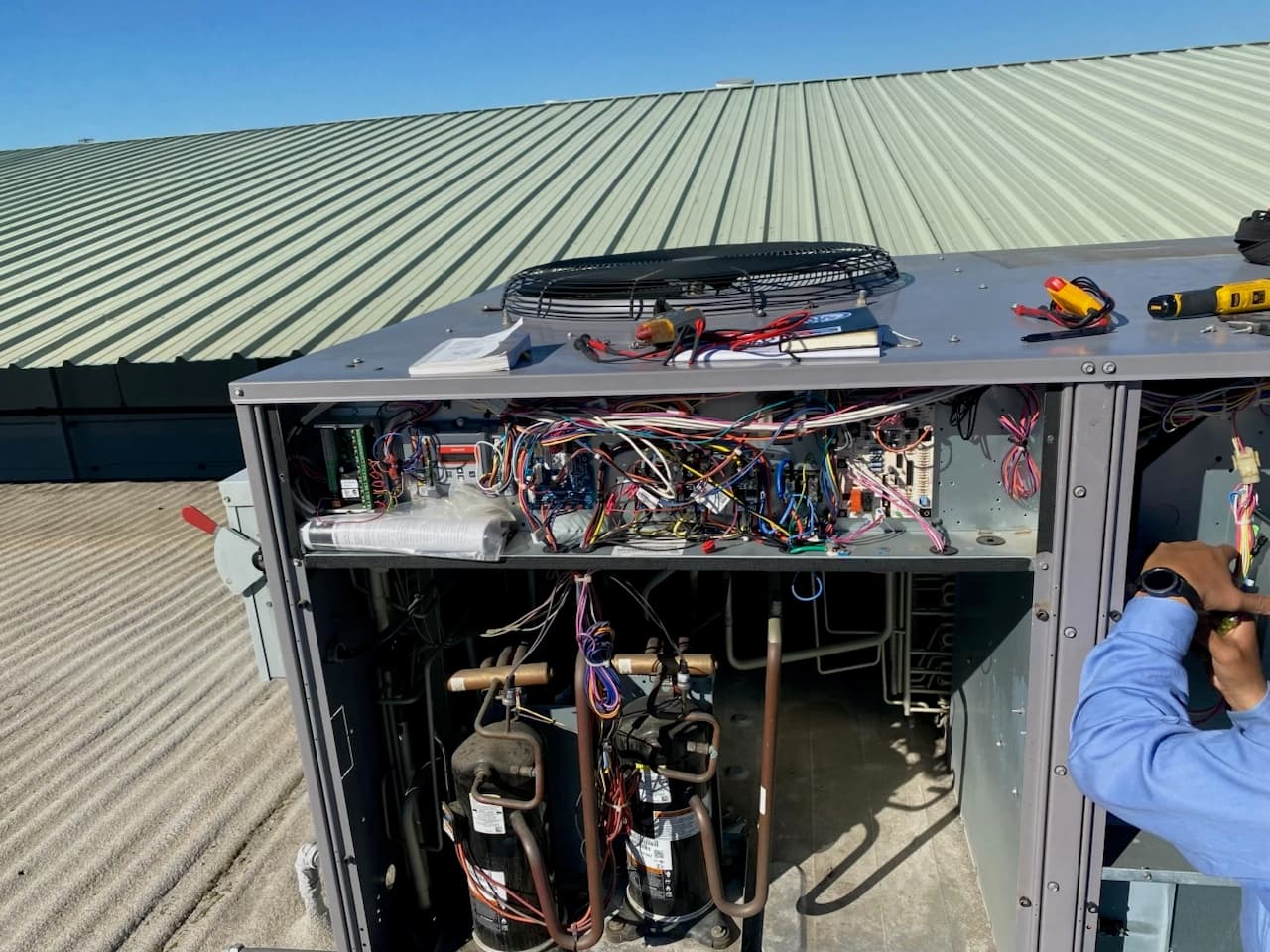
How maintenance plans work plays out in Pomona
The calendar drives maintenance in Pomona more than it does nearer the coast. The window between late February and early May is when condensers get cleaned, refrigerant circuits get checked under a real load, economizers get exercised and anything marginal gets flagged, because once the first week of sustained 95-degree weather arrives, every contractor in the east San Gabriel Valley is running emergency calls. A property that enters June with clean coils, tight electrical connections and verified charge almost always rides out the summer; one that skipped spring is the building calling at 4 p.m. on a Thursday.
Which properties fit which rhythm is fairly predictable here. Restaurants and breweries downtown, grocery and markets along Holt and Indian Hill, commissaries and food distributors in the industrial parks: those run on a quarterly cadence because refrigeration and kitchen equipment never rest. Medical offices around the hospital campus, professional offices and retail centers along Garey Avenue and near the 71 fit a spring-and-fall program, with the fall visit timed before Santa Ana winds load every outdoor coil with dust. Light-duty warehouse space with a couple of units over an office can run annually, as long as filters are handled between visits.
Institutional properties, including campus and school facilities, usually need a program that is also a compliance tool: documented visits, named technicians, readings per asset and a record that survives a district audit or a facilities turnover. That is what the DaVinci Portal is for, and it is included with service. Program structures are described on the plans page, and the general approach is in the preventive maintenance guide.
Pomona's climate and what it does to this equipment
Pomona lies in the eastern part of the Los Angeles basin where the marine layer rarely reaches in summer, so days are hot, sunny and dry, with frequent stretches above 95 degrees and occasional triple-digit heat. Cooling coils work long hours, condensers reject heat into very hot air, and compressors see sustained high head pressure. Santa Ana winds in fall bring dust and debris that clog outdoor coils and intake screens. Winters are mild but nights can be cool enough for heating calls. Smog and fine particulate also load filters faster than at the coast.
For the equipment background behind this page, read our preventive maintenance program guide or the full Commercial Maintenance Plans service page.
- Cal Poly Pomona campus and surrounding institutional areaUniversity buildings with chilled water, lab ventilation and public-agency procurement requirements.
- Fairplex and the Fairplex Drive corridorExhibition halls and event facilities with highly seasonal loads, large spaces and temporary-use cooling.
- Downtown Pomona and the Arts ColonyOlder masonry buildings housing restaurants, breweries and galleries, with tight back-of-house refrigeration and rooftop access challenges.
- Mission, Holt and Garey industrial parksMulti-generation warehouse and manufacturing buildings with mixed-vintage rooftop fleets and aging controls.
- Free diagnostic on repairs for plan members
- Included labor per tier, with a member rate for anything over
- Photo-logged reports with temps, pressures, and amp draws
- DaVinci Portal included with QR tracking and self-service scheduling
What a maintenance plans visit includes, and the problems we most often find
- Walk every covered asset — RTUs, refrigeration, ice machines, water heaters
- Take and log readings against each unit's history, not a generic checklist
- Flag anything trending toward failure before it becomes a breakdown
- Deliver a photo-logged report after every visit
- Free diagnostic on any repair that comes out of the visit
- Equipment that 'seemed fine' failing without any maintenance history to catch the trend
- Multiple pieces of equipment aging out around the same time with no replacement plan
- Surprise repair costs that a documented PM history would have flagged months earlier
- Multi-location accounts with no consistent record across sites
Maintenance tiers for Pomona properties
Pomona plans are built around the inland cooling season and Santa Ana debris, with pre-event timing for fairground and campus properties and records that support institutional budgeting.
See maintenance plan tiers