Chiller & Central Plant Service in Long Beach, CA
Larger Long Beach properties, including some downtown towers, hospital campuses, and big institutional buildings, use chillers, cooling towers, and pumps to deliver comfort and process cooling. Coastal conditions mean tower fill, basin hardware, and exposed piping need attention to corrosion, and water treatment must be consistent. Davinci Mechanical tracks plant performance trends so owners can plan overhaul or replacement work before a failure arrives in the middle of a hot afternoon.
Port-driven logistics and warehousing, a dense downtown, large hospital campuses, and an airport-area business park cluster, all within reach of salt air.
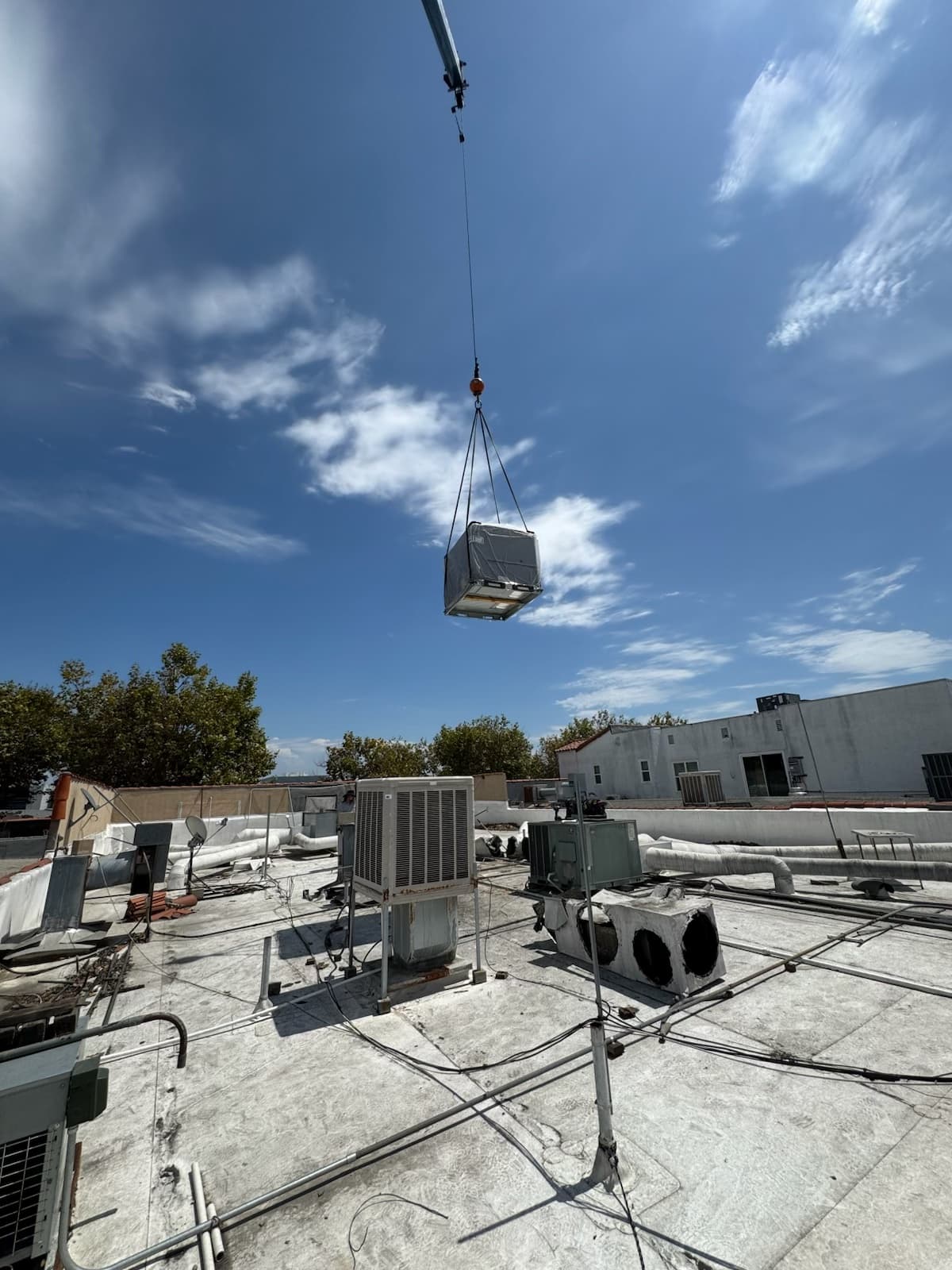
How chiller & central plant service work plays out in Long Beach
The chilled water plants in Long Beach sit on hospital campuses, in the downtown office and hotel towers along Ocean Boulevard, at the Convention Center area, and on the Cal State Long Beach campus and other institutional sites. What they share is a cooling tower exposed to marine air, and that is where the trouble starts. Tower fill, basins, structural hardware, fan assemblies, and exposed piping corrode at a pace that inland plants never see, and water treatment that is adequate elsewhere lets scale and biological growth take hold when the tower is also loaded with salt and port-area particulate. A plant engineer here spends more time on the tower than on the chiller.
Hospital plants carry the highest stakes. A chiller that has to come down for tube cleaning or a compressor overhaul needs a redundancy plan worked out with facility engineering, and the work is scheduled in the mild months when the remaining capacity can carry the building. Downtown towers want weekend windows and a report for the building engineer. Larger institutional plants are often procured as bid-level projects with prevailing wage, which is how most Long Beach plant work from the Orange County base is engaged, through the bid projects process rather than a service call.
A plant that is well cared for here shows it in trend data: approach temperatures that stay flat after cleaning, tower water chemistry logged and in range, pump readings tracked, and photographs of tower condition taken each visit. That record tells an owner whether the next capital item is fill, a tower rebuild, or a chiller, and roughly when. The chillers and hydronic systems guide covers the technical side, and the hospitals and health systems sector page covers how healthcare plant work is coordinated.
Long Beach's climate and what it does to this equipment
Long Beach sits directly on the coast, so salt-laden marine air is a constant at the shoreline, in downtown, and across the port. That air attacks condenser coils, fasteners, panel hardware, and exposed copper far faster than inland conditions, and it is humid enough to feed corrosion and mold in poorly ventilated spaces. Summers are milder than the valleys and basin, but humid afternoons and occasional heat waves still push rooftop equipment hard. Coil protection, drain pan cleaning, and regular inspection of corroded components are central to keeping equipment alive here.
For the equipment background behind this page, read our chillers and hydronic systems guide or the full Chillers & Central Plant Service service page.
- Downtown Long Beach and the ShorelineOffices, hotels, and waterfront restaurants where salt air shortens coil life and ice machines run hard through event season.
- Douglas Park and the airport areaBusiness park and light industrial buildings with dense rooftop equipment, newer tilt-up construction, and corporate tenants with defined comfort expectations.
- Port-adjacent logistics and the Westside industrial areaLarge distribution buildings and cold storage serving container traffic, with dock refrigeration, ventilation, and make-up air needs that run nearly around the clock.
- Medical campuses and the central corridorHospital campuses and medical office buildings where redundancy, filtration, and coordination with in-house engineers shape the work.
- Chiller, tower, pump, and VFD service with logged operating data
- Trend-based diagnosis: approach, delta-T, amp draw, and pressures
- Replacement planning with rigging, power, and temporary cooling considered
- Water-treatment and Legionella-control coordination for water-cooled plants
What a chiller & central plant service visit includes, and the problems we most often find
- Review the plant: chillers, pumps, towers, controls, and recent operating history
- Take full operating readings and compare against design and prior visits
- Inspect and test safeties, strainers, VFDs, valves, and control sequences
- Report findings with prioritized repairs and a forward capital outlook
- Document the plant by asset in the DaVinci Portal for the next visit
- Falling delta-T pushing chillers to run more than the load requires
- Fouled condenser tubes or coils raising approach temperature and amp draw
- Neglected water treatment causing scale, corrosion, and biological growth
- Controls overridden to manual and never returned to automatic