RTU & Split Installs in Long Beach, CA
Rooftop replacements in Long Beach have to account for corrosion from the start. Coastal-exposure coatings, stainless or protected hardware, and careful curb and flashing work help new equipment last longer than its predecessor. Douglas Park and port-adjacent tilt-up buildings usually offer straightforward crane access, while downtown structures can require street coordination. Permits run through the city, so confirm current requirements, and plan Title 24 compliance and any electrical changes before ordering so the lift can happen in a single clean window.
Port-driven logistics and warehousing, a dense downtown, large hospital campuses, and an airport-area business park cluster, all within reach of salt air.
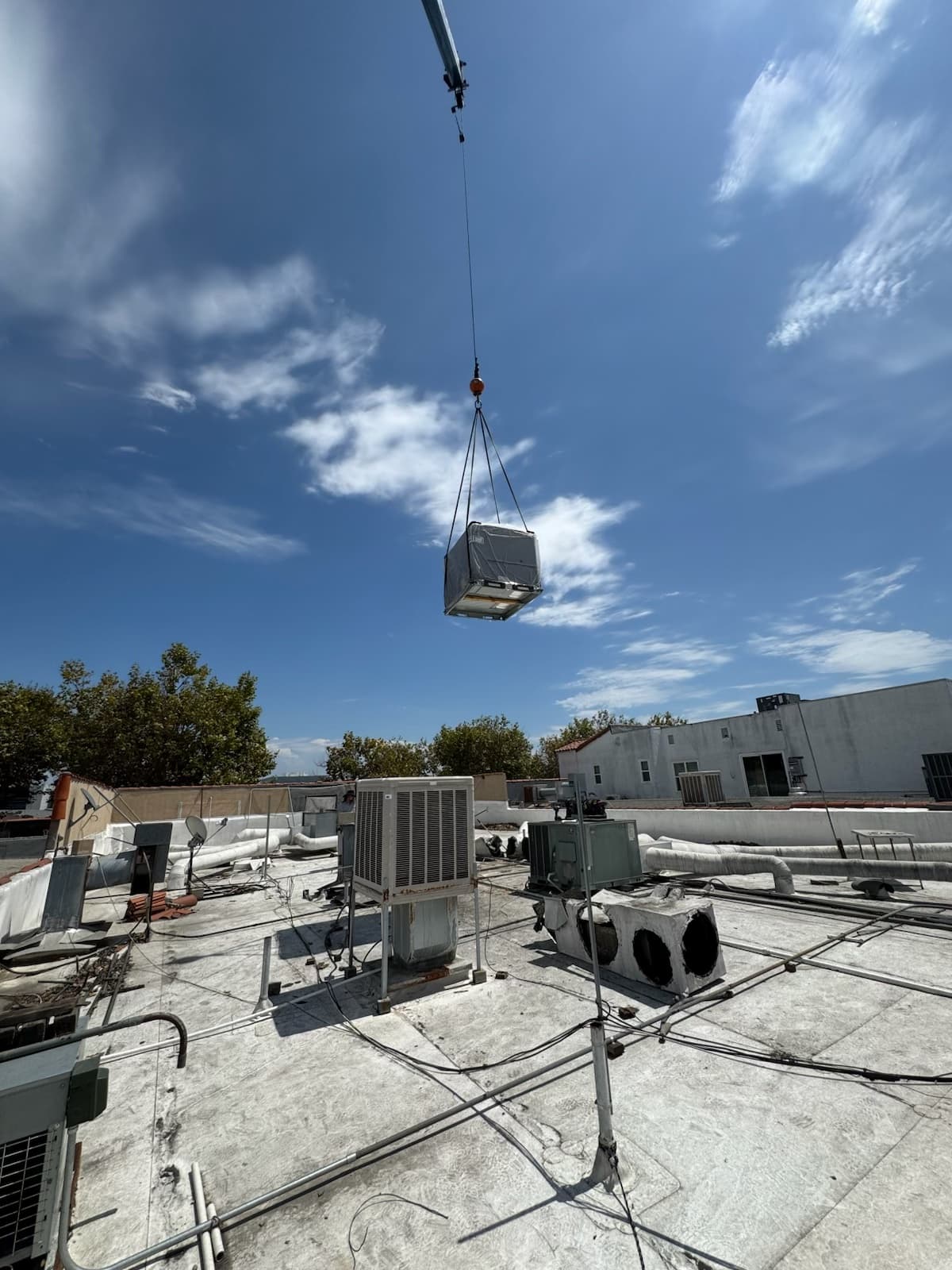
How rtu & split installs work plays out in Long Beach
The specification for a rooftop unit in Long Beach is written by the ocean. Coastal-rated coil coatings, stainless or coated hardware, sealed electrical enclosures, and a drain pan that will not rust through in four years are not upgrades here; they are the difference between a unit that lasts fifteen years and one that is scrap in seven. Properties along Shoreline Drive, Ocean Boulevard, the Pike, and Belmont Shore sit in the worst of it. Even Douglas Park and the Traffic Circle area, a few miles inland, see enough marine air that protection is still worth specifying.
Access varies more than in most cities. The business park buildings near the airport and the logistics boxes on the Westside are the easy case: single-story, open yards, a crane in the parking lot at 6 a.m. and the unit set by 8. Downtown is the hard case: mid-rise office and hotel buildings on narrow streets with the Blue Line and bus routes nearby, where a crane means a street closure coordinated with the city and a lift timed around traffic. Permits run through Long Beach Development Services rather than the county, and the scope decides whether it is a simple mechanical permit or plan check, so current requirements are confirmed before the schedule is set.
A clean replacement here ends with a unit that was ordered with the right coastal package, set on a corrected curb with flashing that will not let salt water sit, wired to an electrical service that was checked first, and documented with Title 24 acceptance where the scope requires it. The commercial RTU replacement page explains the general process; the rooftop unit guide covers equipment selection, and for Long Beach the coastal specification is the part most often skipped by the low bid.
Long Beach's climate and what it does to this equipment
Long Beach sits directly on the coast, so salt-laden marine air is a constant at the shoreline, in downtown, and across the port. That air attacks condenser coils, fasteners, panel hardware, and exposed copper far faster than inland conditions, and it is humid enough to feed corrosion and mold in poorly ventilated spaces. Summers are milder than the valleys and basin, but humid afternoons and occasional heat waves still push rooftop equipment hard. Coil protection, drain pan cleaning, and regular inspection of corroded components are central to keeping equipment alive here.
For the equipment background behind this page, read our commercial rooftop unit guide or the full RTU & Split System Installs service page.
- Downtown Long Beach and the ShorelineOffices, hotels, and waterfront restaurants where salt air shortens coil life and ice machines run hard through event season.
- Douglas Park and the airport areaBusiness park and light industrial buildings with dense rooftop equipment, newer tilt-up construction, and corporate tenants with defined comfort expectations.
- Port-adjacent logistics and the Westside industrial areaLarge distribution buildings and cold storage serving container traffic, with dock refrigeration, ventilation, and make-up air needs that run nearly around the clock.
- Medical campuses and the central corridorHospital campuses and medical office buildings where redundancy, filtration, and coordination with in-house engineers shape the work.
- Site survey covering load, airflow balancing, and duct condition
- Clean rigging with code-correct gas, electrical, and condensate work
- Startup readings documented and stored in the Portal
- DaVinci Portal included: asset QR tag + warranty paperwork on file
What a rtu & split installs visit includes, and the problems we most often find
- Site survey — existing curb/duct compatibility, load, and airflow requirements
- Equipment selection sized to actual load and hours of operation, not just square footage
- Crane scheduling and rigging coordinated for roof access
- Install with code-correct gas, electrical, and condensate work
- Startup readings taken and documented; warranty registered in the Portal
- Undersized or oversized replacement units causing short-cycling or poor comfort
- Curb mismatches that turn a 'simple swap' into a bigger job mid-install
- Duct transitions that don't match the new unit's airflow requirements
- Aging units on refrigerant types that are getting harder and more expensive to service
RTU & Split Installs in Long Beach: questions we get
Is a crane realistic for a rooftop replacement on a Downtown Long Beach mid-rise near Pine Avenue?
Yes, with a street closure plan. Most downtown rooftop replacements use a crane set in a closed lane during an early-morning window, with a traffic control plan and city permit arranged ahead of time, and attention to the Blue Line alignment and bus stops nearby. The survey identifies which street face gives the shortest reach and where the unit can be staged. It adds coordination and lead time; it rarely makes the project impossible.
How much longer does a coastal-rated rooftop unit actually last in Long Beach compared with a standard one?
There is no single number, because exposure varies between the shoreline and the airport area, but the pattern is consistent: standard coils and hardware within a mile or two of the water often show serious corrosion within a few years, while coated coils, protected hardware, and sealed electrical compartments slow that considerably. Combined with coil rinsing on a maintenance schedule, the coastal package is what gets a unit near the water to a normal service life.
Do you handle the crane pick and rigging?
Yes — we coordinate crane scheduling, rigging, and roof access so the install stays on schedule and code-compliant.
Can you match an existing curb or duct layout?
In most cases yes. We'll confirm curb compatibility and duct transitions during the site survey before quoting.