Ice Machine Service in Long Beach, CA
Waterfront restaurants, hotels, and event venues around downtown Long Beach depend on ice during the busy season, and hospital campuses need it clean and dependable all year. Salt air speeds corrosion on condenser fins, while water quality leads to scale inside the machine. Regular sanitation, filter replacement, and condenser cleaning keep production up and reduce the chance of off-taste ice or a failed inspection. Service records through the DaVinci Portal give managers a clear trail for each machine.
Port-driven logistics and warehousing, a dense downtown, large hospital campuses, and an airport-area business park cluster, all within reach of salt air.
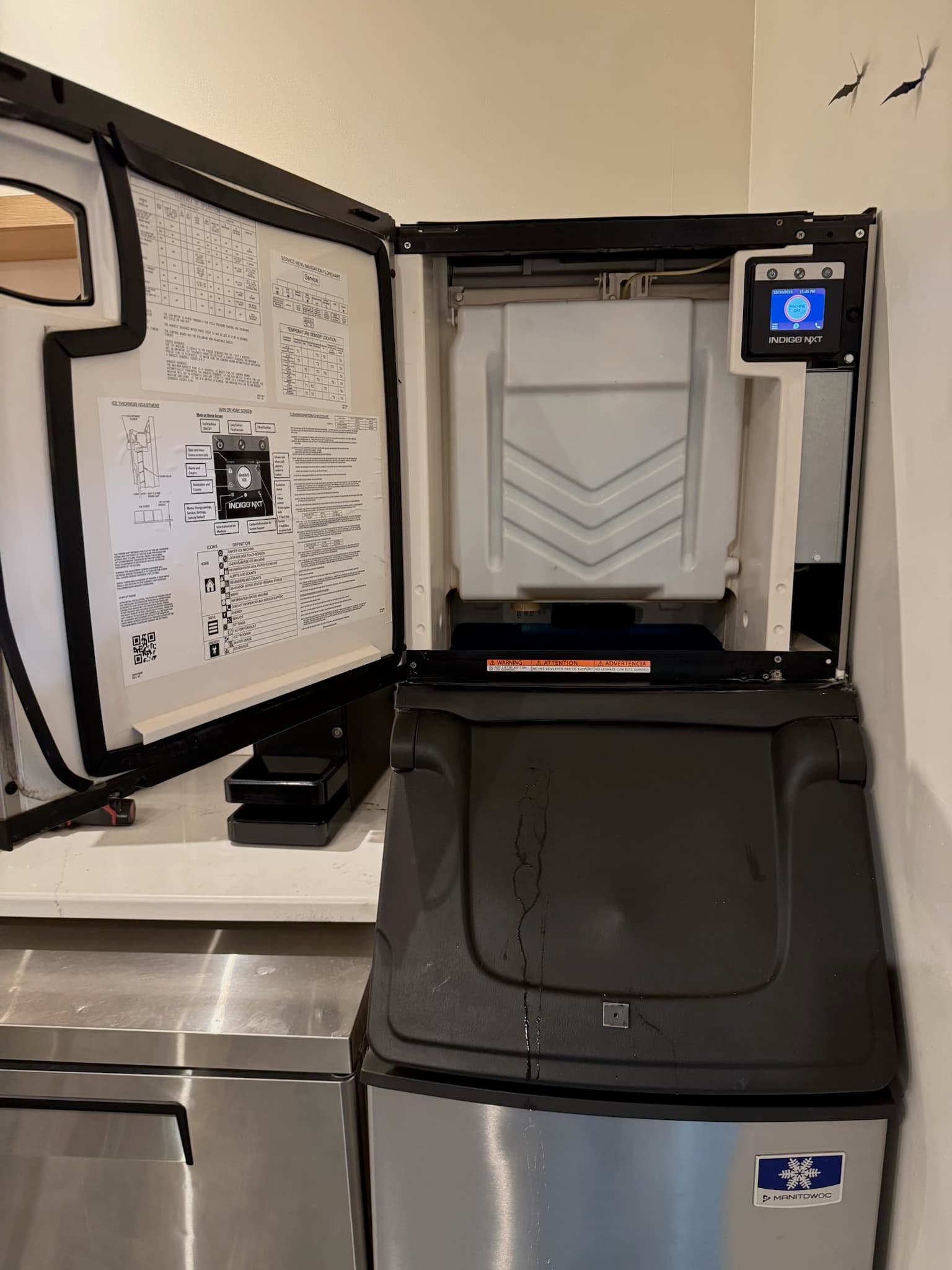
How ice machine service work plays out in Long Beach
Event season is the stress test for Long Beach ice. The Convention Center, the hotels along Ocean Boulevard and Shoreline Drive, the Pike, and the restaurants around Rainbow Harbor all run flat out during Grand Prix weekend, convention weeks, and summer, and an ice machine that produces 70 percent of its rating because its condenser is salted up becomes the bottleneck for a bar or banquet operation. Hospital campuses along the Atlantic corridor and at the VA need ice year-round with sanitation records to match, and a machine that fails inspection there is a different kind of problem.
Salt air does two things to an ice machine that inland water never does. It corrodes the condenser fins and cabinet hardware, cutting production and shortening the life of fan motors. And in humid coastal back rooms, the bin and the evaporator develop slime faster, so a sanitation interval that works in Riverside is too long on Pine Avenue. Local water hardness adds scale on top of that. Machines in waterfront restaurant kitchens also share air with fryers and grills, so the condenser is coated in grease and salt together, which is harder to clean than either alone.
Service that holds up here combines descaling and sanitizing on a shorter cycle than inland, condenser cleaning aimed at the salt and grease mix, a water filter check against the actual supply, and a look at airflow around the machine. Every visit is logged against the machine in DaVinci Portal, which gives hotel engineers and hospital facility staff the record they need. The ice machine guide covers the general cycle; the hotels and convention sector page covers how hospitality programs are built.
Long Beach's climate and what it does to this equipment
Long Beach sits directly on the coast, so salt-laden marine air is a constant at the shoreline, in downtown, and across the port. That air attacks condenser coils, fasteners, panel hardware, and exposed copper far faster than inland conditions, and it is humid enough to feed corrosion and mold in poorly ventilated spaces. Summers are milder than the valleys and basin, but humid afternoons and occasional heat waves still push rooftop equipment hard. Coil protection, drain pan cleaning, and regular inspection of corroded components are central to keeping equipment alive here.
For the equipment background behind this page, read our commercial ice machine guide or the full Ice Machines — Service & Sanitation service page.
- Downtown Long Beach and the ShorelineOffices, hotels, and waterfront restaurants where salt air shortens coil life and ice machines run hard through event season.
- Douglas Park and the airport areaBusiness park and light industrial buildings with dense rooftop equipment, newer tilt-up construction, and corporate tenants with defined comfort expectations.
- Port-adjacent logistics and the Westside industrial areaLarge distribution buildings and cold storage serving container traffic, with dock refrigeration, ventilation, and make-up air needs that run nearly around the clock.
- Medical campuses and the central corridorHospital campuses and medical office buildings where redundancy, filtration, and coordination with in-house engineers shape the work.
- Scale removal, deep sanitation, and filter change-out programs
- Bin sensors, harvest cycles, pumps, and valves checked
- OEM-spec readings taken against manufacturer PM intervals
- DaVinci Portal: photo-logged cleanings and reminder scheduling
What a ice machine service visit includes, and the problems we most often find
- Check ice quality, production rate, and bin sensor operation
- Full descale of water lines and evaporator plate
- Sanitize all food-contact surfaces per manufacturer spec
- Inspect water filtration and replace if due
- Photo-document the cleaning for your compliance records
- Scale buildup from hard water slowing production and clouding ice
- Bin sensors misreading and causing over- or under-production
- Water filters overdue for change, affecting both taste and machine health
- Visible slime or mold in the bin — the most common health-inspection flag
Ice Machine Service in Long Beach: questions we get
Our hotel near the Long Beach Convention Center runs out of ice during event weeks. Should we add a machine or fix the ones we have?
Measure first. Air-cooled machines near the water routinely run well below rated output because of salted condensers, warm ice closets, and scaled evaporators, and restoring them often recovers the capacity the hotel thought it had lost. If the machines produce their rating after cleaning and the banquet demand still exceeds it, then an additional machine or a larger unit is the answer. Adding a machine before fixing the existing ones usually just adds another underperforming unit.
How often should ice machines at a Long Beach waterfront restaurant be sanitized compared with the manufacturer's schedule?
More often than the printed interval, typically. Manufacturer schedules assume average conditions, and a humid coastal kitchen with grease in the air is not average. The practical approach is to inspect at a shorter interval during the first year, see how fast slime and scale actually return at that location, and set the sanitation cycle from that evidence. The maintenance record then shows inspectors a schedule based on the machine's real environment.
How often should ice machines be sanitized?
Most manufacturers recommend sanitizing every six months minimum, more often in high-mineral water areas. We'll set the interval based on your machine and water supply.
Can you fix low production without a full replacement?
Often, yes. Scale buildup, refrigerant charge, and water filtration are the most common causes of low ice production and are usually repairable.