Building Controls & Automation in Long Beach, CA
Buildings across Long Beach, from Douglas Park offices to downtown mid-rises, often have controls that were set up for a prior tenant or a different schedule. Coastal humidity makes economizer behavior worth checking, since a poorly tuned economizer can bring in damp air that makes a space feel clammy. Verifying sensors, schedules, and setpoints, and documenting the changes, usually recovers comfort and reduces runtime without a major capital project. Port-side offices with warehouse mezzanines often benefit most, since two very different loads share one thermostat.
Port-driven logistics and warehousing, a dense downtown, large hospital campuses, and an airport-area business park cluster, all within reach of salt air.
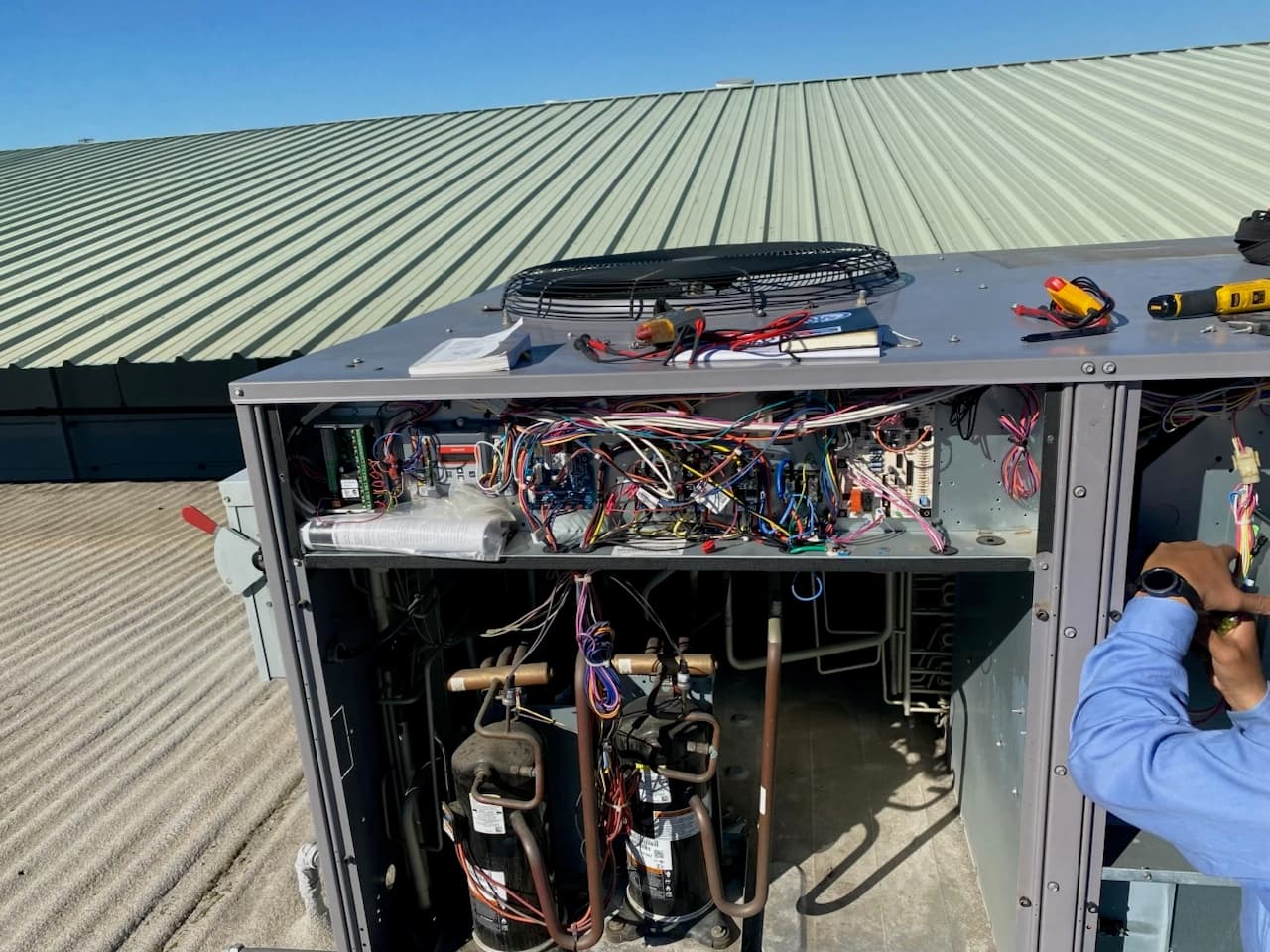
How building controls & automation work plays out in Long Beach
Controls work in Long Beach has a humidity problem that most inland cities never think about. An economizer on an office building in Douglas Park or downtown is running in a climate with hundreds of mild hours a year, which should be free cooling, but if it brings in marine air at the wrong moment the space feels clammy, the rooftop unit cannot wring out the moisture, and tenants complain even though the thermostat reads correctly. Economizer high-limit and enthalpy settings matter here in a way that dry-bulb-only logic cannot handle, and many units were set up with the default and never revisited.
The building types add their own patterns. Port-side offices attached to warehouses on the Westside often run one thermostat for an office and a mezzanine over a dock, two loads that have nothing in common. Hospital campuses have automation that is current and well maintained but coordinated through in-house engineering, so any changes are documented to their standard. Downtown mixed-use buildings carry layered systems from successive tenants. Corrosion gets into controls too: outdoor air sensors, damper actuators, and rooftop control wiring terminals pit and drift faster near the water.
The useful work is verification: checking every sensor against a calibrated instrument, testing economizer modulation and high-limit behavior under real outdoor conditions, rebuilding schedules around actual occupancy, and replacing corroded actuators and sensors with sealed units before they fail. Every setpoint and sequence change is recorded in DaVinci Portal so the next engineer is not guessing. Title 24 acceptance requirements apply where scope triggers them, and Long Beach has its own permitting path, so current requirements are confirmed per project.
Long Beach's climate and what it does to this equipment
Long Beach sits directly on the coast, so salt-laden marine air is a constant at the shoreline, in downtown, and across the port. That air attacks condenser coils, fasteners, panel hardware, and exposed copper far faster than inland conditions, and it is humid enough to feed corrosion and mold in poorly ventilated spaces. Summers are milder than the valleys and basin, but humid afternoons and occasional heat waves still push rooftop equipment hard. Coil protection, drain pan cleaning, and regular inspection of corroded components are central to keeping equipment alive here.
For the equipment background behind this page, read our building controls and energy guide or the full Building Controls & Automation service page.
- Downtown Long Beach and the ShorelineOffices, hotels, and waterfront restaurants where salt air shortens coil life and ice machines run hard through event season.
- Douglas Park and the airport areaBusiness park and light industrial buildings with dense rooftop equipment, newer tilt-up construction, and corporate tenants with defined comfort expectations.
- Port-adjacent logistics and the Westside industrial areaLarge distribution buildings and cold storage serving container traffic, with dock refrigeration, ventilation, and make-up air needs that run nearly around the clock.
- Medical campuses and the central corridorHospital campuses and medical office buildings where redundancy, filtration, and coordination with in-house engineers shape the work.
- Schedule, setpoint, and sequence review across rooftop and central equipment
- Sensor calibration and economizer verification
- Alarm and trend setup so problems surface early
- Programmable and networked thermostat installation
What a building controls & automation visit includes, and the problems we most often find
- Inventory controllers, thermostats, and any building automation system
- Compare schedules and setpoints to how the building is actually used
- Verify sensors, actuators, and economizer logic against measured conditions
- Correct overrides, sequences, and alarms; document the changes
- Review trends after adjustment to confirm savings and stability
- Schedules left at default so equipment runs when nobody is there
- Equipment overridden manually and never returned to automatic
- Drifting or miswired sensors producing comfort complaints
- Economizers that never actually modulate