Maintenance Plans in Burbank, CA
Preventive maintenance in Burbank should be heavy on pre-summer preparation. Coil cleaning, belt and bearing checks, refrigerant readings, and control verification go first, so equipment is ready before the valley heats up. Studio campuses, restaurants, and airport-area industrial buildings each need different visit timing, and results are recorded in the DaVinci Portal so managers can see exactly what was found and fixed on each unit. Airport-area industrial buildings with many identical rooftops especially benefit from a unit-by-unit comparison.
Studio and media campuses, airport-area industrial buildings, a restaurant-rich Magnolia Park, and hospital facilities in the heat of the San Fernando Valley.
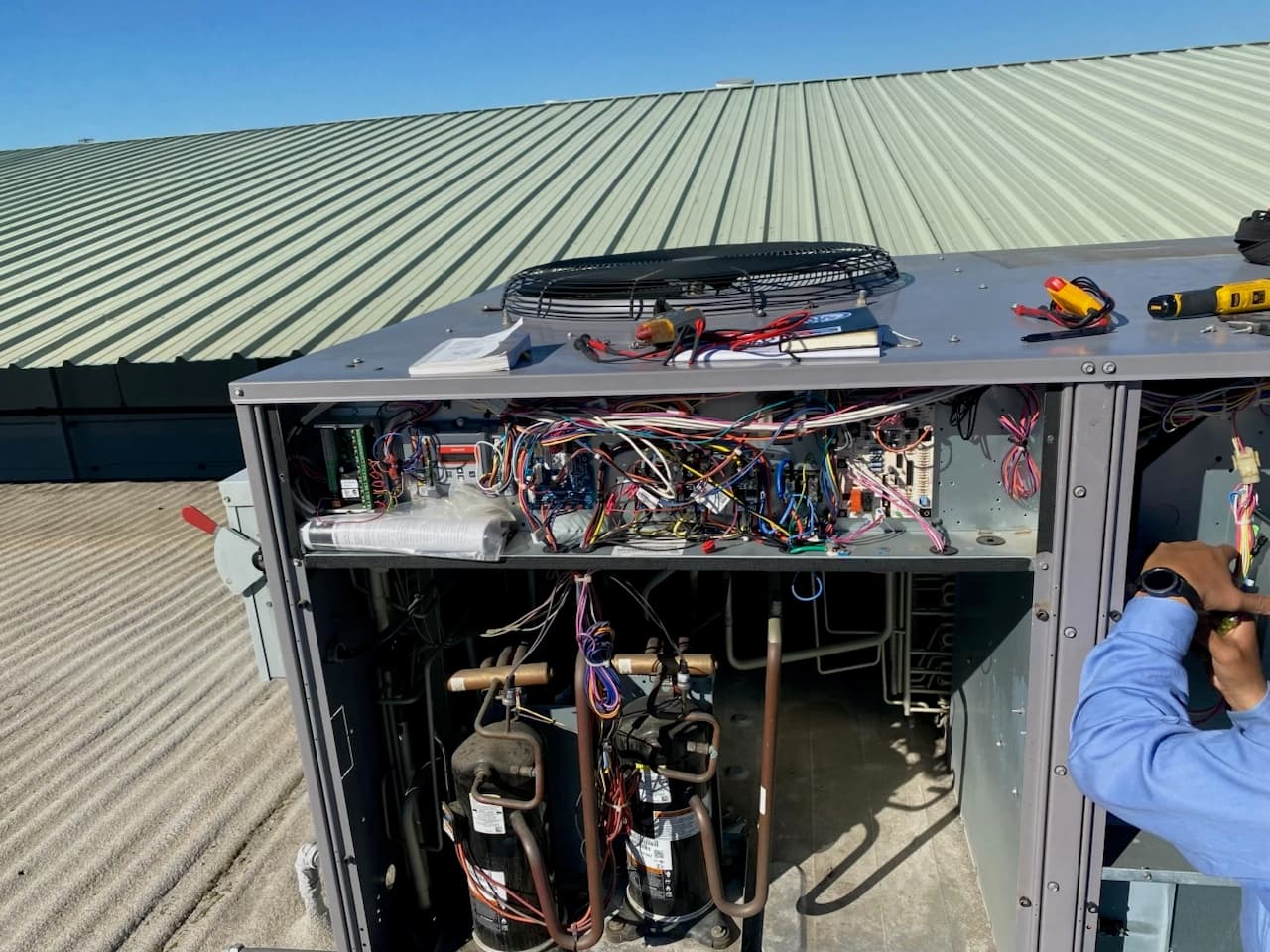
How maintenance plans work plays out in Burbank
Burbank maintenance programs are built backward from the hottest week of the year. If a rooftop unit over an edit suite or a Magnolia kitchen is going to fail, it will fail when the valley hits 105, so the spring visit does the heavy work: coil cleaning, condenser fan and motor checks, capacitor and contactor inspection, refrigerant readings against ambient, belt and bearing checks, and economizer verification. A fall visit cleans up after fire season and Santa Ana dust and gets heating equipment ready for the handful of weeks it is needed. Properties with critical rooms get quarterly attention because a season is too long to wait.
The properties that gain most are the ones with scale or stakes. Airport-area industrial landlords with dozens of identical rooftop units get a unit-by-unit ranking that turns a vague replacement budget into a defensible sequence. Studio and media tenants get a documented record on every machine room and edit bay unit, which is what their operations leads actually want. Magnolia Park restaurants and the hotels near the airport get refrigeration and ice machines folded into the same schedule as the HVAC, so one visit covers everything that can ruin a day. Medical offices around Providence Saint Joseph get a record a surveyor can read.
Scheduling respects the calendar of each property: dark days and hiatus periods for studios, early mornings for restaurants, shift changes for industrial tenants. Every reading, photo, and recommendation lives in the DaVinci Portal, per unit, so after two seasons the pattern is obvious and replacement planning becomes a budgeting exercise rather than a scramble. The maintenance program page outlines the tiers, and the preventive maintenance guide explains what each visit should include.
Burbank's climate and what it does to this equipment
Burbank sits in the San Fernando Valley, and the valley holds heat. Summer days regularly reach the upper 90s and into the 100s during heat waves, with warm nights that limit equipment recovery. The marine layer that cools coastal cities rarely reaches this far, so cooling seasons are long and intense. Santa Ana winds add dry air, dust, and fire-season smoke that load filters and coils. In these conditions, rooftop condensers and chillers work close to their limits more often than elsewhere in the county.
For the equipment background behind this page, read our preventive maintenance program guide or the full Commercial Maintenance Plans service page.
- Media District and studio campusesProduction lots, office buildings, edit suites, and server areas with steady cooling loads and limited tolerance for interruption.
- Magnolia ParkIndependent restaurants, cafes, and shops in older commercial buildings, where kitchens, coolers, and rooftop equipment are compact.
- Airport-area industrial and business parksLarge industrial and light-industrial buildings near Hollywood Burbank Airport with substantial rooftop equipment counts.
- Downtown Burbank and hospital campusesOffices, retail, and medical buildings where comfort, filtration, and scheduling around clinical or business hours are essential.
- Free diagnostic on repairs for plan members
- Included labor per tier, with a member rate for anything over
- Photo-logged reports with temps, pressures, and amp draws
- DaVinci Portal included with QR tracking and self-service scheduling
What a maintenance plans visit includes, and the problems we most often find
- Walk every covered asset — RTUs, refrigeration, ice machines, water heaters
- Take and log readings against each unit's history, not a generic checklist
- Flag anything trending toward failure before it becomes a breakdown
- Deliver a photo-logged report after every visit
- Free diagnostic on any repair that comes out of the visit
- Equipment that 'seemed fine' failing without any maintenance history to catch the trend
- Multiple pieces of equipment aging out around the same time with no replacement plan
- Surprise repair costs that a documented PM history would have flagged months earlier
- Multi-location accounts with no consistent record across sites
Maintenance tiers for Burbank properties
Burbank plans put pre-summer preparation first, with visit timing built around production schedules, restaurant hours, and airport-area operations. Records are kept in the DaVinci Portal.
See maintenance plan tiers