Maintenance Plans in Santa Monica, CA
Maintenance in Santa Monica should be tuned to coastal conditions. That means frequent coil cleaning, corrosion inspection, drain checks, and electrical connection tightening on top of filters and belts. Visit schedules need to work around Promenade foot traffic, restaurant service, and clinic hours. Each unit's findings are logged in the DaVinci Portal, which helps owners decide when protective measures or replacement make better sense than another repair. Salt film builds quickly, so intervals here are shorter than inland.
A coastal commercial market of Third Street Promenade retail, Main Street restaurants, creative and tech offices, and hospitals, all exposed to salt air.
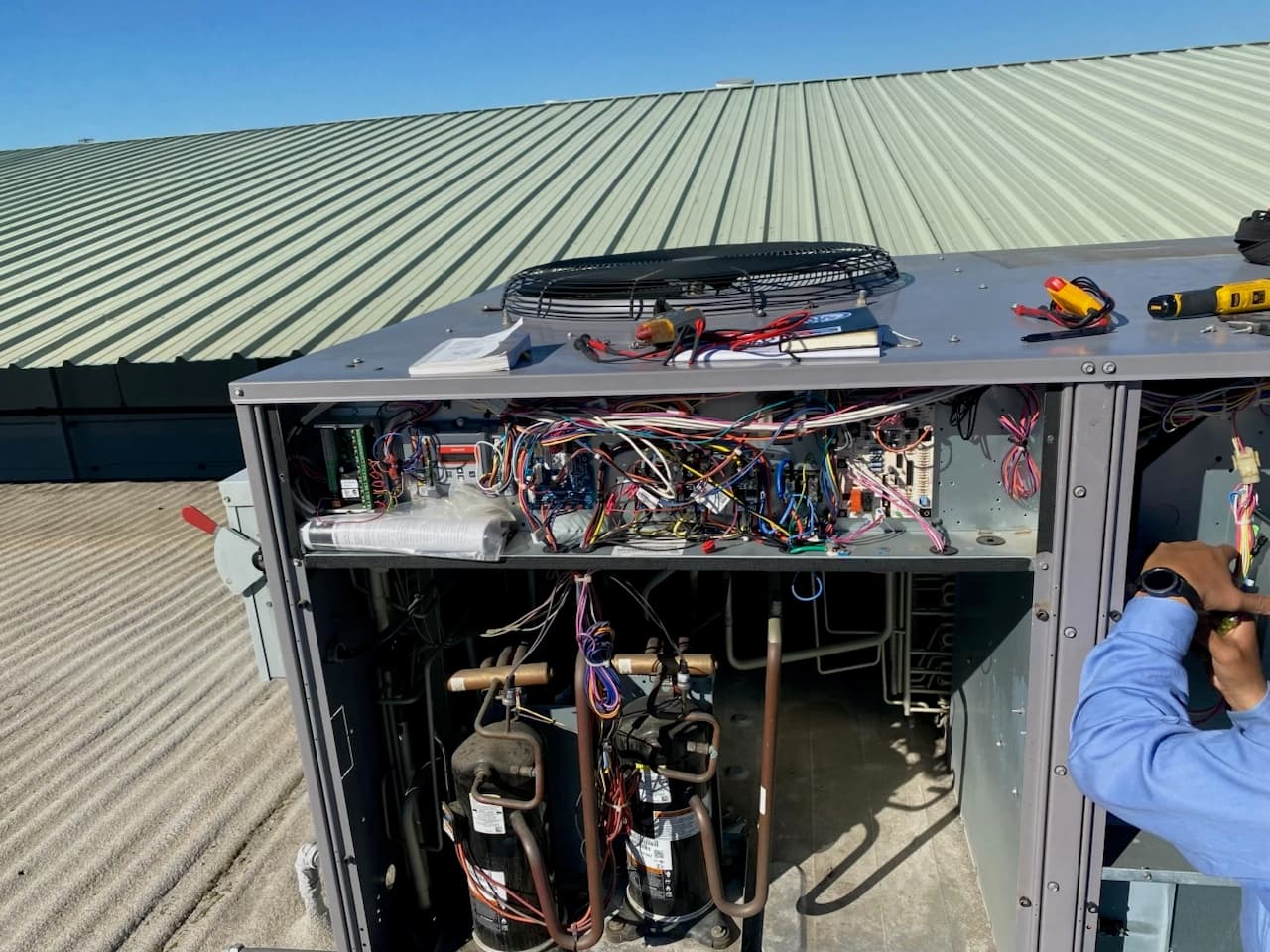
How maintenance plans work plays out in Santa Monica
The maintenance calendar in Santa Monica runs on corrosion, not on heat. Inland, the big question is whether the equipment is ready for a 105 degree August. Here, August rarely gets past the low 80s, and the real question is how much salt film has built up on a coil since the last visit, whether the drain pan has started to rust through, and whether the electrical compartment seal is still keeping moisture out. That changes what a visit contains and how often it needs to happen. Coil rinsing, enclosure inspection, fastener checks, and connection tightening belong on every visit, and the interval for anything west of Lincoln Boulevard is shorter than a generic quarterly plan would suggest.
The properties that get the most out of a program here are the ones with a lot of equipment and no tolerance for downtime: the hotels on Ocean Avenue with dozens of units and a full kitchen, the medical office buildings around the hospital corridors on Wilshire and 16th Street, and the creative campuses around Bergamot and Olympic Boulevard where VRF outdoor units line the roof. Restaurants on Main Street and the Promenade benefit too, but on a different cadence, since their walk-ins, ice machines, and exhaust fans fail in ways that a quarterly coil visit catches early.
Scheduling works around the city's rhythms. Promenade retail wants visits before the stores open, restaurants before lunch prep, clinics before the first appointment or over lunch, and hotels during the mid-morning lull. Summer weekends near the pier are not realistic for roof work because parking and street access are gone by mid-morning. Each visit lands in the DaVinci Portal with readings and photos, which gives an owner a documented corrosion history, and that history is what makes the replace-or-repair decision straightforward. The maintenance programs page and the PM program guide cover the tiers.
Santa Monica's climate and what it does to this equipment
Santa Monica is directly on the Pacific, so salt air is the defining condition. Marine layer keeps summers mild and mornings gray, but the constant moist, salty air corrodes condenser coils, fasteners, electrical enclosures, and exposed copper far faster than inland conditions. Heat waves are less severe than in the valleys, although occasional offshore wind events can briefly drive temperatures up. Because equipment runs fewer extreme hours but suffers from corrosion, coil protection, frequent inspection, and careful hardware choices matter more than raw capacity.
For the equipment background behind this page, read our preventive maintenance program guide or the full Commercial Maintenance Plans service page.
- Downtown and Third Street PromenadeDense retail, restaurants, hotels, and offices with shared rooftops, limited access, and heavy foot traffic.
- Main Street and the shorelineRestaurants, cafes, and small hotels near the beach, where salt air accelerates corrosion on exposed equipment.
- Bergamot, Olympic Boulevard, and creative or tech officesConverted industrial buildings and newer mid-rise offices with modern comfort expectations and often VRF or advanced rooftop systems.
- Hospital and medical corridorsHospital campuses and medical office buildings where filtration, redundancy, and coordination with in-house engineers are central.
- Free diagnostic on repairs for plan members
- Included labor per tier, with a member rate for anything over
- Photo-logged reports with temps, pressures, and amp draws
- DaVinci Portal included with QR tracking and self-service scheduling
What a maintenance plans visit includes, and the problems we most often find
- Walk every covered asset — RTUs, refrigeration, ice machines, water heaters
- Take and log readings against each unit's history, not a generic checklist
- Flag anything trending toward failure before it becomes a breakdown
- Deliver a photo-logged report after every visit
- Free diagnostic on any repair that comes out of the visit
- Equipment that 'seemed fine' failing without any maintenance history to catch the trend
- Multiple pieces of equipment aging out around the same time with no replacement plan
- Surprise repair costs that a documented PM history would have flagged months earlier
- Multi-location accounts with no consistent record across sites
Maintenance tiers for Santa Monica properties
Santa Monica plans center on corrosion control and coil care, with visits timed around foot traffic, restaurant service, and clinic hours. Findings are logged in the DaVinci Portal.
See maintenance plan tiersMaintenance Plans in Santa Monica: questions we get
Is quarterly maintenance overkill for a small office near the beach that only runs its units a few hours a day?
Run hours matter less than exposure in Santa Monica. A unit that idles for days still collects salt and moisture, and corrosion does not wait for the compressor to start. For a light-duty office west of Lincoln, we often recommend at least bi-annual visits with coil cleaning and enclosure inspection, and quarterly if the roof faces the ocean directly or the building has walk-ins or an ice machine. The first inspection tells us which it is, and we adjust the interval based on what the coils look like.
Our property manager wants one vendor across three buildings downtown. Can a program cover mixed equipment like VRF, packaged units, and a walk-in?
Yes, and that is the usual situation in downtown Santa Monica. We inventory every asset across the buildings, tag each with a QR code, and build a schedule where the VRF outdoor units, packaged rooftop units, and refrigeration each get the tasks and intervals that fit them. The manager sees one calendar, one invoice stream, and one portal with every asset's history, which makes it easy to report to ownership and to compare buildings against each other.
What's the difference between the plan tiers?
Tiers differ by visit frequency and included labor. Quarterly is best for kitchens and refrigeration-heavy sites; annual fits lighter-use office or retail space.
Can one plan cover multiple locations?
Yes — multi-site accounts are common. We'll set up the Portal so each location's equipment and history stay organized separately.