Maintenance Plans in City of Industry, CA
A City of Industry maintenance plan has to scale: dozens of rooftop units per building, many buildings per owner, and a hot season that punishes anything neglected. Visits concentrate on coil cleaning, belts, contactors and refrigerant readings before summer, then follow-up checks through the peak. We tier units by what they serve, so offices and refrigerated areas get priority. The DaVinci Portal gives each unit a QR-coded record, so a landlord reviewing a multi-building portfolio sees age, condition and service history without opening a spreadsheet.
One of the largest warehouse, distribution and manufacturing concentrations in the San Gabriel Valley, with food processing, rail corridors and punishing inland summer heat.
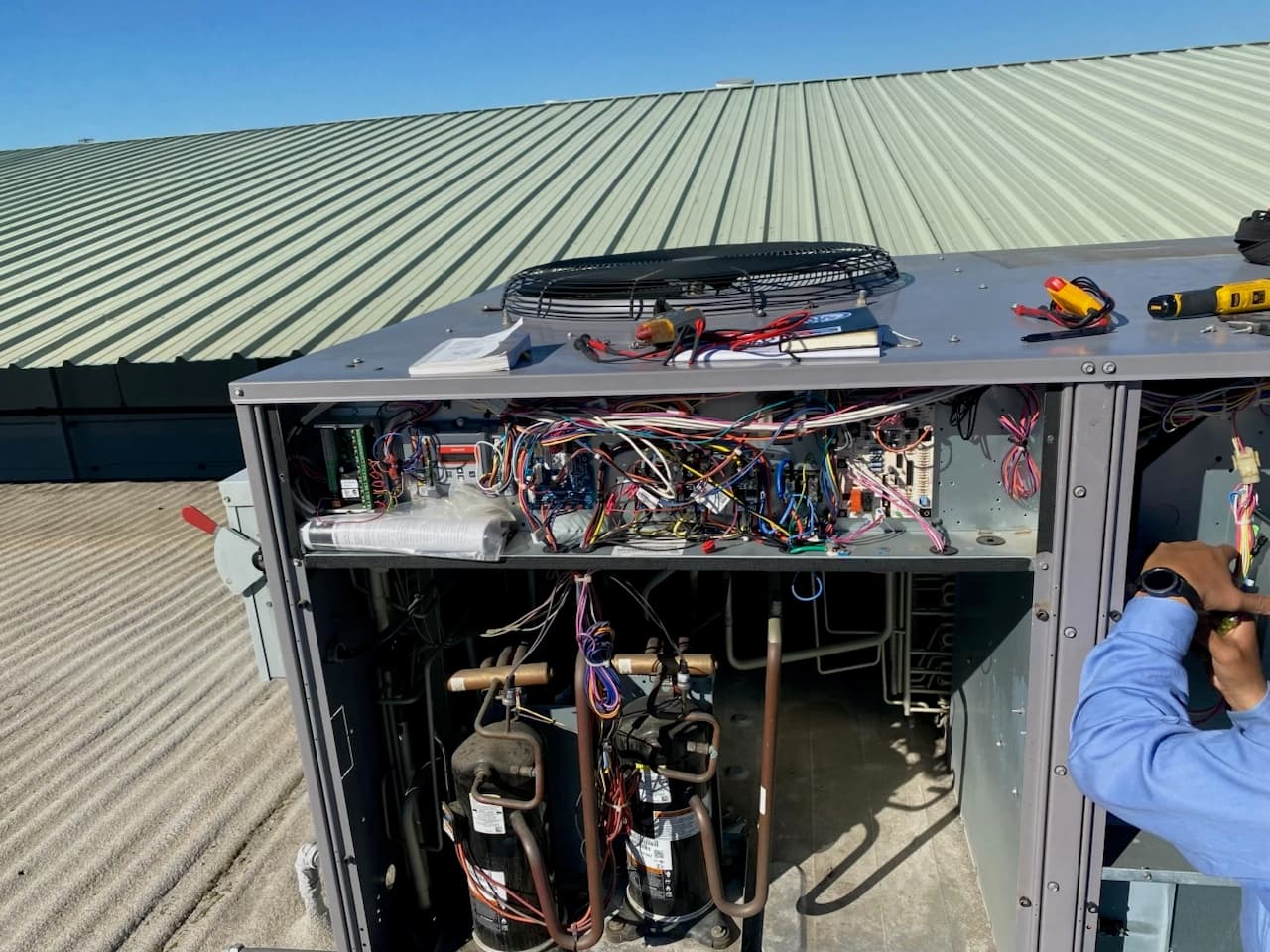
How maintenance plans work plays out in City of Industry
In City of Industry the maintenance calendar is built backward from the first week of triple-digit heat. Everything that protects a rooftop fleet through summer, meaning washed condensers, verified charge, fresh belts and filters, tested contactors and capacitors, has to be done between March and May, because once the roof is at 150 degrees the only thing a technician can do up there is respond to failures. A second pass in early July catches units that are drifting, and a fall visit grades the damage and sets up heating sections for the mild winter.
Scale is the other defining feature. A single tenant might occupy 500,000 square feet with sixty or more packaged units, several make-up air units, a refrigerated area and a battery room, and an owner might hold a dozen such buildings between Valley Boulevard and the 57. No one person can know all of that equipment, so the program is organized by what each unit serves. Units over dock offices, break rooms, data closets and refrigerated spaces are checked on every visit; units over open storage are inspected, graded and fixed when their condition warrants.
Documentation does the rest of the work. Each unit carries a QR tag linked to a record in the DaVinci Portal with age, readings, photos and recommended actions, so an asset manager can see which of twelve roofs needs capital next year without visiting any of them. The preventive maintenance program guide describes how we tier equipment and set visit frequency, and the warehouses industry page covers the lease questions that usually come up.
City of Industry's climate and what it does to this equipment
City of Industry sits in the San Gabriel Valley, well inland, and summer afternoons regularly push past 95 degrees with stretches of triple digits. Large dark roofs soak up that heat, so rooftop units work against extreme ambient conditions plus radiant load from the roof surface. Low humidity makes evaporative approaches effective but also puts a premium on clean condensers, since dusty air from rail yards and truck traffic builds up fast on coils. Santa Ana wind events add debris and static pressure problems, and winter nights are mild enough that heating loads stay light.
For the equipment background behind this page, read our preventive maintenance program guide or the full Commercial Maintenance Plans service page.
- Valley Boulevard and Azusa Avenue distribution corridorLarge tilt-up warehouses with long rooftop unit rows, dock offices and multi-shift operations.
- Gale Avenue and Nelson Avenue manufacturing and food-processing blocksPlants with process refrigeration, sanitation hot water and make-up air demands that change with production.
- Puente Hills Mall and Fullerton Road retailAnchor and strip retail with restaurants, older packaged equipment and shared roof infrastructure.
- Industry Hills hospitality and business park areaResort, event and office properties with hot water loads, chilled-water or large packaged systems and seasonal event peaks.
- Free diagnostic on repairs for plan members
- Included labor per tier, with a member rate for anything over
- Photo-logged reports with temps, pressures, and amp draws
- DaVinci Portal included with QR tracking and self-service scheduling
What a maintenance plans visit includes, and the problems we most often find
- Walk every covered asset — RTUs, refrigeration, ice machines, water heaters
- Take and log readings against each unit's history, not a generic checklist
- Flag anything trending toward failure before it becomes a breakdown
- Deliver a photo-logged report after every visit
- Free diagnostic on any repair that comes out of the visit
- Equipment that 'seemed fine' failing without any maintenance history to catch the trend
- Multiple pieces of equipment aging out around the same time with no replacement plan
- Surprise repair costs that a documented PM history would have flagged months earlier
- Multi-location accounts with no consistent record across sites
Maintenance tiers for City of Industry properties
Industry plans focus on pre-summer coil and condenser work across large rooftop fleets, prioritized by what each unit serves, with portfolio-level reporting for owners holding several buildings.
See maintenance plan tiers