Maintenance Plans in Carson, CA
For Carson distribution and manufacturing buildings, a maintenance plan means keeping a large fleet healthy with minimal downtime. Quarterly visits concentrate on coil washing, belts, filters and electrical connections, since dirty air and long run hours drive most failures. We prioritize units serving offices, control rooms and refrigerated areas, and report the rest by condition so owners can budget replacements in advance. All asset history lives in the DaVinci Portal, which helps landlords with several buildings in the city compare equipment condition across the portfolio.
Large industrial and distribution base in the South Bay, with food and consumer-product manufacturing, refinery-adjacent sites and the Dignity Health Sports Park area.
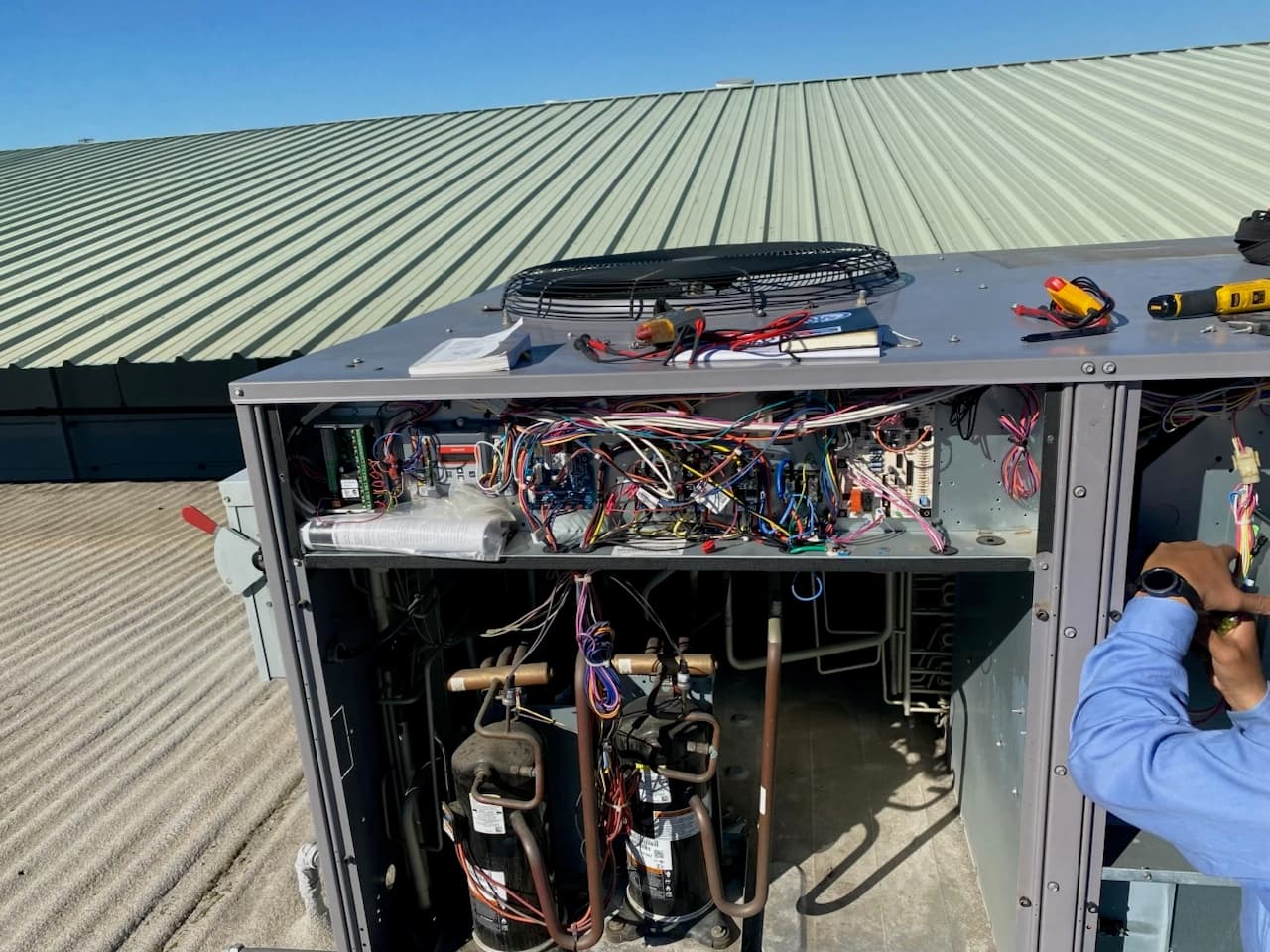
How maintenance plans work plays out in Carson
The scale of a Carson building changes what preventive maintenance has to accomplish. A single tenant in a 300,000 square foot tilt-up near the Dominguez Channel might have forty packaged units, two make-up air units over a production room, a walk-in or two and a battery charging area with its own exhaust. Nobody on site has time to know all of that equipment, and the lease usually puts the maintenance obligation on the tenant with a repair cap and a replacement clause that favors whichever side kept better records. A program here is as much about documentation as it is about belts and filters.
Timing follows the air quality as much as the calendar. The spring visit is the one that matters most: coils washed before the first warm stretch, contactors and capacitors checked, drains cleared so that the first humid week in July does not overflow a condensate pan into a mezzanine office. A fall visit catches the damage summer did and sets up the units that heat the offices, which is a small load in Carson but a loud complaint when it fails in January. Food plants and cold docks move to quarterly because refrigeration and sanitation loads do not slow down.
For a landlord holding several Carson industrial buildings, the real product is a portfolio view. Each unit gets a QR tag and a record in the DaVinci Portal with age, condition, readings and photos, so the asset manager can compare one building against another and plan replacements across a budget cycle rather than reacting to failures one at a time. The preventive maintenance program guide describes how we tier equipment by what it serves.
Carson's climate and what it does to this equipment
Carson sits in the South Bay basin, close enough to the coast to get the marine layer on many mornings but inland enough to see warm, humid afternoons in late summer. The mix is hard on equipment in a quiet way: summer humidity loads cooling coils and condensate systems, warm nights keep cooling running late, and airborne particulate from freeways, ports and refineries coats outdoor coils and clogs filters. Hot spells push large warehouse roofs to extremes. Equipment is stressed by long run hours and dirty air more than by any single heat wave.
For the equipment background behind this page, read our preventive maintenance program guide or the full Commercial Maintenance Plans service page.
- Dominguez and 405 corridor industrial parksTilt-up distribution and light manufacturing buildings with large RTU fleets over office and warehouse zones.
- Dignity Health Sports Park and Cal State Dominguez HillsEvent venues, athletic facilities and university buildings with highly variable loads and public-agency procurement rules.
- South Bay Pavilion and Avalon Boulevard retailBig-box and strip retail with older packaged units, food service tenants and shared-roof access issues.
- Refinery-adjacent and food-manufacturing blocksFood and consumer-product plants with process refrigeration, make-up air and equipment exposed to industrial air.
- Free diagnostic on repairs for plan members
- Included labor per tier, with a member rate for anything over
- Photo-logged reports with temps, pressures, and amp draws
- DaVinci Portal included with QR tracking and self-service scheduling
What a maintenance plans visit includes, and the problems we most often find
- Walk every covered asset — RTUs, refrigeration, ice machines, water heaters
- Take and log readings against each unit's history, not a generic checklist
- Flag anything trending toward failure before it becomes a breakdown
- Deliver a photo-logged report after every visit
- Free diagnostic on any repair that comes out of the visit
- Equipment that 'seemed fine' failing without any maintenance history to catch the trend
- Multiple pieces of equipment aging out around the same time with no replacement plan
- Surprise repair costs that a documented PM history would have flagged months earlier
- Multi-location accounts with no consistent record across sites
Maintenance tiers for Carson properties
Plans for Carson industrial and institutional properties center on large rooftop fleets and refrigerated spaces, with coil washing, belt and electrical checks, and condition reporting that supports multi-year replacement budgets.
See maintenance plan tiers