Commercial Refrigeration in Long Beach, CA
Cold storage is a core Long Beach story because of the port. Walk-in coolers and freezers support food importers, distributors, and the restaurants serving downtown and the waterfront. Typical failures include condenser fouling from coastal grime, evaporator icing from door and infiltration problems, and defrost control issues on rooms that open constantly during shipping. Diagnosing the real source of temperature drift protects inventory and prevents the late-night emergency that comes after a missed warning sign.
Port-driven logistics and warehousing, a dense downtown, large hospital campuses, and an airport-area business park cluster, all within reach of salt air.
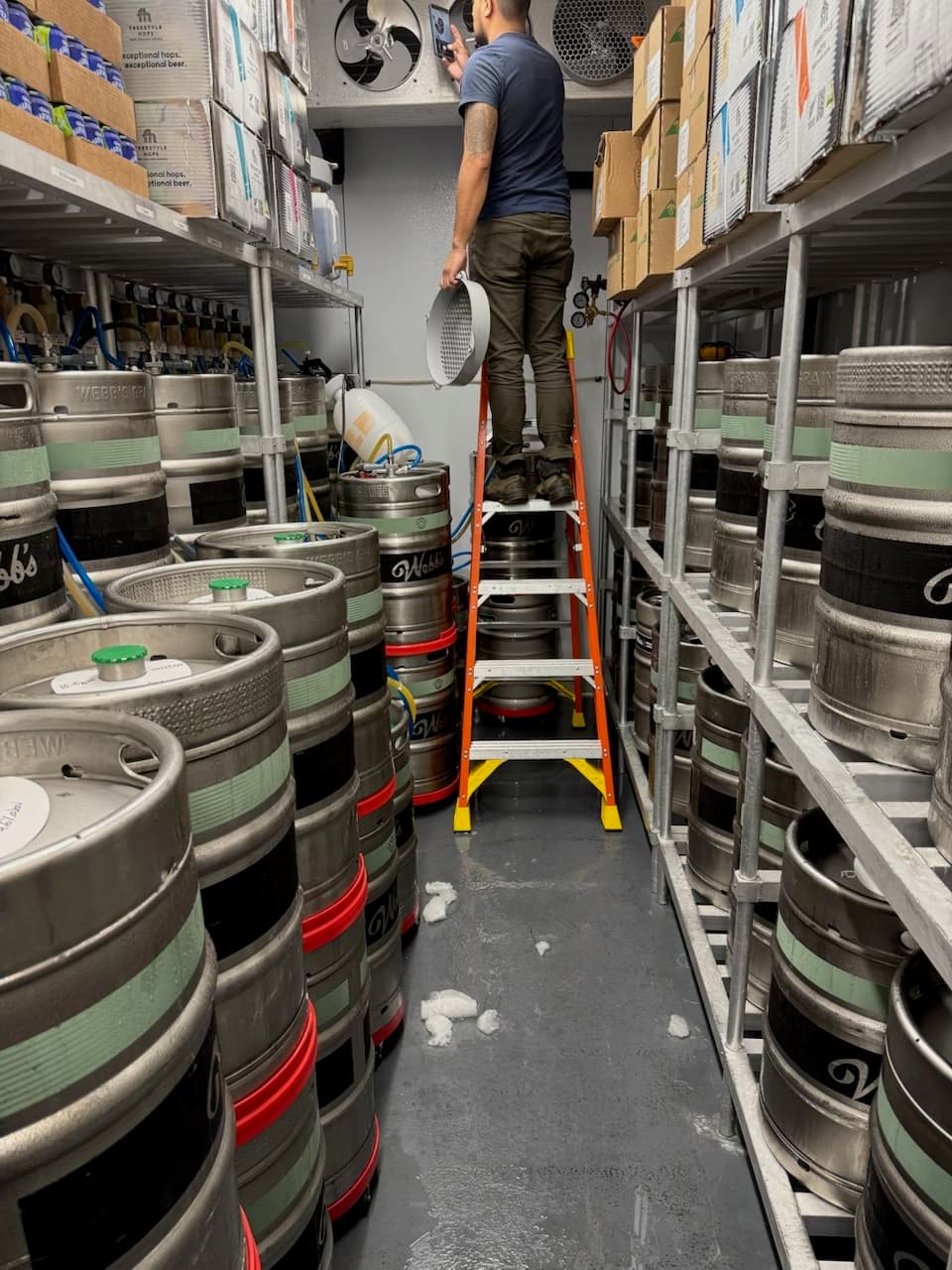
How commercial refrigeration work plays out in Long Beach
Refrigeration in Long Beach is tied to what moves through the port. Cold storage and food import buildings on the Westside and around the harbor hold product that arrived in containers and leaves on trucks, with walk-in freezers and coolers that cycle doors from the overnight shift through mid-morning. A condensing unit on one of those roofs breathes salt air and diesel exhaust, and a compressor that short-cycles for a month because nobody checked the condenser is a product loss measured in pallets. Grocery stores across the city, from the Traffic Circle area to North Long Beach, run display cases and walk-ins with the same exposure and tighter margins.
The restaurant side is spread along the waterfront and the avenues: the Pike, Shoreline Village, Pine Avenue, Second Street in Belmont Shore, and Retro Row on Fourth. Walk-ins there live in back rooms and alleys where humid coastal air feeds condensation and mold on gaskets and panels, and corrosion eats evaporator fan motors from the inside. Door sweeps, gasket condition, drain line health, and evaporator coil cleanliness get checked before the refrigerant gauges come out, because a box losing temperature in this climate is as likely a sealing or airflow problem as a mechanical one.
What the operator should see afterward is a box that holds setpoint through a receiving shift or a Saturday night and a documented record of why it was drifting. For the port-area cold chain buildings, the program is structured like the one described on the food manufacturing and cold storage sector page; the walk-in guide covers the mechanical fundamentals, and grocery and retail covers case and rack work.
Long Beach's climate and what it does to this equipment
Long Beach sits directly on the coast, so salt-laden marine air is a constant at the shoreline, in downtown, and across the port. That air attacks condenser coils, fasteners, panel hardware, and exposed copper far faster than inland conditions, and it is humid enough to feed corrosion and mold in poorly ventilated spaces. Summers are milder than the valleys and basin, but humid afternoons and occasional heat waves still push rooftop equipment hard. Coil protection, drain pan cleaning, and regular inspection of corroded components are central to keeping equipment alive here.
For the equipment background behind this page, read our walk-in cooler and freezer guide or the full Refrigeration: Walk-In & Reach-In Coolers/Freezers service page.
- Downtown Long Beach and the ShorelineOffices, hotels, and waterfront restaurants where salt air shortens coil life and ice machines run hard through event season.
- Douglas Park and the airport areaBusiness park and light industrial buildings with dense rooftop equipment, newer tilt-up construction, and corporate tenants with defined comfort expectations.
- Port-adjacent logistics and the Westside industrial areaLarge distribution buildings and cold storage serving container traffic, with dock refrigeration, ventilation, and make-up air needs that run nearly around the clock.
- Medical campuses and the central corridorHospital campuses and medical office buildings where redundancy, filtration, and coordination with in-house engineers shape the work.
- Evaporator/condenser coil cleaning and defrost checks
- TXV/EEV, superheat, subcool, and pressure readings logged
- Door seals, drains, heaters, and fan packages inspected
- DaVinci Portal: temps and pressures logged by asset over time
What a commercial refrigeration visit includes, and the problems we most often find
- Check current box temperature against setpoint and recent trend
- Inspect door seals, drains, and evaporator/condenser coils for buildup
- Take superheat, subcool, and pressure readings against manufacturer spec
- Address the root cause — not just a temporary recharge
- Log readings to the asset so drift is caught early next visit
- Door seals and hinges that no longer hold a tight close
- Evaporator coils iced over from a defrost cycle issue
- Condenser coils caked with grease or debris, especially near kitchen exhaust
- Slow refrigerant leaks that show up as gradual temperature drift, not sudden failure