Maintenance Plans in Los Angeles, CA
A maintenance program in Los Angeles has to fit very different properties: an office tower with strict access rules, a restaurant that cannot lose a lunch service, and a distribution warehouse running a cold dock. Davinci Mechanical builds visit schedules around the property rather than around a template, with coil cleaning, belt and bearing checks, refrigerant readings, and control verification logged to the DaVinci Portal. Property managers get a clear service history for each unit, which helps with budgeting and with decisions about repair versus replacement.
A sprawling mix of high-rise offices, production and creative space, food distribution in the industrial core, and a long LAX-adjacent logistics corridor, all under one of the state's most demanding permit environments.
How maintenance plans work plays out in Los Angeles
The maintenance question in Los Angeles is rarely what to do; it is when and how to get to the equipment. A property manager with a Bunker Hill office tower, three strip centers in the Valley, and a cold dock near Vernon needs three different visit patterns. The tower wants quarterly visits scheduled through engineering, with coil cleaning timed before the late-summer heat and work on the chilled water side done on weekends. The strip centers need early-morning rooftop access before tenants open and a single point of contact for the landlord. The cold dock needs visits that avoid the overnight receiving window.
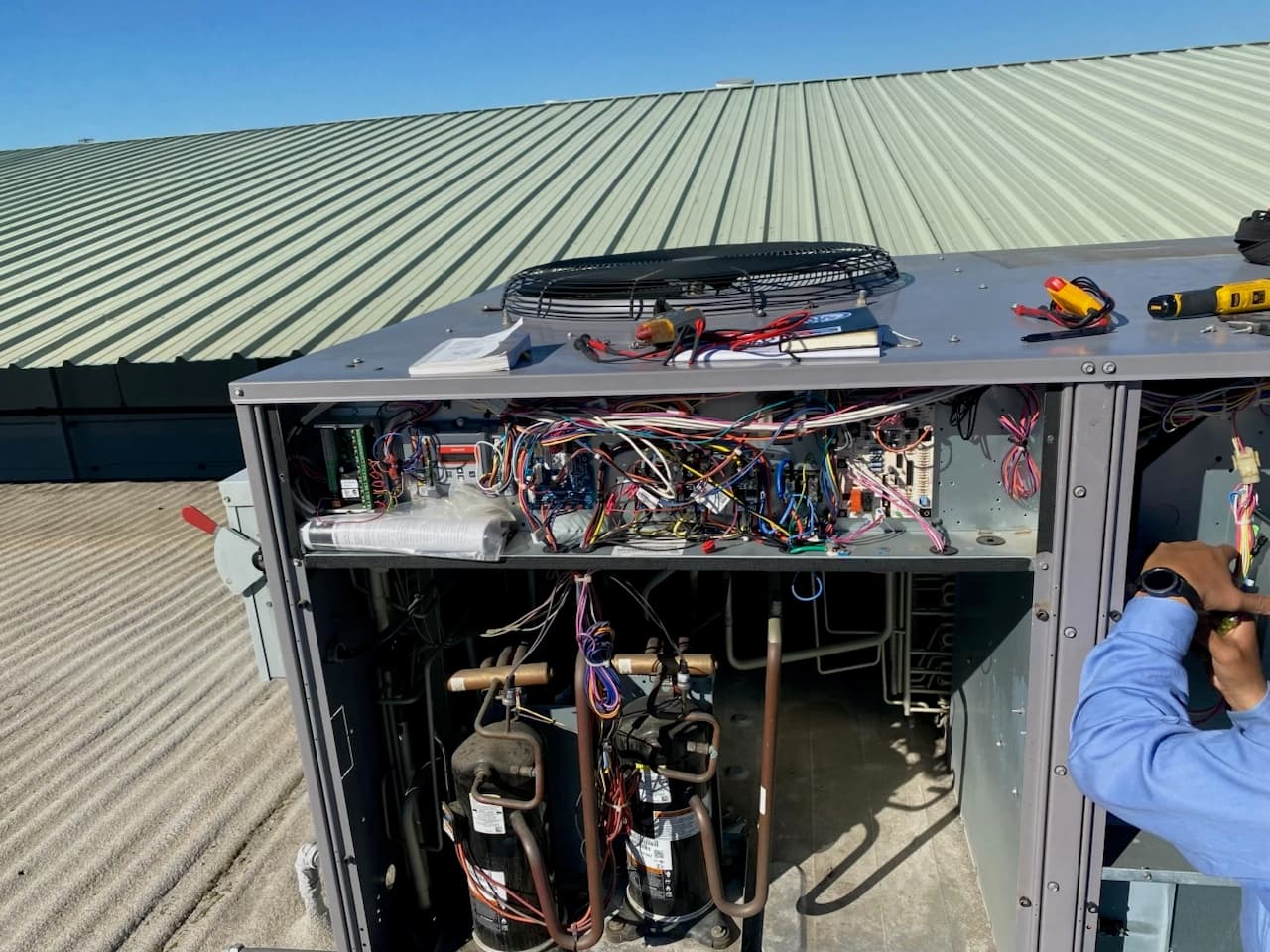
Building type decides the checklist. Rooftop packages on retail along Crenshaw, La Brea, and Lankershim get coil washes, belt and bearing checks, refrigerant readings, economizer verification, and condensate drain clearing, with the heavy work scheduled in spring so the units enter August with full capacity. Production and post-production buildings in Hollywood and the studio zone need humidity and temperature verification on the rooms that matter, not just the general office floor. Medical buildings along Wilshire add filter changes on a stricter calendar and documentation that a compliance officer can read.
The output that matters is the record. Each unit on each property gets its own history in DaVinci Portal, with readings, photos, and what was found, so an owner comparing two near-identical rooftops in Van Nuys can see why one needs replacement and the other has years left. That history is what turns a maintenance program into a capital plan. The preventive maintenance guide covers how tiers are built; the LA-specific version is mostly about access and heat timing.
Los Angeles's climate and what it does to this equipment
Los Angeles has a Mediterranean climate, but the city spans very different conditions. Areas near the coast stay under the marine layer through much of late spring and early summer, while the basin and downtown run noticeably hotter in late summer and early fall, and Santa Ana wind events can bring dry heat and blowing dust. Equipment sees long cooling seasons, and rooftop condensers in urban areas collect soot, leaf litter, and airborne grime. Older buildings with undersized airflow often show problems only during the first stretch of real heat, which is exactly when response time matters most.
For the equipment background behind this page, read our preventive maintenance program guide or the full Commercial Maintenance Plans service page.
- Downtown Los Angeles and the Historic CoreConverted older buildings, high-rise offices, and new mixed-use towers, with a mix of central plants, VRF, and rooftop equipment that often needs careful hoisting and access planning.
- Mid-Wilshire, Miracle Mile, and Century CityDense office towers and professional suites along Wilshire, where chilled water systems, after-hours scheduling, and tenant-sensitive work windows shape every service call.
- Hollywood and studio-related production spaceProduction offices, post-production suites, and sound-sensitive rooms where noise, humidity, and tight temperature control matter as much as capacity.
- Arts District, Vernon-adjacent industrial, and the LAX corridorFood distribution, cold storage, and warehouse buildings east of downtown, plus hotels and logistics buildings along the airport corridor on the west side.
- Free diagnostic on repairs for plan members
- Included labor per tier, with a member rate for anything over
- Photo-logged reports with temps, pressures, and amp draws
- DaVinci Portal included with QR tracking and self-service scheduling
What a maintenance plans visit includes, and the problems we most often find
- Walk every covered asset — RTUs, refrigeration, ice machines, water heaters
- Take and log readings against each unit's history, not a generic checklist
- Flag anything trending toward failure before it becomes a breakdown
- Deliver a photo-logged report after every visit
- Free diagnostic on any repair that comes out of the visit
- Equipment that 'seemed fine' failing without any maintenance history to catch the trend
- Multiple pieces of equipment aging out around the same time with no replacement plan
- Surprise repair costs that a documented PM history would have flagged months earlier
- Multi-location accounts with no consistent record across sites
Maintenance tiers for Los Angeles properties
Maintenance programs for Los Angeles properties are typically built around access: tower rules, restaurant dayparts, and cold-dock hours decide when each unit can be serviced. Programs can be scaled by property type and documented in DaVinci Portal.
See maintenance plan tiers