Maintenance Plans in Downey, CA
Downey maintenance plans mix retail, medical and light industrial. Retail tenants need service timed around business hours and holiday periods; medical buildings need coordination with clinic schedules and infection control; and industrial properties need coil cleaning before dirty, long summers. Visits cover filters, coils, belts, drains and electrical, and give particular attention to condensate lines in humid weather. All findings live in the DaVinci Portal so owners, managers and tenants can see the same history.
Stonewood-area retail, multiple hospital campuses, former aerospace sites and light industrial blocks in the Gateway Cities.
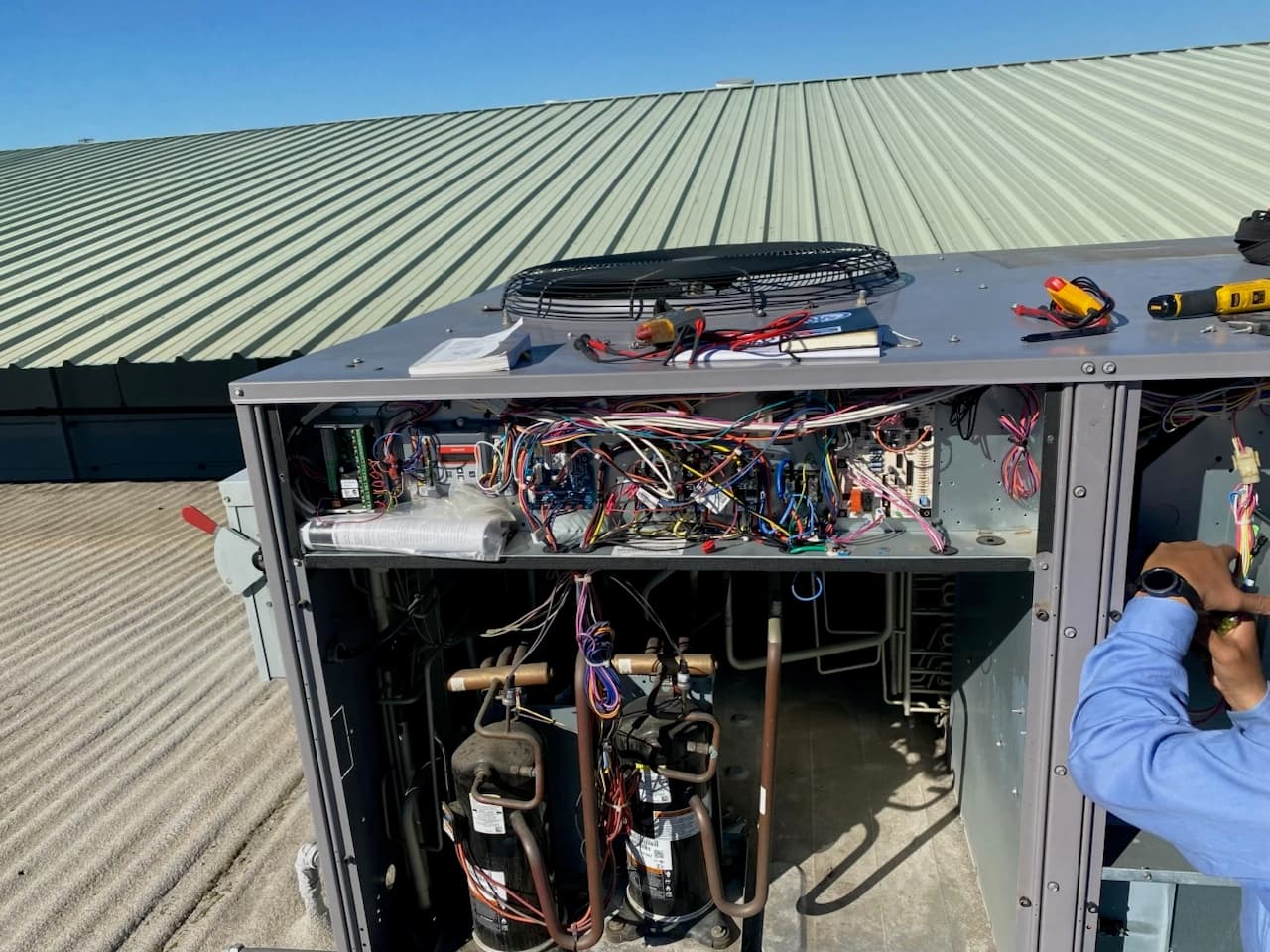
How maintenance plans work plays out in Downey
The Downey properties that benefit most from a preventive maintenance program are the ones with the dirtiest air and the least forgiving tenants: restaurant and food court roofs at Stonewood and the Promenade, medical office buildings near Kaiser Downey and the Brookshire Avenue hospital, the dealership and service-bay buildings along Firestone, and the older light industrial shells near the rail line. Downey sits downwind of the 5, 605 and 105 and beside active rail, so condenser coils here load up faster than the same unit would in a coastal city, and a once-a-year filter change does not keep up.
A program visit in Downey is built around two local realities: humidity and age. Each visit clears and tests condensate drains, because a backed-up drain in August floods a ceiling in a day. Each visit also records refrigerant pressures, amp draws and supply temperatures so we can trend decline on units that are already past their design life, which describes a large share of the rooftop fleet in this city. Quarterly cadence suits kitchens and markets, bi-annual suits offices and clinics, and annual suits light-duty warehouses and self-contained spaces. We set the cadence per unit, not per building, when a property mixes uses.
Scheduling follows the tenant. Mall tenants get early-morning windows agreed with center management, clinics get visits outside patient hours with notice to the practice manager, and industrial tenants get whatever day their dock is quiet. Every finding, reading and photo lands in the DaVinci Portal against a QR tag on the unit, so a property manager with six buildings across the Gateway Cities can see which roofs are trending toward replacement. The PM program guide describes what each visit includes.
Downey's climate and what it does to this equipment
Downey is part of the flat, warm Gateway Cities plain, inland of the coast but still influenced by the marine layer on many mornings. Summers bring warm, humid afternoons in the 80s and low 90s, with occasional heat waves that push higher, and warm nights that keep cooling equipment running late. Humidity makes condensate and coil cleanliness more important than in drier valleys. Freeway traffic, rail and nearby industry put fine particulate on filters and coils. Equipment is rarely heat-limited but works long hours in moderately dirty, humid air.
For the equipment background behind this page, read our preventive maintenance program guide or the full Commercial Maintenance Plans service page.
- Stonewood Center and Lakewood Boulevard retailEnclosed-mall and surrounding national tenants with restaurants, food courts and shared roof and plant systems.
- Kaiser Downey and Rancho Los Amigos medical corridorHospital and rehabilitation campuses plus nearby medical offices with strict environmental and documentation requirements.
- Downtown Downey and Firestone BoulevardOlder low-rise offices, restaurants and professional buildings with aging rooftop and split-system equipment.
- Former aerospace and rail-line light industrial areasLarge legacy buildings and smaller industrial properties adapted from aerospace use, often with mixed-vintage mechanical systems.
- Free diagnostic on repairs for plan members
- Included labor per tier, with a member rate for anything over
- Photo-logged reports with temps, pressures, and amp draws
- DaVinci Portal included with QR tracking and self-service scheduling
What a maintenance plans visit includes, and the problems we most often find
- Walk every covered asset — RTUs, refrigeration, ice machines, water heaters
- Take and log readings against each unit's history, not a generic checklist
- Flag anything trending toward failure before it becomes a breakdown
- Deliver a photo-logged report after every visit
- Free diagnostic on any repair that comes out of the visit
- Equipment that 'seemed fine' failing without any maintenance history to catch the trend
- Multiple pieces of equipment aging out around the same time with no replacement plan
- Surprise repair costs that a documented PM history would have flagged months earlier
- Multi-location accounts with no consistent record across sites
Maintenance tiers for Downey properties
Downey programs combine retail and restaurant refrigeration with medical-adjacent HVAC and aging rooftop fleets, emphasizing condensate and humidity checks and coordination with clinic and mall operating hours.
See maintenance plan tiers